

WHO raises alarm as DRC Ebola cases hit 1,094, death toll reaches 277

The World Health Organisation (WHO) says 1,094 confirmed Ebola cases and 277 deaths have been reported in the Democratic Republic of the Congo (DRC) five weeks after the outbreak was declared on May 15.
WHO Director-General, Tedros Ghebreyesus, said this on Wednesday during an online media conference on Ebola and other health issues.
Mr Ghebreyesus said that it was the largest first-month caseload of any Ebola outbreak in Africa, and that the outbreak continues to outpace the response.
“The outbreak is driven by the Bundibugyo strain, a rare Ebola virus for which there is no licensed vaccine or specific treatment.
“Cases are concentrated in Ituri province, which has spread to North Kivu, South Kivu, and across the border into Uganda,” he said.
According to him, treatment bed capacity increased from fewer than 10 beds to more than 500 in 19 health centres.
He said that laboratory capacity jumped from 30 tests per day in Kinshasa to more than 2,000 per day in nine laboratories across three provinces, with WHO and Africa CDC support.
According to him, more than 100 people have recovered through early detection and supportive care, showing that many can survive the disease.
He, however, warned that mortality could fall further with the use of therapeutics.
The WHO boss said that a clinical trial of two antivirals would begin at the end of June in the DRC, adding that MDPC134 and remdesivir would be tested alone and in combination for Bundibugyo virus disease.
He said that the U.S. and Gilead Sciences donated doses, while WHO, the DRC’s National Institute for Biomedical Research, HALIMA, and Oxford University are conducting the trial with communities involved.
“Uganda reported 20 confirmed cases and two deaths, all linked to the DRC outbreak. A new case was reported last Sunday, the first in two weeks. France also reported a HALIMA health worker who tested positive after returning from caring for patients in DRC.
“Nearly 80 health workers have been infected. WHO urges countries to ensure safe deployment, clear risk information, infection prevention and control, and evacuation plans.
“More communities are becoming aware of Ebola risks and requesting tools and support to protect themselves,” he said.
Mr Ghebreyesus said that the organisation and its partners are working closely with communities to inform them and involve them in the therapeutics trial.
According to him, coverage is still not at the level needed, treatment and isolation centres lack capacity, and safe and dignified burials remain a major challenge.
“Multiple security incidents have been reported in an area facing decades of conflict. Border closures continue to hinder response efforts.
“Humanitarian access requires urgent political advocacy and action.
“More than 270,000 people, mostly women and children, are sheltering in 60 or more sites across Ituri with limited water, sanitation, and health services. Cases have been confirmed in camps, heightening the risk of spread,” he said.
Mr Ghebreyesus noted that WHO and Africa CDC requested 518 million dollars for a joint continental preparedness and response plan.
He added that financial reporting on pledges was expected soon to clarify funding gaps and needs.
The WHO boss said that the organisation assesses the risk as very high in the DRC, high regionally, and low globally. Countries are advised to prepare for safe personnel deployment and monitoring.
He said that a Hantavirus outbreak has caused an uncertain number of cases and three deaths, with more than 650 contacts traced in 33 countries.
According to him, all but 54 contacts have completed quarantine, with WHO expecting to declare the outbreak over by July 2 if no new cases emerge.
“In Sudan, West Kordofan has reported 734 suspected cholera cases and 105 deaths since May 15 amid conflict-disrupted health systems.
“Europe and the Northern Hemisphere are facing extreme heat waves that claim around 500,000 lives globally each year.
“WHO is working with FIFA and host countries on a ‘Beat the Heat’ initiative for the World Cup, focusing on early warnings, safe water, cooling strategies, and protecting workers, athletes, and fans,” he said.
(NAN)

We have recently deactivated our website's comment provider in favour of other channels of distribution and commentary. We encourage you to join the conversation on our stories via our Facebook, Twitter and other social media pages.

More from Peoples Gazette

Agriculture
FG tasks ECOWAS on leveraging financing strategies for agroecology
The federal government has urged stakeholders in the agriculture and finance sectors in the West Africa region to leverage financing strategies to enhance agroecology practices

Politics
Katsina youths pledge to deliver over 2 million votes to Atiku
“Katsina State is Atiku’s political base because it is his second home.”
States
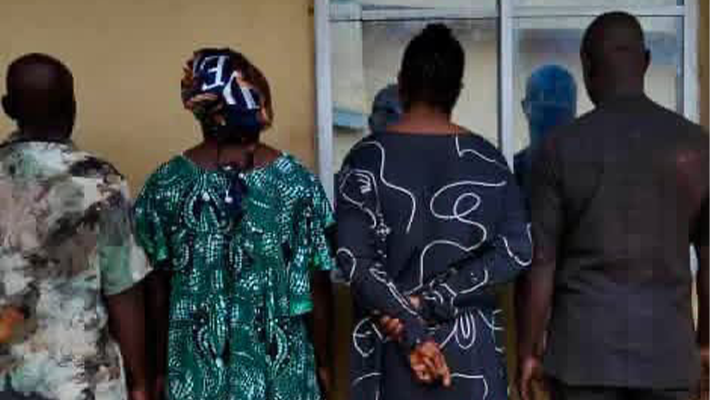
Police nab four suspects for alleged child trafficking in Abia
Ms Chinaka said the suspects allegedly conspired to steal a four-day-old baby from her mentally unstable mother.
Agriculture
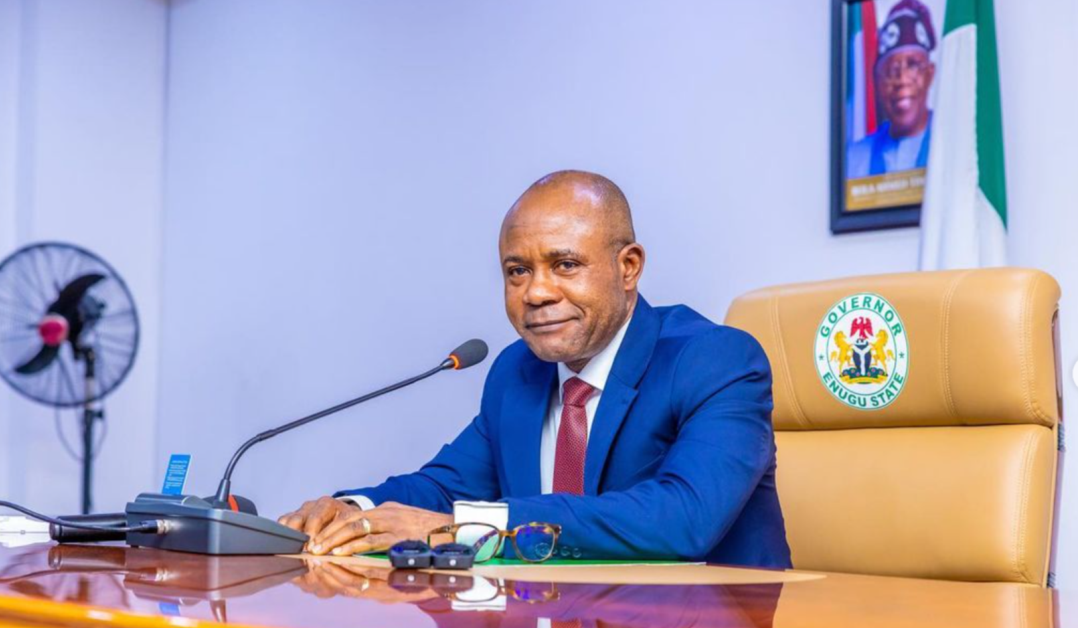
Enugu hires over 160 professionals to revive livestock production
Mr Ubru said the recruitment was in fulfilment of Governor Peter Mbah’s vision to revamp the agricultural sector.

Heading 2
Plateau government disburses N1.5 billion intervention funds to attack victims
Governor Caleb Mutfwang formally inaugurated the disbursement of the funds on Monday in Jos.

Heading 5
Don’t destroy APC like you did PDP, group warns Wike
Mr Wike has insisted that his major political priority remained securing the re-election of Mr Tinubu in 2027.

Heading 1
Atiku condemns Tinubu’s prolonged vacation abroad, says Nigeria can’t be governed on autopilot
Mr Onanuga said that the president would return to the country at the weekend.
Economy
ECOWAS to honour 60 West African start-ups
The top three start-ups will receive $30,000, $20,000 and $15,000 respectively in seed funding.


