

Nigeria’s quality of life worse than average in Sub-Saharan Africa; many risk torture, extrajudicial killing: Report

Nigeria is “performing worse than average” when compared with other countries in Sub-Saharan Africa in terms of the quality of life of its citizens, and many Nigerians risk “arbitrary arrest, torture and ill-treatment, forced disappearance, death penalty or extrajudicial killing,” a report by the Human Rights Measurement Initiative stated.
The report, HRMI’s first global project to systematically track the human rights performance of countries, was released on Wednesday and stated that “Nigeria’s new human rights scores show little improvement.”
“Nigeria fails to fully protect its people’s economic, social, civil, and political rights,” the report stated, adding, “Nigeria’s right to food (58.6%), health (48.8%), housing (41.0%), and work (34.9%) scores all fall in the ‘very bad’ range, making it clear that Nigeria still has a very long way to go to meet its immediate obligations on economic and social rights.”
On the “quality of life” of citizens of Africa’s most populous country, the report stated that “Compared with the other countries in Sub-Saharan Africa, Nigeria is performing worse than average when we look across the rights for which we have data (this comparison is calculated using the ‘Income adjusted’ benchmark).”
According to the report, Nigeria’s Safety from the State score of 5.9 out of 10 suggests that many people are not safe from one or more of the following: arbitrary arrest, torture and ill-treatment, forced disappearance, death penalty, or extrajudicial killing.
The report, which measures human rights performance across 212 countries, stated that, “Nigeria’s score of 5.8% for ensuring the right to good quality education is the second lowest in the world, indicating that Nigeria is only doing 5.8% of what HRMI calculates it is capable of at its current level of per capita income.”
Thalia Kehoe Rowden, HRMI Co-Executive Director, said, “The rights we measure are absolutely fundamental. Nigeria’s leaders will need to make significant changes to improve their people’s quality of life. Better lives for its people are within its grasp if leaders choose.”

We have recently deactivated our website's comment provider in favour of other channels of distribution and commentary. We encourage you to join the conversation on our stories via our Facebook, Twitter and other social media pages.

More from Peoples Gazette

States
Independence: NBA urges Nigerians to expect better future
The NBA said that ordinary Nigerians should be deriving benefit from the subsidy removal rather than hardship.
Agriculture
FG tasks ECOWAS on leveraging financing strategies for agroecology
The federal government has urged stakeholders in the agriculture and finance sectors in the West Africa region to leverage financing strategies to enhance agroecology practices

Politics
Katsina youths pledge to deliver over 2 million votes to Atiku
“Katsina State is Atiku’s political base because it is his second home.”
States
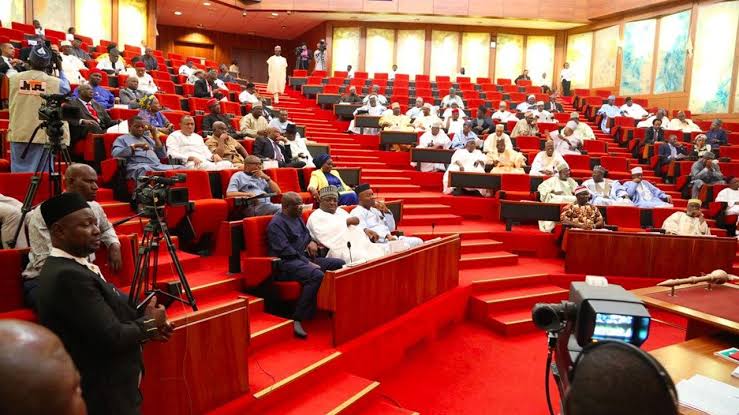
Bayelsa Boat Disaster: Senate urges enforcement of safety regulations on waterways
The lawmakers further urged NEMA to provide relief materials to support the welfare and recovery of the accident victims.
World
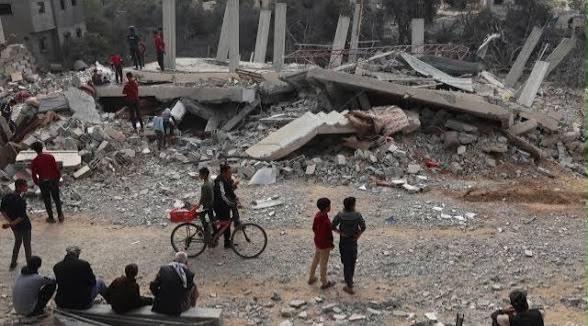
Hamas security chief, six others killed in Gaza strikes
Medical sources said one person was killed in the attack, while several others sustained injuries and were taken to the hospital for treatment.

Anti-Corruption
Court jails salesgirl for diverting N7.8 million
Ms Enyeribe pleaded guilty to the one-count charge against her.

Africa
DR Congo rebels halt advance, withdraw from captured areas
The group said it had ordered a halt to its advance towards Bunia and a withdrawal from recently captured areas.

States
Northern governors sack NNDC board
The decision was taken by the secretaries to the governments of the 19 northern states, representing their respective state governments.
NationWide
NDC accuses police of bias, boycotts IGP’s security meeting over alleged attacks on members
The party said it would not legitimise a security process that had failed to guarantee the safety of its members.


