

U.S. Supreme Court allows Trump to end protected status for 360,000 Haitians, Syrians
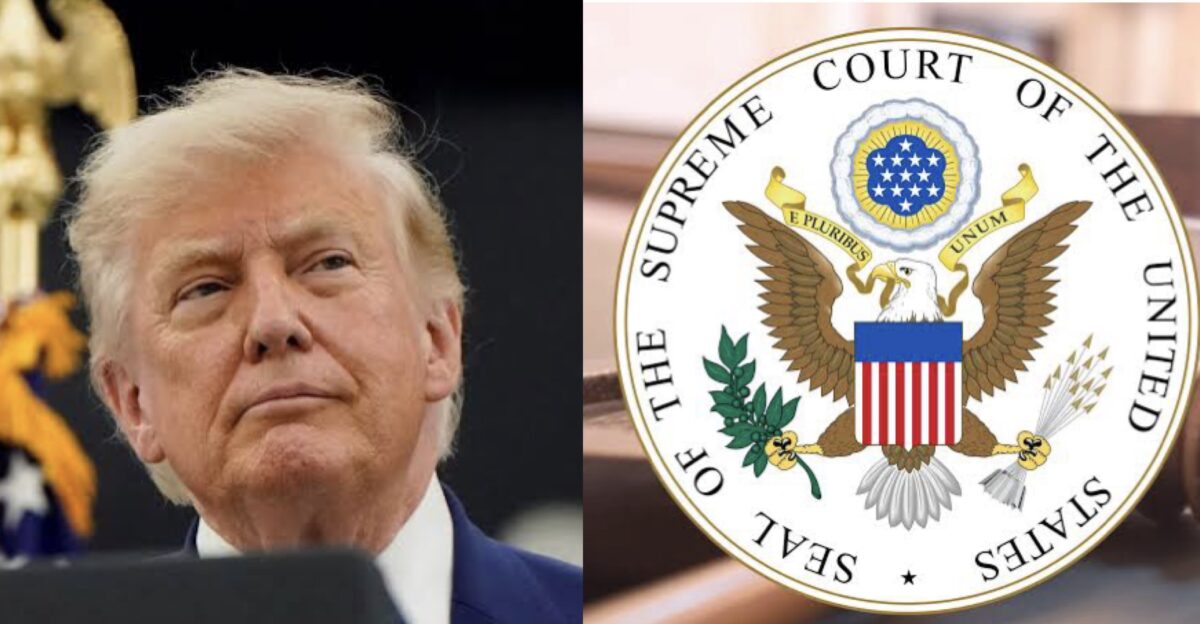
The United States Supreme Court has ruled that President Donald Trump can end a Barack Obama-era Temporary Protected Status (TPS) for over 360,000 Haitians and Syrians amid aggressive anti-immigration push in the North American country.
Haitians and Syrians were both been granted protected statuses in 2010 and 2012, respectively, by former President Obama, which allowed individuals from the countries to temporarily live and work in the United States of America for 18 months, subject to extensions.
The most recent extensions of Temporary Protected Status were approved during the administration of former President Joe Biden, extending protections for Syrians through September 2025 and for Haitians through February 2026.
However, in an impromptu move in November last year, the then-Secretary of Department of Homeland, Security Kristi Noem, announced that the Trump administration would rescind the protections, citing that both Haiti and Syria no longer meet the criteria for the programme.
With the 355,000 Haitians and 6,000 Syrians affected by the decision, several lawsuits were filed against the Trump administration, challenging the announcement.
Lower court judges subsequently postponed the termination of the programme, prompting the government to approach the Supreme Court.
In a 6-3 majority ruling on Thursday, the apex court sided with the Trump administration and ordered that the government could proceed to strip the legal status of thousands of Haitians and Syrians in the United States of America, citing that judges cannot review the decision of the White House on TPS.
“In these cases, we consider whether respondents, who challenge the termination of Temporary Protected Status (TPS) for aliens from Syria and Haiti, are entitled to orders postponing the terminations during litigation. We hold that they are not.
“The TPS statute plainly bars consideration of respondents’ non-constitutional claims. It allows “no judicial review of any determination with respect to the termination” of a TPS designation,” the majority wrote in their opinion.
The judgment means that more than 360,000 Haitians and Syrians could now face mass deportation from the United States of America.

We have recently deactivated our website's comment provider in favour of other channels of distribution and commentary. We encourage you to join the conversation on our stories via our Facebook, Twitter and other social media pages.

More from Peoples Gazette

States
Independence: NBA urges Nigerians to expect better future
The NBA said that ordinary Nigerians should be deriving benefit from the subsidy removal rather than hardship.

Agriculture
FG tasks ECOWAS on leveraging financing strategies for agroecology
The federal government has urged stakeholders in the agriculture and finance sectors in the West Africa region to leverage financing strategies to enhance agroecology practices

Politics
Katsina youths pledge to deliver over 2 million votes to Atiku
“Katsina State is Atiku’s political base because it is his second home.”

NationWide
FG begins free 100MB daily data rollout for Nigerian students
The ALTON chairman said the telecommunications and wider technology industry had shown significant commitment to the initiative.

States
Makinde urges Nigerians to remain united, honour founding heroes
Mr Makinde urged the citizens to appreciate the sacrifices of Nigeria’s founding heroes.

States
Troops eliminated 16 terrorists, rescued 10 prospective NYSC members: Nigerian Army
The report said the troops repelled the attacks, forcing the terrorists to flee towards Garkida on motorcycles.

Anti-Corruption
U.S. immigration officer jailed for accepting $6,000 bribe
Mr Dukuly pleaded guilty to “aiding and abetting the bribery of a public official in exchange for an official act.”

Uncategorized
TCN restores Kainji-Birnin Kebbi 330kV transmission line
The company said power went off in the affected areas on September 7.
States
Group seeks better healthcare, social support for elderly Nigerians
Mr Oluwadamilare said growing old in Nigeria was becoming increasingly difficult due to economic hardship.


