

State police may be misused for political victimisation if systemic corruption persists, Anglican bishop says
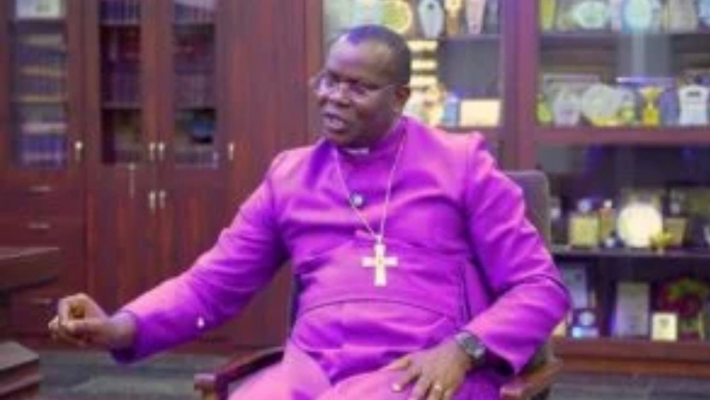
Owen Nwokolo, the Anglican bishop of Niger diocese, has cautioned that the proposed establishment of state police may be misused for political victimisation if systemic corruption is not urgently addressed.
Mr Nwokolo said this on Saturday in Abuja during an interactive session with journalists to mark his 59th birthday and 15th episcopal anniversary.
Assessing the current state of the nation across security, education and governance, he stressed the need for reforms that would guarantee fairness and accountability in any new security arrangement.
The bishop also spoke on educational developments and the theological foundations of Christian marriages.
He urged leaders at all levels to prioritise integrity and justice, saying institutions could only serve the people effectively if corruption were tackled.
According to him, while decentralising the police force appears to be a viable panacea for the country’s rising wave of insecurity, the underlying culture of corruption and nepotism poses a major threat to its success.
“Ordinarily, state police would be the solution to insecurity. But if corruption is still prevalent, those in state authority might use the structure to victimise their perceived enemies, and that will worsen the situation.
”We need an entire overhaul of our national system to change our psyche for national identity and true fidelity.
“The major problem may not just be the government in power; we have an endemic problem of corruption that has eaten deep into the fabric of society,” the cleric said.
Reviewing national governance over the last three years, Mr Nwokolo noted that structural deterioration had been a successive challenge passed from one administration to another.
According to him, only a collective change in orientation can give birth to a “New Nigeria.”
He lamented the ongoing security challenges while urging citizens to look beyond political recycling as the 2027 general elections approach.
Mr Nwokolo highlighted major strides recorded under his 15-year episcopacy since his enthronement in 2011, particularly in youth empowerment and educational expansion.
He disclosed that the diocese had repositioned over 150 primary schools and 58 secondary schools, and had expanded into specialised tertiary health and technology education to curb youth delinquency and brain drain.
”We established the Beatrice Onyemelukwe School of Science and Technology to equip young people with critical vocational skills.
“We also set up schools for nursing sciences, pharmacy technicians, medical laboratory technicians, a polytechnic, and the flagship University on the Niger.
”The University on the Niger, which secured its operational license from the National Universities Commission (NUC) in 2023, uniquely mandates the study of Chinese, French, and Igbo languages for all students to position them for the global emerging economy,” he said.
He added that the 119-year-old Iyienu Mission Hospital was subsumed to serve as the university’s teaching hospital, operating on a self-reliant model funded solely by internally generated revenue and voluntary donations.
He noted that, despite the institutional challenges posed by brain drain, or the “Japa” phenomenon affecting professionals nationwide, the diocese had maintained its workforce by implementing robust structural systems.
”We have tried to have a good package of remuneration, payment of salaries, and ensuring that we give them some of the little comforts needed.
“We have a sustaining pension scheme so anybody that is working for us knows that he has a future,” Mr Nwokolo said.
Addressing the heavy criticisms trailing his recent Synod charge, where he asserted that traditional weddings without church validation amount to cohabitation for Christians, Mr Nwokolo defended his position on theological and canonical grounds.
He clarified that while traditional marriage is entirely legitimate for non-Christians, believers are bound by a different standard and spiritual covenant overseen by the church.
”Any marriage for a Christian that is not held in the presence of God and his people, as far as the person is a Christian, is not a Christian marriage, and it is not acceptable.
“We are not condemning traditional marriage. Traditional marriage is a full marriage for those who are in traditional practice,” the bishop said.
He explained that Christ gave the church the authority to establish holy customs, adding that the trend of young believers treating family ceremonies as final is “confusing Christians.”
To cushion the financial burdens associated with weddings, Mr Nwokolo announced an institutional policy within his domain to eliminate administrative hurdles for intending couples.
”In our diocese, we maintain that marriage is free of charge. Anybody that is coming to wed in the church, there is no marriage fee, no certificate fee. People come to the church and wed. Nobody gives them lists,” he said.
The bishop, however, urged the next generation of Christian leaders to remain dedicated to spiritual and academic discipline and offered prayers for national peace, economic recovery, and divine intervention in Nigeria’s affairs.
(NAN)

We have recently deactivated our website's comment provider in favour of other channels of distribution and commentary. We encourage you to join the conversation on our stories via our Facebook, Twitter and other social media pages.

More from Peoples Gazette

Agriculture
FG tasks ECOWAS on leveraging financing strategies for agroecology
The federal government has urged stakeholders in the agriculture and finance sectors in the West Africa region to leverage financing strategies to enhance agroecology practices

Politics
Katsina youths pledge to deliver over 2 million votes to Atiku
“Katsina State is Atiku’s political base because it is his second home.”

Health
Niger agency moves to enforce standards in private health institutions
NiSPHFA has intensified regulatory oversight of private health institutions to ensure compliance with established standards and improve healthcare service delivery.

States
FRSC impounds 39 vehicles for overloading, route violations
The Federal Road Safety Corps says it has arrested 39 vehicles for various traffic offences in the ongoing special enforcement operation across Kebbi.
World
U.S. issues security alert to citizens amid ongoing Mideast conflict
The U.S. Department of State on Tuesday issued the second security alert in three days amid heightened Mideast tensions, advising U.S. citizens to exercise increased caution.

States
Troops kill alleged Boko Haram driver in Yobe
Troops of Operation Hadin Kai have killed a suspected Boko Haram driver and foiled an alleged terrorist extortion mission along the Paya Kafiya–Garin Gada area of Yobe.
Economy
Fire razes many shops in Lagos market
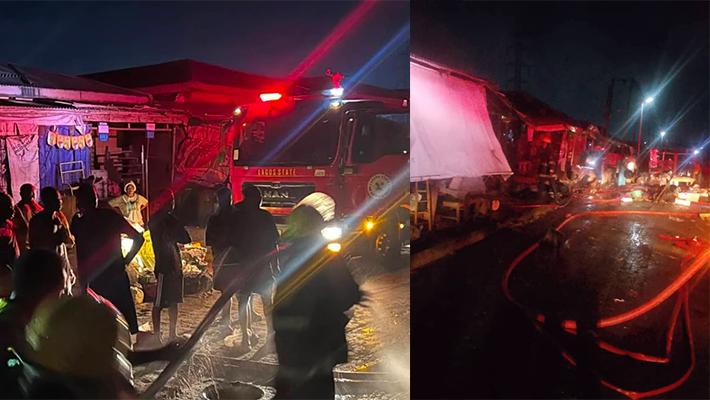
At least 17 shops were destroyed following a blaze that swept through Sabo Market in the Ikorodu area of Lagos early Tuesday.

Economy
Tinubu govt targets higher value from non-oil exports
The federal government says it will sustain growth in non-oil exports by promoting value addition, expanding markets and improving export competitiveness.


