

N2 billion NPFL prize won’t fix Nigerian football, says Gara-Gombe

Former chairman of Gombe United Football Club, Ahmed Gara-Gombe, says increasing the Nigeria Premier Football League (NPFL) prize money cannot resolve the structural problems affecting Nigerian football.
Mr Gara-Gombe made the remarks on Saturday while briefing journalists in Abuja against the backdrop of a proposed N2 billion prize for the league champions.
He said the proposed prize money was attractive, but sustainable football development required stronger foundations, including good governance, infrastructure and commercial viability.
“You can offer ₦10 billion to the league champions, but if the fundamentals are not in place, the league will continue to struggle,” he said.
Mr Gara-Gombe identified eight key areas required for a successful league: good governance, a strong capital base, commercial viability, modern infrastructure, competent administrators, player welfare, fan engagement and professional refereeing.
On infrastructure, he lamented that Nigeria had only a few stadiums capable of meeting international standards.
He described the Godswill Akpabio International Stadium, Uyo, as the country’s most reliable venue for major continental fixtures.
He recalled that several Nigerian clubs had been forced to relocate continental matches after their home grounds failed to meet Confederation of African Football requirements.
Mr Gara-Gombe also criticised poor officiating, describing it as a major threat to the credibility of the NPFL.
“Today, we produce poor champions because they are products of poor officiating,” he said, calling for improved referee training, monitoring and accountability.
He also advocated the criminalisation of match-fixing, saying football manipulation should attract serious legal consequences beyond normal sporting sanctions.
On the Nigeria Football Federation leadership, Gara-Gombe defended his support for Ibrahim Gusau’s second-term bid.
He said continuity would allow Nigerians to properly assess Mr Gusau’s administration, adding that many challenges facing Nigerian football predated the current leadership.
He said the problems required long-term institutional reforms rather than frequent changes in administration.
According to him, Mr Gusau should be judged by his own decisions, policies and achievements if given another term in office.
Mr Gara-Gombe also called for reforms to reduce government dependence on football, urging state governments to gradually stop directly funding football clubs.
He suggested that government support should continue through grants, while clubs developed independent revenue streams through sponsorships, broadcasting rights, merchandising and professional management.
He criticised the appointment of politicians and political loyalists as club administrators, insisting that football clubs should be managed by qualified professionals.
“Football administration is a profession and should be treated as such,” Mr Gara-Gombe said, urging competency requirements for club managers under the licensing system.
He maintained that Nigerian football could only achieve sustainable growth through professional governance, improved infrastructure, credible officiating and commercially driven clubs.
Mr Gara-Gombe said financial sustainability also required determining the true commercial value of the league before setting multi-billion-naira prize money.
“You must first know what your league is worth before placing a price tag on it,” he said.
He said the assessment should consider clubs’ revenue-generating capacity, including sponsorship, merchandising, branding and supporter engagement.
Mr Gara-Gombe also raised concerns over poor medical facilities at several league venues, saying some clubs still relied on borrowed ambulances from hospitals, health centres or the Red Cross during matches.
He described the situation as evidence of inadequate professionalism within the league.
Comparing Nigeria with North African football, he cited Tunisian club Espérance Sportive de Tunis as an example of a team that had developed strong commercial structures over time.
He said Nigerian clubs must build similar institutions capable of surviving beyond government funding.
“Commercial value is not created overnight but built through proper planning, branding and professional management,” he said.
(NAN)

We have recently deactivated our website's comment provider in favour of other channels of distribution and commentary. We encourage you to join the conversation on our stories via our Facebook, Twitter and other social media pages.

More from Peoples Gazette

Agriculture
FG tasks ECOWAS on leveraging financing strategies for agroecology
The federal government has urged stakeholders in the agriculture and finance sectors in the West Africa region to leverage financing strategies to enhance agroecology practices

Politics
Katsina youths pledge to deliver over 2 million votes to Atiku
“Katsina State is Atiku’s political base because it is his second home.”
Lagos
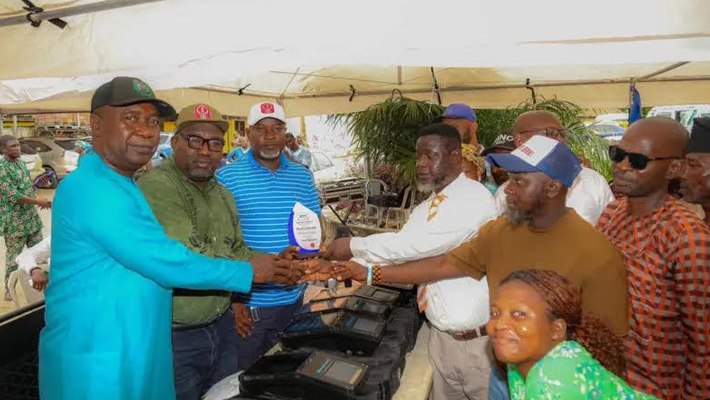
Lagos council inducts 156 financial inclusion experts
The chairman urged the inductees to use the digital devices provided to them with integrity.

Heading 1
FCCPC resumes implementation of digital lending regulations
WASPAN had challenged the Commission’s authority to issue and implement the DEON Regulations.
Heading 5
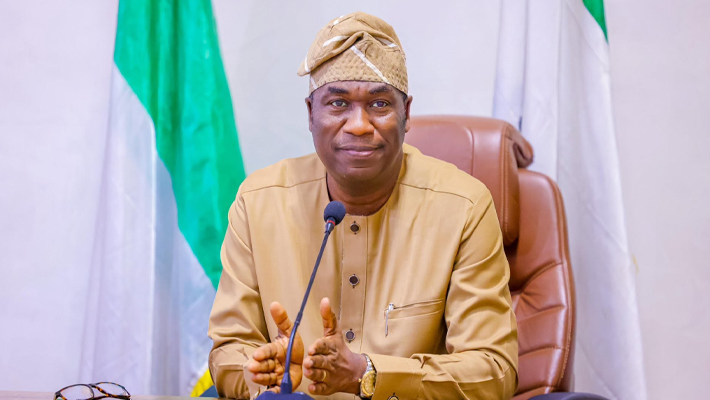
Lagos seeks stronger ties with Turkey to boost investment opportunities
Mr Hamzat described the longstanding relationship between Lagos and Turkish firms as productive.
NationWide
FG, NASS reiterate commitment to support roles of electricity regulators
Mr Babalola said the Electricity Act decentralises aspects of governance.

Economy
Flutterwave’s Fidelis Chiwara advocates stronger ecosystem collaboration at AT50 Market Open
Mr Chiwara stressed that Africa’s long-term opportunity lies in creating stronger connections between markets.

Heading 4
Ex-England captain, manager Kevin Keegan dies following battle with cancer
Mr Keegan’s death came over a month after he publicly announced for the first time that he was battling stage four cancer.


