

Alleged Defamation: SSS asks court to foreclose Sowore’s defence for allegedly frustrating trial
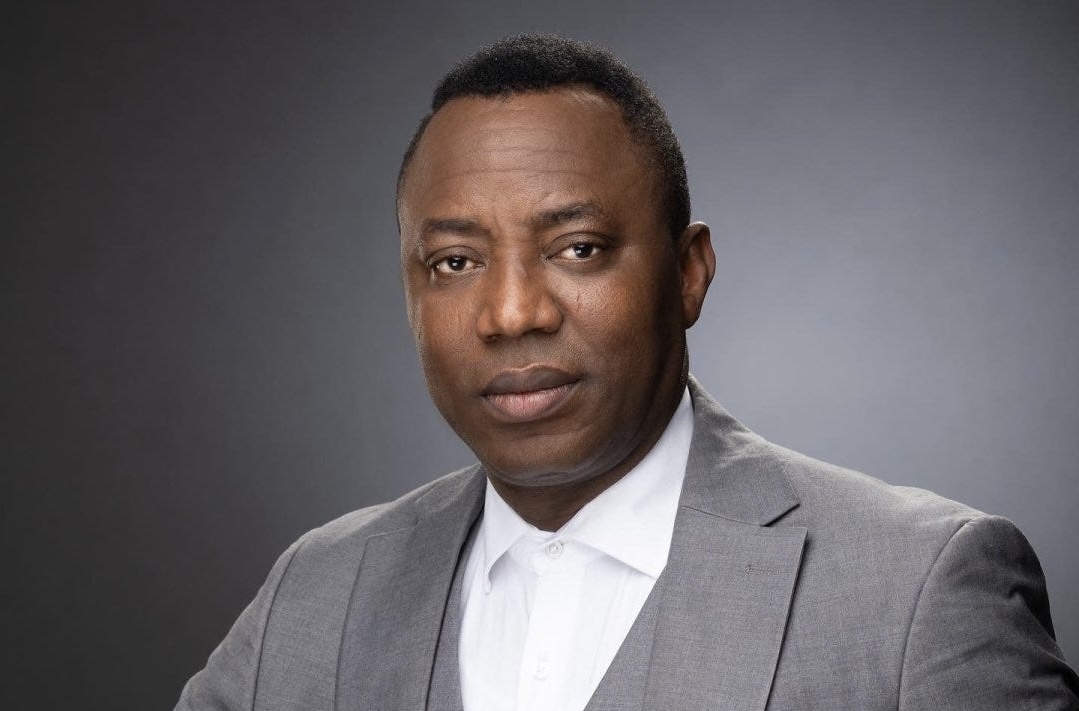
The State Security Service (SSS) on Monday asked the Federal High Court, Abuja Division, to foreclose Omoyele Sowore’s defence for allegedly frustrating his ongoing trial.
The SSS counsel, Akinloku Kehinde, SAN, made the application before Justice Mohammed Umar after Adeyinka Olumide-Fusika, SAN, lawyer to Mr Sowore, sought an adjournment in the matter.
When the case was called, Mr Olumide-Fusika informed the court that the matter was scheduled for continuation of defence.
He said he had been reliably informed that a witness was in court based on the subpoena they served on the Director-General of the SSS, Oluwatosin Ajayi.
“Unfortunately, it will not be possible for us to proceed,” Mr Olumide-Fusika said.
The lawyer said though he filed an application on July 22 requesting the judge to attest to some documents which he planned to use in leading the subpoenaed witness, he discovered a few minutes before the hearing commenced that the request had just been granted.
“We filed an application on 22nd July, 2026, and we were told that your lordship has not approved it.
“We only discovered that the court approved it on 27th July, a few minutes before the court began sitting.
“Obviously, the problem is not from your lordship; it is a registry issue. That is the predicament, my lord,” he said.
However, counsel to the SSS opposed the defence’s position, arguing that it was part of a dilatory tactic to keep the matter pending on the court’s docket.
He submitted that, at the last adjourned date, all parties agreed that a nominated officer from the DG of the SSS would appear in court to testify for the defence.
“That part of the agreement was kept in toto by the prosecution, and the essence of the witness being in court is to be cross-examined on Exhibit DW-D tendered on July 22 before this court.
“It is trite that when an application is made to the court in a case by the defence, it is the responsibility of the applicant to follow up,” Mr Kehinde said.
The senior lawyer, therefore, urged the court to foreclose Mr Sowore’s case, arguing that he was merely wasting the court’s time.
He submitted that where the court had repeatedly given opportunities which had been deliberately and persistently frustrated, the court is entitled to invoke its discretionary case management powers.
He argued that this would not amount to a breach of the constitutional right to fair hearing.
Relying on Section 36(4) and (6) of the 1999 Constitution (as amended), Mr Kehinde argued that the Constitution only guarantees an opportunity to be heard, and not an unlimited right to delay proceedings.
He also cited a 2011 Supreme Court decision between Segun Ogunsanya and the State to back his argument.
He submitted that the apex court held that deliberate attempts to stall a trial should not be allowed by the court.
He therefore urged the court to make a consequential order directing parties to file their final written addresses.
Responding, Mr Olumide-Fusika disagreed with the submission.
He argued that the prosecution had failed to address the facts placed before the court.
He accused Mr Kehinde of blaming every problem on the defence, including its own refusal to produce a subpoenaed witness.
He argued that if the defence truly intended to delay the proceedings, it would have insisted on calling the earlier subpoenaed witness.
Responding to the prosecution’s submission that the defence ought to have followed up on its application, he said they were not in a position to determine when the judge had signed the application since the communication would be through the registry.
He cited Sections four to 13 of the Evidence Act to back his argument.
Besides, Mr Olumide-Fusika added that if he had planned to delay proceedings, he wouldn’t have come to court since the court had already commenced its vacation.
“If he (Kehinde) doesn’t want to cooperate with me, and he wants us to be fighting,..” Mr Olumide-Fusika said when the judge interjected.
“Mr Fusika,” began Justice Umar.
“How can he say that I am using dilatory tactics?” Mr Olumide-Fusika responded.
At that point, Mr Kehinde stood up, saying, “I object to counsel’s vituperation against me. I respectfully ask that he be temperate. I am the oldest member of the Bar…”
The judge, who reminded Mr Olumide-Fusika that he had just come into the matter, said the defence has been delaying the case since March when the prosecution closed its case.
But Mr Olumide-Fusika said his calmness should not be taken for granted.
He said the prosecution should deal with the facts.
“What exactly are these alleged dilatory tactics?” he said.
Mr Kehinde then interrupted.
“My lord, he can’t be talking all the time; this court does not belong to him,” Mr Kehinde said.
“Does it belong to you? You behave like a persecutor.
“What is wrong with you; all you want is to jail him,” Mr Olumide-Fusika responded.
The judge, who was angry with the lawyers’ altercation, said he would not hesitate to refer any counsel to the appropriate disciplinary body if they continued.
“I have been on the Bench for 22 years. We have junior counsel here. This is not good.
“This should be the last time. If you are no longer interested in the case, you should say so.
“You cannot behave in my court in that manner.
“I am adjourning this matter. I am not in a position to continue hearing the case today,” Justice Umar said.
He consequently adjourned the matter until September 20 for continuation of the defence.
Shortly after adjournment, both counsel apologised to the court.
Mr Sowore is being prosecuted on allegations bordering on criminal defamation.
He was alleged to have made false claims against the person of President Bola Tinubu by referring to him as “a criminal” in a post he made on his “X” and Facebook accounts.
In response, the SSS charged Mr Sowore, the presidential candidate of the African Action Congress (AAC), with criminal defamation, cyberstalking, and incitement.
(NAN)

We have recently deactivated our website's comment provider in favour of other channels of distribution and commentary. We encourage you to join the conversation on our stories via our Facebook, Twitter and other social media pages.

More from Peoples Gazette

Agriculture
FG tasks ECOWAS on leveraging financing strategies for agroecology
The federal government has urged stakeholders in the agriculture and finance sectors in the West Africa region to leverage financing strategies to enhance agroecology practices

Politics
Katsina youths pledge to deliver over 2 million votes to Atiku
“Katsina State is Atiku’s political base because it is his second home.”
Sport
Fortune FA remain unbeaten as Idowu U-16 League records 19 goals
The victory lifted Heritage out of the relegation zone and boosted their hopes of turning around their campaign.

Agriculture
Kwara targets 1,000 cattle for artificial insemination Pub
The Director of TGB Farms, Ishola Peace, commended the government for extending the programme to the farmers.

Education
NLC opposes concession of King’s College, unity colleges
Mr Ajaero said the NLC endorsed protests against concessioning King’s College and other unity colleges.
States
So-Safe corps nabs interstate tricycle thief in Ogun
The state commander, Soji Ganzallo, commended the operatives of the corps for their persistence, professionalism and tactical efficiency.

Economy
Refinery IPO investors are at no risk; they will reap bountiful returns, says Dangote VP
Mr Devakumar said, “The Dangote Refinery is one of the most significant industrial investments ever undertaken on the African continent.”
Hot news Home top
NSCDC names 23 officers detained over Niger miners’ deaths; orders corps’ flag to fly at half-mast across commands
Mr Afolabi noted that Mr Audi pledged on behalf of the service to continue to keep the public abreast on the outcome of the investigation.


