


Northern leaders advised to curb almajirai menace
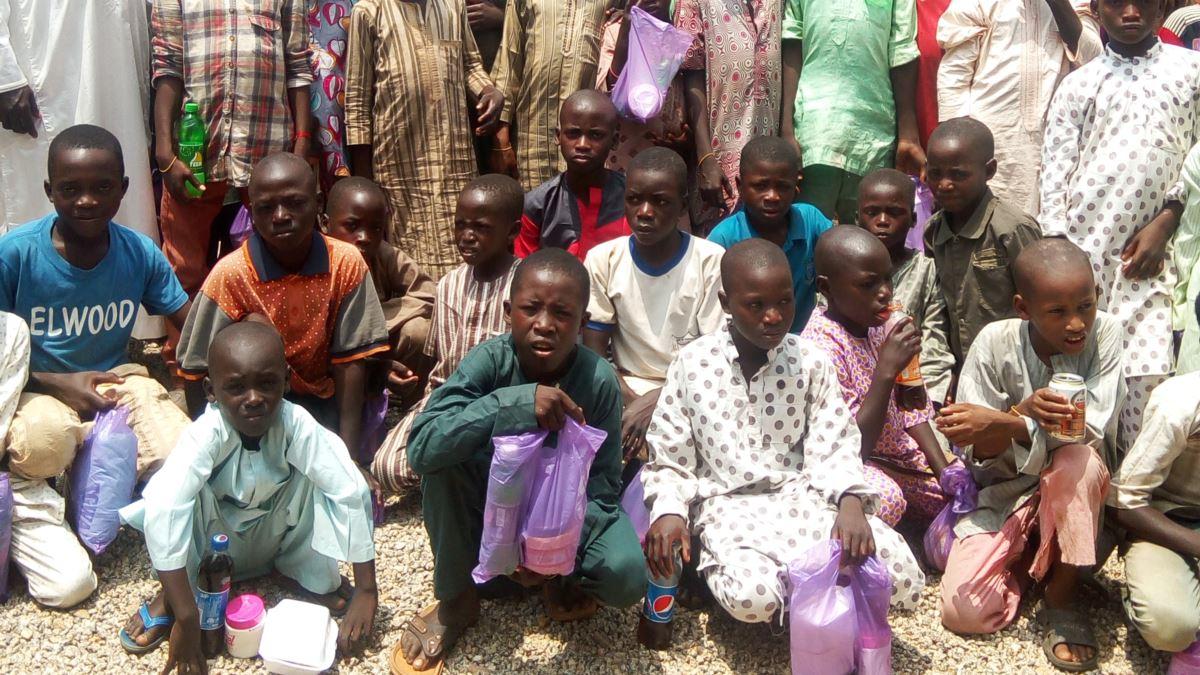
Secretary-General of the Committee of Vice Chancellors of Nigerian Universities (CVCNU), Andrew Haruna, on Wednesday called on northern leaders to urgently remove Almajiri children from the streets.
Mr Haruna warned that failure to address the problem would worsen insecurity in the region.
Mr Haruna made the call while presenting a paper titled, “Youth Empowerment as a Strategy for Preventing Violence, Extremism and Insecurity in Northern Nigeria,” at the Arewa Awareness Summit on Unity Against Insecurity organised by the Arewa Cohesion for Peace, Unity and Development Initiative (ACI) in Kaduna.
The university don said the North possessed the human and material resources to solve the Almajiri challenge but lacked the political will required to confront it.
According to him, leaving millions of children on the streets without education, care or opportunities poses a serious threat to the future of the region.
“If the North wants to survive, these boys must be taken off the streets. We have the capacity to do it. Let us stop blaming others and take responsibility for our children,” he said.
Mr Haruna said his recent visits to parts of Southern Nigeria showed a sharp contrast, noting that he did not encounter Almajiri children on the streets except those from the North.
He described the situation as a disturbing reflection of years of neglect and poor leadership.
“We are sending the wrong signal about ourselves. We cannot continue to abandon our children and expect to have a peaceful future,” he said.
The professor lamented that while lavish mansions continued to spring up across the region, millions of children remained homeless, hungry and without access to education.
He warned that poverty and exclusion were creating conditions that made vulnerable youths easy targets for recruitment into violent and criminal groups.
Mr Haruna, who recalled relocating from Borno State because of the Boko Haram insurgency, said many children had grown up knowing nothing but violence.
“How do you re-engineer the mind of a child who has spent his entire life witnessing bloodshed? That is the danger we face if we fail to act now,” he said.
He also narrated an incident in Keffi where an unemployed youth confronted a wealthy motorist over what he considered extravagant spending, saying it reflected growing frustration among young people.
According to him, the region is witnessing an increasing population of unemployed and hopeless youths trapped in what social scientists describe as the “waithood” period, where young adults are unable to secure jobs, establish families or achieve economic independence.
Mr Haruna attributed the situation to poor governance, inadequate educational opportunities and the failure to invest in human capital.
He said many of those now involved in banditry and other violent crimes were once children who had been denied access to education and meaningful livelihoods.
The academic criticised political leaders for failing to prioritise education, youth development and moral leadership, stressing that insecurity could not be addressed through military action alone.
He also expressed concern over what he described as the declining moral authority of both Christian and Muslim leaders to confront corruption, abuse of power and social decay because of persistent divisions.
Mr Haruna urged traditional rulers, religious leaders, governments and communities to work together in rebuilding trust, promoting education and creating economic opportunities for young people.
Quoting the late Islamic scholar, Usman Dan Fodio, he reminded leaders that public office was a sacred trust that should never be used for personal enrichment.
He also cited Nigeria’s 1970-1974 National Development Plan, saying its vision of a just, united and self-reliant nation remained relevant.
Mr Haruna appealed to Northern leaders to acknowledge past mistakes and take deliberate steps to secure the future of the region through investment in education, youth empowerment and responsible leadership.
“We should not lose hope. History is being written about us every day, and future generations will judge us by what we do today,” he said.
(NAN)

We have recently deactivated our website's comment provider in favour of other channels of distribution and commentary. We encourage you to join the conversation on our stories via our Facebook, Twitter and other social media pages.

More from Peoples Gazette

Agriculture
FG tasks ECOWAS on leveraging financing strategies for agroecology
The federal government has urged stakeholders in the agriculture and finance sectors in the West Africa region to leverage financing strategies to enhance agroecology practices

Politics
Katsina youths pledge to deliver over 2 million votes to Atiku
“Katsina State is Atiku’s political base because it is his second home.”

States
Three family members killed by gunmen in Plateau, says group
He stated that the aged mother had lost all her five sons to violent attacks.

Heading 4
Osun govt to sue EFCC over account freeze
Mr Adeleke, in a statement on Wednesday, said the state government recieved a letter from the anti-graft agency instructing the bank to freeze the account.

Heading 2
LNSA inaugurates first mechanical workshop to cut repair costs
The facility, located in Ijede, Ikorodu, is the first workshop established by the agency.

States
NANS gives Ogun govt 72 hours to rescue abducted polytechnic students
The student leader demanded increased security patrols.

Heading 2
COAS warns army personnel against drug, substance abuse
He said drug and substance abuse undermined unit cohesion and degraded operational effectiveness.

Education
AUN secures NUC approval for five postgraduate programmes
The approval followed a successful resource assessment by the commission.


