

Nigeria’s surging stablecoin inflow poses risks to CBN monetary control: IMF

Stablecoins: Promise, Risks, and Policy Choices for Emerging Markets
Remarks by Dan Katz, IMF First Deputy Managing Director, at the University of Cape Town, South Africa
August 7, 2026
As prepared for delivery
Good morning, and thank you, Deputy Vice-Chancellor, for the introduction. It is a great pleasure for me to be here at the University of Cape Town. This may be the region’s oldest university, but it is also one of the most forward-looking, with your Financial Innovation Hub.
As new technologies reshape the financial system, they raise new questions for policymakers. One that is becoming increasingly important is how to respond to the growing trend toward the tokenization of financial assets, from stablecoins and tokenized deposits to many other forms of—if not all—financial claims, including wholesale central bank reserves, and theoretical forms of money like retail central bank digital currencies.
Of these, stablecoins are the most mature class. Despite their still modest size, they have attracted outsized attention from policymakers. This is because they offer significant potential benefits, particularly by increasing competition in payments and financial services, while also carrying significant potential risks. Critically, in emerging markets, those benefits and risks are often magnified.
Today I want to focus on one consequence of stablecoins that is particularly important for emerging markets: more frictionless access to foreign currency and the implications of potential policy responses, including efforts to promote local-currency stablecoins.
I will draw on new work at the Fund to show that this risk is not the same everywhere. The impact of FX stablecoins on emerging markets depends on country circumstances: the strength of macro frameworks, whether currency substitution is already prevalent and in what form, the financial market structure, and the availability of local-currency stablecoins. Based on this analysis, I will present recommendations to help IMF members tailor their policy toolkits to these emerging challenges.
Ultimately, the goal is to improve outcomes for households and businesses. Even if stablecoin adoption falls short of some of the more bullish growth projections, competitive responses from incumbent financial institutions could still deliver lower costs and greater efficiency.
I. The Landscape: What We Know
First, let’s step back and take stock of the global stablecoin ecosystem today. Despite tremendous excitement, stablecoins remain modest in size relative to the financial system. The market capitalization of stablecoins nearly tripled between 2021 and 2025 but has remained relatively flat over the last year at around $300 billion. Nearly 99 percent of stablecoins are denominated in U.S. dollars. Reserves are largely held in short-term T-bills and reverse repos, although some issuers also use less liquid and riskier backing assets.
According to some sources, total stablecoin transaction volume exceeded $30 trillion in 2025, of which $6.1 trillion was cross‑border. However, the bulk of this activity remains within the crypto ecosystem, and much of it is driven by bots and algorithmic arbitrage. The Bank for International Settlements estimates that there were only $390 billion in payment-related stablecoin flows in 2025. This is in the context of a global cross-border payments market that is estimated at around one quadrillion U.S. dollars annually.
But this does not fully capture the potential of stablecoins. They are part of a broader trend toward tokenization. Many financial sector institutions are actively experimenting with tokenized deposits, money market funds, and securities, and central banks are exploring tokenizing the money they issue.
Together, these trends are reconfiguring settlement and risk management practices in the traditional financial system. This could cut reconciliation costs and enable programmability and atomic settlement. In some emerging markets, tokenization could also help leapfrog market development by reducing reliance on legacy systems and expanding access.
Increased competition in retail digital payments from stablecoins could bring benefits in areas such as cross-border payments by bringing down the cost of remittances. There is some evidence this is already happening. Forthcoming IMF research shows that the end-user cost of stablecoins can be significantly cheaper than the current average global remittance cost of 6.5 percent, which is even higher in many corridors linking African countries. However, these savings are not uniform. While network transfer costs can be lower, on- and off-ramp fees can be higher depending on the corridor. Additionally, differences in exchange rates using stablecoins relative to traditional channels (the ‘stablecoin premium’) can push the relative cost higher or lower.
Advances in artificial intelligence may also accelerate the adoption of stablecoins. Stablecoins’ programmability and settlement capabilities make them particularly well suited to a world of agentic AI, where agents transact with each other on behalf of users and businesses. These properties could give them a first-mover advantage over other financial instruments that have yet to adapt. This is why getting the global policy response right matters, not just for the stablecoin market, but for the future of the financial system—whatever form it takes.
II. What Stablecoins Mean for Emerging Markets
This brings me to the core of what I want to discuss. In theory, stablecoins can give users easier access to foreign currency, and in particular, U.S. dollar-denominated assets. For example, remittance beneficiaries could directly receive foreign currency assets in their digital wallets rather than the domestic currency assets they generally receive now. And as anyone can open a digital wallet, over time, access to FX holdings may become easier and could extend to broader use for local transactions.
II.A. The risk from local-currency stablecoins
Potential dollarization poses very important macroeconomic questions for emerging markets, which I’ll return to shortly. One seemingly straightforward way countries may seek to manage these pressures is by encouraging the development of local‑currency stablecoins.
The logic is appealing: if FX stablecoins are gaining traction, some jurisdictions might find it preferable to channel demand toward local-currency instruments by establishing well-calibrated domestic regulatory frameworks to enable their use. The IMF has developed and disseminated recommendations for how authorities can best unlock the potential benefits while mitigating key risks. Indeed, we are actively providing capacity development to our member countries in this area.
South Africa offers an interesting early example. Dollar-based stablecoins appear to have gained limited traction thus far, but Rand-linked stablecoins have seen even less demand. Although it is too early to draw firm conclusions, the divergence may suggest that users prefer dollar-linked instruments because they offer greater liquidity, stronger network effects, and are widely accepted across platforms and cross-border transactions.
Lower demand for local-currency stablecoins creates another problem that brings us back to the central risk that I want to cover today. Once a local-currency stablecoin exists on the same blockchain infrastructure as dollar stablecoins, conversion between the two becomes an on-chain transaction, meaning that depending on the use case, there may be a diminished need for traditional financial intermediaries.
The friction created by traditional financial intermediaries that currently gives authorities policy levers to manage capital flows could disappear. The on-ramp from local-currency to dollars moves from the regulated perimeter of banks and FX dealers to the on-chain perimeter: decentralized exchanges, liquidity pools, peer-to-peer swaps. Harder to monitor, harder to control.
In this way, local-currency stablecoins might even accelerate the adoption of FX stablecoins.
II.B. Dollarization Dynamics
So, for many of our member countries, domestic stablecoin growth presents a familiar force: dollarization. Many emerging markets have experienced episodes of financial dollarization, typically driven by high inflation, exchange rate volatility, institutional fragility, and weak policy credibility. This is not only a historical analogy. Recent IMF analysis confirms the pattern empirically: it is precisely in these environments where stablecoin inflows are larger.
The reasons are not difficult to understand. Households and firms use dollarization as a way to protect themselves from inflation and currency depreciation. Dollarization can also have the unintended effect of strengthening incentives for sound policymaking, as currency competition increases the costs of poor macroeconomic management.
But dollarization can have long-term macroeconomic consequences. While households benefit from access to dollars, once entrenched, dollarization tends to be highly persistent, even after the conditions that triggered it have subsided. Past mistakes and negative shocks can therefore carry very long-lasting costs, for example, by constraining monetary policy space.
What makes stablecoins different is the potential speed and scale at which these dynamics could unfold. In the past, currency substitution spread gradually, through physical cash holdings, domestic dollar deposits or offshore accounts. In theory, substitution via stablecoins could spread much faster: smartphones and messaging apps make access and adoption far easier, and stablecoins can reach countries where conventional dollar access is restricted entirely.
Capital flows could become more volatile, as stablecoins may make it easier to circumvent capital flow management measures (CFMs) that were designed for regulated intermediaries. In periods of stress, that could amplify outflows, creating pressure on exchange rates and, in some cases, triggering financial instability. If monetary policy transmission is impaired, this could create a downward spiral.
Even in the absence of major macroeconomic stress, large inflows into FX stablecoins can also generate deviations between the stablecoin price and the spot foreign exchange rate—resembling a parallel market—with measurable spillovers to conventional FX markets. Forthcoming IMF research shows that the cost of sending $200 using stablecoins varies between negative 2 percent to 8 percent, depending on the corridor. Why can someone get paid to send or receive a payment? Because in some markets, dollar stablecoins command a premium relative to official exchange rates. This suggests that there may be some latent demand for dollar stablecoins, which could be driven either by a repressed desire to hold dollar assets in the context of a distorted official exchange rate or by the utility users assign to easily access digital asset markets and services.
II.C. Dollarization in Different Country Contexts
Importantly, the magnitude of the risk of FX stablecoins is not uniform across countries and markets. Stablecoin adoption can either substitute for existing forms of dollarization or create incremental dollarization pressure. The extent of each of these forces will depend on each country’s circumstances, on existing levels and forms of dollarization, on the strength of macro frameworks, and on the design of CFMs. To understand the policy implications, we need to distinguish between which forms of dollarization stablecoins affect and how.
Highly Dollarized Economies
In economies that are already highly dollarized, stablecoins will likely serve mainly as a cheaper or more convenient digital alternative. As a result, the impact on overall foreign currency demand should be relatively limited. The extent of this substitution process depends on factors like the relative returns and utility of stablecoins. The macro impact is a shift in form, but not necessarily in level.
For physical dollars, substitution into stablecoins likely does not create significant macroeconomic risks. Indeed, the potential benefits—including providing greater utility and supporting de-shadowing of the economy—are disproportionate to the risks.
Where stablecoins draw funds from FX deposits, the implications can be more complex. The reserves backing the stablecoins are often invested abroad, in U.S. Treasury bills, rather than in the domestic economy. So even if total dollar holdings are unchanged, the intermediation channel shifts, with domestic banks potentially losing a funding source for FX lending. This could potentially tighten domestic credit conditions and increase the vulnerability of FX deposit funding, especially during periods of stress.
However, we have not yet seen clear evidence of actual disintermediation. For example, bank credit and deposits continue to expand at healthy levels in El Salvador despite its fully dollarized economy and dynamic digital asset ecosystem.
Economies With Limited Access to Dollars
The picture is different in less dollarized economies where access to foreign currency is constrained and macro frameworks are weak. In these economies, there can be significant repressed demand for dollars. As a result, it is easy to imagine an end state in which stablecoin penetration leads to a net increase in foreign currency holdings and higher dollarization levels.
But as with highly dollarized economies, the profile of risks will ultimately depend on the channels through which adoption occurs.
Even when economies have limited official access to dollars through the domestic financial system, there may still be large quantities of physical dollars in circulation. If stablecoins primarily serve as a substitute for this hard currency, the impact might be relatively limited, similar to the case of highly dollarized economies.
The implications may be more significant where households and businesses shift from domestic financial assets to stablecoins. In such cases, the channel of adoption becomes particularly important. Where adoption takes place through domestic intermediaries, regulatory and supervisory frameworks should bring these intermediaries within their scope to help preserve policy frameworks, including CFMs. As I mentioned earlier, it is critical to incorporate local-currency stablecoins into these frameworks given their potential role as an on-ramp to FX stablecoins. When foreign intermediaries play a role, cooperation with the hosting authority becomes increasingly important.
Once stablecoins are acquired through domestic intermediaries, users could move these assets into unhosted wallets that could pose an even greater challenge for authorities. Though the magnitude of adoption through these channels may be limited because of the lack of scale effects associated with centralized intermediaries, incentives to seek alternative stores of value could change during periods of high inflation or exchange-rate instability. In the case of widespread adoption, the lack of a clear legal entity with which supervisors can interact creates a very fundamental problem. Cross-border cooperation between the relevant authorities with some degree of influence over the relevant intermediaries would be essential, as would domestic enforcement efforts.
Open Economies with Strong Macro Frameworks
Finally, many emerging markets have a stronger track record based on sound macro frameworks paired with higher openness, efficient domestic payments systems and low dollarization levels. In these cases, foreign stablecoin adoption is likely to be more muted as there is limited repressed demand for dollar assets. These economies may still benefit from increased competition and lower costs in cross-border payments and macro financial risks would be lower relative to the other cases I discussed. Still, overall capital flow volatility may increase.
III. Policy Implications
So, what does this all mean for policymakers in emerging markets? Let me conclude with five suggestions for harnessing the competitive forces unleashed by stablecoin innovation while safeguarding monetary and financial stability:
First: strong macro fundamentals are essential. The best defense against unwanted currency substitution is sound macroeconomic policies and frameworks: credible monetary policy, sustainable fiscal positions, strong institutions, and well-functioning domestic payment systems. Where these are in place, demand for foreign-currency stablecoins is lower.
Second: close data gaps. The analysis I have just set out draws on a growing body of empirical evidence, but important blind spots remain. On-chain data is pseudonymous, while activity within exchanges, OTC markets, and custodial wallets is largely invisible. As a result, estimates of cross-border stablecoin flows rely heavily on assumptions that differ across methodologies. Policy tools depend on data. CFMs, for example, cannot be calibrated without knowing the volume and direction of flows. This is why the IMF, together with international partners under the G20 Data Gaps Initiative, is working to strengthen the measurement of digital assets by developing and disseminating international best practices.
At the same time, data collection should not wait for perfect regulation. The South African Reserve Bank (SARB) is a good example. It has compiled custody data and gained meaningful insights into the structure of the market, including the predominance of household holdings, by engaging directly with major crypto exchanges. But the exercise also revealed how much remains outside the statistical perimeter. The lesson is clear: without reporting requirements embedded in robust legal and regulatory frameworks, policymakers will continue to see only part of the picture. This is why the SARB’s draft Crypto Asset Manual is an important step forward.
Third: revise the policy toolkit to address the trade-offs that stablecoin innovation may pose. Existing CFMs were designed around traditional financial institutions. That is no longer sufficient. Comprehensive regulation, supervision, and oversight of crypto-asset activities is needed. That includes exchanges, on- and off-ramp providers, custodians, and payment platforms. Reporting requirements for these entities reduce data gaps and support monitoring on which effective CFMs depend.
Fourth: tailor policy responses to the specific channels of stablecoin adoption. Where stablecoins primarily substitute for existing FX holdings, the priority should be managing intermediation shifts and bank funding risks through traditional prudential tools. Where stablecoins expand dollar access beyond what existing frameworks allow, the priority should be to bring stablecoins into the regulatory perimeter by extending CFM controls to on- and off-ramps and on-chain exchange points—particularly where local-currency and FX stablecoins coexist on the same infrastructure. A one-size-fits-all response would risk over-regulating in one context and under-responding in the other.
Fifth: strengthen international cooperation. Stablecoins operate across jurisdictions, while regulation and supervision remain largely national. Unless there is effective cross-border cooperation, activity will simply migrate to jurisdictions with weaker oversight or into unhosted wallets outside the regulatory perimeter. As recent reviews by the FSB and IOSCO highlight, there are still gaps in existing cooperation mechanisms. Addressing these will be critical for the effective supervision of global stablecoins and the service providers that facilitate access to them.
IV. The IMF’s Role
The IMF supports member countries across all these dimensions.
Through our surveillance and analytical work, we are deepening the evidence base on transmission channels and dollarization dynamics.
Through our capacity development, we help countries adapt regulatory frameworks and policy toolkits, while also supporting efforts to enhance cross-border payments by improving existing infrastructures, with a strong focus on countries in the Southern African Development Community.
Through the G20 Data Gaps Initiative, we are advocating for embedding reporting in regulation.
And through our convening role, we help foster dialogue and cooperation across jurisdictions.
It is entirely possible that stablecoins may never become a much larger force in the international financial system. Other financial instruments and institutions may ultimately outcompete them by adopting tokenization or other technologies. In that sense, stablecoins could become victims of their own success.
Ultimately, households and businesses can be the winners, benefitting from lower costs and greater competition. It is up to policymakers to help make that possible by getting the policy framework right: creating an environment where competition and innovation can flourish without undermining macroeconomic and financial stability.
Thank you very much.

We have recently deactivated our website's comment provider in favour of other channels of distribution and commentary. We encourage you to join the conversation on our stories via our Facebook, Twitter and other social media pages.

More from Peoples Gazette

Agriculture
FG tasks ECOWAS on leveraging financing strategies for agroecology
The federal government has urged stakeholders in the agriculture and finance sectors in the West Africa region to leverage financing strategies to enhance agroecology practices

Politics
Katsina youths pledge to deliver over 2 million votes to Atiku
“Katsina State is Atiku’s political base because it is his second home.”

Africa
Guterres demands Africa’s minerals create jobs, backs permanent UN seats
António Guterres has demanded an end to the plundering of Africa’s mineral resources, insisting the continent’s wealth must create jobs and prosperity for Africans.
Economy
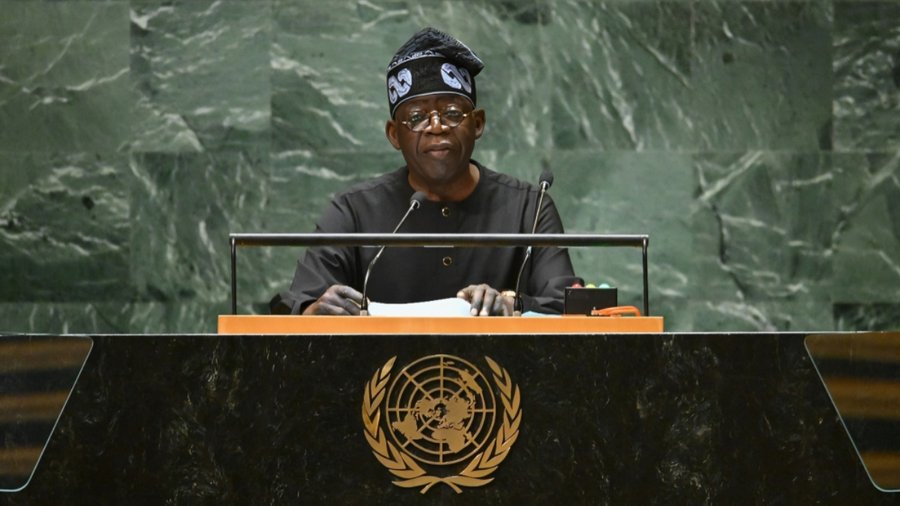
Nigeria push for end of exploitation of Africa’s mineral resources at UNGA81
President Bola Tinubu has called for a fresh continental push to end the exploitation of Africa’s critical mineral resources.

Heading 4
Lawyer Ikeni Mbako-Allison suspended after being found guilty of harassing woman in UK
“Ikeni Mbako-Allison, a barrister, behaved in a way which is likely to diminish the trust and confidence which the public would place in him or in the profession,” the BSB said.

Abuja
Dangote Refinery: Abuja motorists, commuters decry delay in petrol price cuts
Motorists and commuters across Abuja have decried petrol stations’ failure to reduce petrol prices following the Dangote Refinery’s latest N25 per litre cut.

Anti-Corruption
Crown Medical Solutions, owners reach agreement with U.S. govt over fraudulent billing scheme
Crown and its owners, Michelle and Philanzo King, have agreed to pay $825,000 to resolve allegations of submitting false claims to Medicare for payment.

World
UK govt charges Vincent ‘Bajinya’ Brown with crimes linked to Rwandan genocide
The UK police, in a statement on Monday, said Mr Brown was the first to be charged in the UK over a link to the 1994 genocide against the Tutsi in Rwanda.


