

WPC’s date clash with African Energy Week deserves a proper explanation
Scheduling the 2026 World Petroleum Congress almost directly against Africa’s flagship energy gathering risks forcing governments and industry leaders into an unnecessary choice—and raises questions about how seriously the global energy establishment treats African institutions.
There are scheduling conflicts, and then there are scheduling decisions so consequential that they require an explanation. The decision to hold the 25th WPC Energy Congress in Riyadh from October 11 to 15, 2026, falls into the second category.
Those dates place one of the world’s major petroleum gatherings almost directly against African Energy Week, scheduled for October 12–16 in Cape Town.
Four of the five days overlap.
For an industry that constantly speaks about collaboration, partnership, and bringing producing regions into the global energy conversation, this is an extraordinary outcome.
It means ministers, national oil company executives, international energy companies, financiers, service companies and senior policymakers with interests spanning Africa and the Middle East may have to choose between Riyadh and Cape Town.
They should never have been put in that position. And WPC Energy should explain how they were.
This is bigger than two conferences
It would be easy to describe the controversy simply as an unfortunate diary clash. That understates its significance.
African Energy Week has developed into an important meeting point for governments, energy companies, financiers and investors seeking opportunities across Africa’s oil, gas, power and emerging energy industries.
The WPC Energy Congress operates on a considerably broader global stage and carries decades of institutional history.
Precisely because WPC occupies that position, greater—not less—consideration should be expected when its calendar intersects with major regional gatherings.
No conference possesses proprietary rights over a week in October.
But international energy diplomacy depends on coordination.
Major conferences compete for many of the same people: energy ministers, chief executives, national oil company heads, financiers, regulators and technical specialists whose calendars are often fixed months ahead.
Placing two major energy events aimed partly at the same constituency almost completely on top of one another therefore has foreseeable consequences.
Africa should not simply be expected to absorb them.
Who decided these dates?
This is where WPC needs to provide clarity. The Congress is being hosted in Riyadh. That means responsibility needs to be examined carefully rather than lazily assigned.
Was October 11–15 proposed by WPC Energy? Was it determined primarily by venue availability? Did the Saudi hosts participate in selecting the dates? What alternative windows were examined? And, critically, what consideration was given to the existing international energy calendar—including African Energy Week?
These are reasonable questions.
There may be perfectly legitimate logistical explanations for the decision. Major congresses involving governments, companies and thousands of delegates are enormously complicated to schedule.
But complexity cannot become a substitute for accountability. If these were genuinely the only viable dates, WPC should say so and explain why. If alternatives existed, the industry deserves to know why this particular week prevailed.
Saudi Arabia should also clarify its role
It would be premature to turn this into an accusation that Saudi Arabia deliberately targeted an African conference.
There is no public evidence establishing such a motive. That distinction is important. But Riyadh cannot be treated as entirely incidental either.
Saudi Arabia is hosting the WPC Congress and is one of the most influential countries in the international petroleum industry. Its economic engagement with Africa has also been expanding.
The Kingdom therefore has every interest in ensuring that an event it hosts strengthens rather than inadvertently complicates its relationship with African energy stakeholders.
If Saudi authorities had no substantive role in choosing the dates, saying so would immediately clarify responsibility. If they participated in the decision, they should explain what consideration was given to the consequences for African participation.
Either answer would be preferable to ambiguity.
African executives cannot be in two cities
The practical problem is obvious.
Consider an African petroleum minister expected in Riyadh for high-level discussions but also central to meetings taking place in Cape Town. Or the chief executive of an African national oil company courted by investors at both conferences.
Or an international major operating across several African markets whose senior executives would ordinarily participate in both gatherings. Or an African development financier trying to engage governments, operators and project developers across the two platforms.
They cannot fully participate in both.
Riyadh and Cape Town are separated not merely by geography but by travel time, immigration requirements and the demands surrounding senior-level international conferences.
Splitting delegations is possible. Splitting decision-makers is considerably harder. The result could therefore be weaker participation in both events. That makes the scheduling decision self-defeating.
But there is a more uncomfortable question
The real controversy is not simply logistical. It concerns institutional weight.
Africa has spent years arguing that it should no longer be treated merely as a location from which energy resources are extracted while the important conversations about capital, technology, markets and policy take place elsewhere.
African governments have demanded greater control over their energy development. African institutions have built their own investment forums. African companies and national oil corporations are taking larger positions in assets previously dominated by international operators. And global institutions repeatedly say they want stronger African participation.
That rhetoric creates obligations. Respect for African institutions cannot exist only when convenient. An African conference with an established constituency should not automatically become subordinate because a larger global organisation needs space on the calendar.
This is not an argument for preferential treatment. It is an argument for parity. Would WPC knowingly schedule its flagship Congress directly over another major international petroleum gathering considered strategically indispensable to the global industry?
That is the uncomfortable benchmark against which this decision will inevitably be judged.
Africa should not automatically be the one that moves
Calls may emerge for one of the organisers to change dates. If that happens, the assumption should not automatically be that African Energy Week must move because WPC is larger.
Size is not a principle of international cooperation. Nor should institutional prestige confer an automatic right of way.
Changing the dates of an established conference carries financial and logistical consequences: venue contracts, hotel bookings, speaker commitments, sponsorship programmes, exhibition arrangements, government schedules, travel plans and media partnerships.
Those costs are real. The organisation responsible for creating the later conflict should bear a substantial responsibility for resolving it.
That principle should apply irrespective of whether the affected conference is being held in Cape Town, Houston, Abu Dhabi or Singapore.
WPC now has an opportunity
This dispute need not deteriorate into an Africa-versus-Saudi Arabia confrontation. That would be unnecessary and probably counterproductive. There is a simpler solution: transparency and engagement.
WPC Energy should explain how the dates were chosen and whether alternatives remain possible. The Saudi hosts should clarify their involvement. And the organisers of both events should explore whether the collision can still be resolved.
But what should not happen is silence followed by an expectation that African stakeholders simply adjust. The international energy establishment has spent years talking about Africa becoming a more consequential participant in global energy affairs.
That proposition is now being tested in a surprisingly elementary place: the calendar. Africa cannot simultaneously be described as central to the future of global energy and treated as peripheral when major institutional decisions are made.
Four overlapping days may appear like a scheduling problem. They are increasingly looking like a question of respect.
Onome Amawhe is the lead consultant at Africa Executive, a media consultancy specialising in editorial strategy, executive content, corporate publishing, and special reports. He writes and advises on energy, infrastructure, and policy across Africa.

We have recently deactivated our website's comment provider in favour of other channels of distribution and commentary. We encourage you to join the conversation on our stories via our Facebook, Twitter and other social media pages.

More from Peoples Gazette

States
Independence: NBA urges Nigerians to expect better future
The NBA said that ordinary Nigerians should be deriving benefit from the subsidy removal rather than hardship.

Agriculture
FG tasks ECOWAS on leveraging financing strategies for agroecology
The federal government has urged stakeholders in the agriculture and finance sectors in the West Africa region to leverage financing strategies to enhance agroecology practices

Politics
Katsina youths pledge to deliver over 2 million votes to Atiku
“Katsina State is Atiku’s political base because it is his second home.”
States
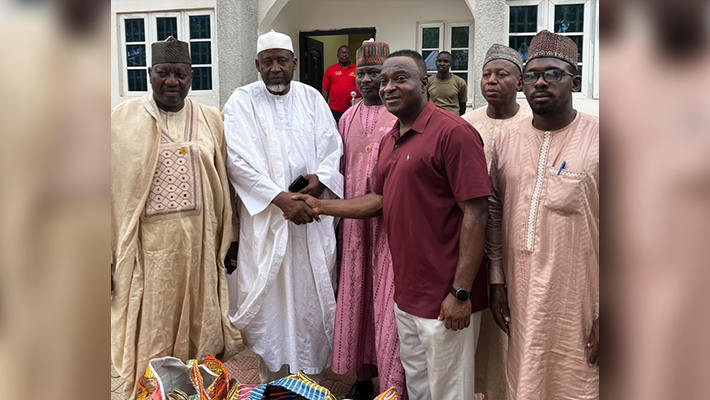
Sokoto govt donates N38 million, grains to families of fallen heroes
The Sokoto government donated N38.25 million and bags of grains to the families of 24 fallen soldiers and 57 injured personnel in recognition of their sacrifices in service.
Rights
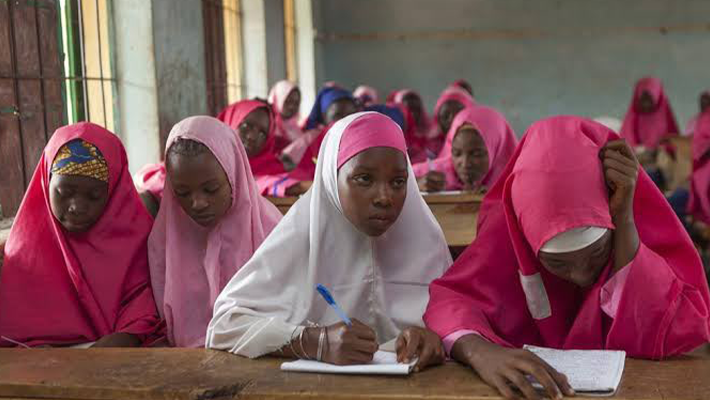
Kano residents seek end to child marriage, improved access to education
Kano residents have called for an end to child marriage, improved access to education and stronger protection of girls to secure their rights and future.
Economy
World Bank mobilising $6 billion for Nigeria targeting agriculture, MSMEs, 850,000 jobs
AGROW is expected to mobilize approximately $220 million from agribusiness firms and a further $22 million from certified seed producers.
Diaspora
U.S. report identifies Nigerians as most trafficked persons in Ghana
The U.S. Department of State also upgraded the West African country to Tier 1 in its 2026 Trafficking in Persons Report.
Rights
UN chief urges member states, others to scale up investment in girls
“Together, let us defend the right of all girls to a childhood, and ensure every daughter, every sister, grows up free to shape her own future,’’ he said.

Rights
CJN urges judges to mentor younger ones
The Chief Justice of Nigeria has urged senior judges to mentor junior judicial officers to ensure a seamless transfer of knowledge in the best interest of justice.


