

How Kaduna communities fight erosion with grassroots initiatives
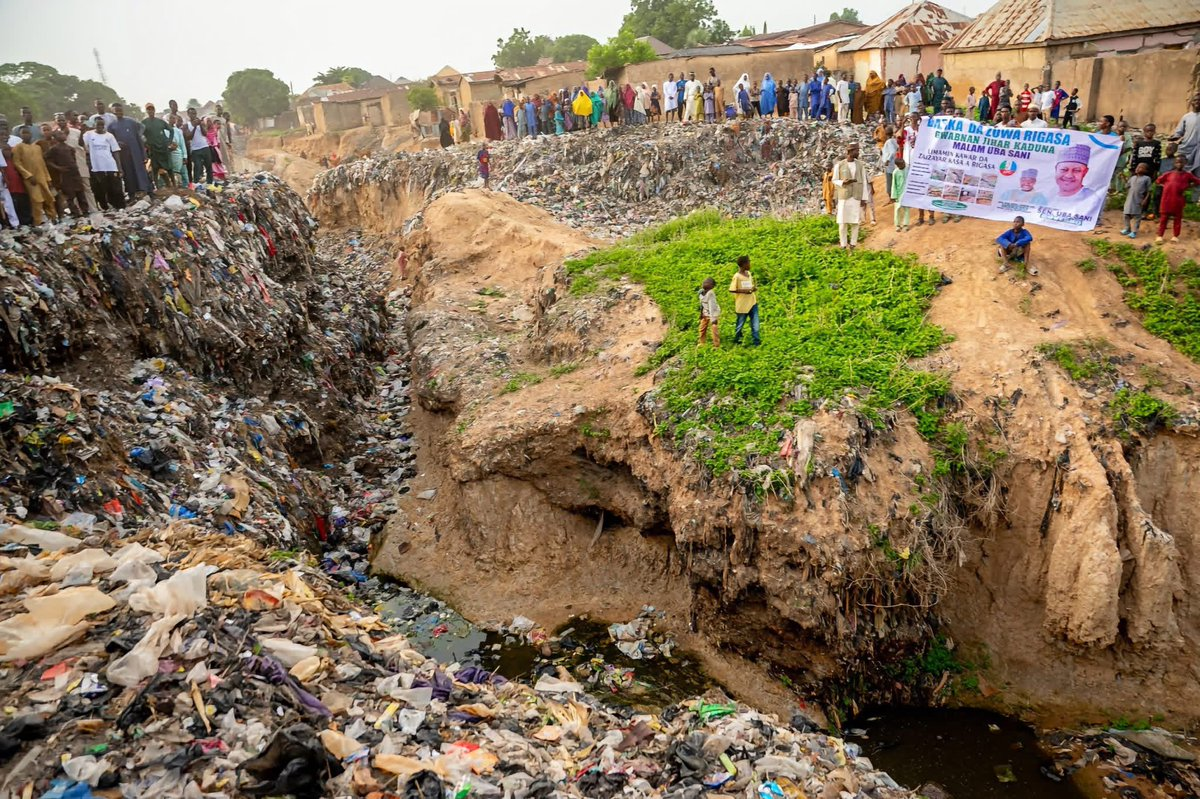
The rainy season brings a mix of relief and anxiety for residents of Rigasa in Kaduna state. While downpours replenish vital water sources and boost local farming, heavy storms renew constant fears of devastating floods, crumbling roads, ruined homes, and rapidly growing gullies.
For years, residents have responded to the threat through community-led initiatives, including clearing blocked drainage channels, removing refuse from waterways, filling small erosion channels and mobilising neighbours when heavy rainfall threatens vulnerable areas.
However, residents say the growing scale of erosion has made it increasingly difficult for communities to cope without major government intervention.
Asmau Sadiq, a resident of Rigasa, said erosion had affected homes and access roads in the community over the years.
“Erosion has taken away our houses and access roads over the years. We have suffered for years, but I believe this government intervention will finally bring lasting relief.
Another resident, Sadiq Lawal, said heavy rainfall often left families living near erosion channels anxious.
“We are always worried when it starts raining. You don’t know what will happen when the rain becomes heavy,” stated Mr Lawal.
Mr Lawal said a lasting solution would give residents greater confidence and security.
“It will protect our homes and our future,” he said.
The experiences of the residents reflect a wider environmental challenge confronting several communities across Kaduna state.
Uncontrolled storm water, blocked drainage systems, indiscriminate waste disposal and loss of vegetation have contributed to flooding and gully erosion in some areas, threatening roads, houses, farmlands and other infrastructure.
In Rigasa, residents say their response to the challenge began long before the arrival of major erosion-control projects.
Community members often identify areas where erosion is developing and mobilise neighbours to fill smaller channels before they become wider.
They also organise sanitation activities and discourage residents from dumping refuse into waterways.
The district head of Rigasa, Aminu Idris, said the community had endured the effects of gully erosion for many years.
“During the rainy season, we lose farmlands, houses, and sometimes lives because of erosion. This intervention gives us hope,” he said.
He, however, noted that community initiatives had limitations and could not substitute for large-scale engineering interventions.
The development has attracted increased government attention with the commencement of a N34 billion flood and gully erosion control project along the Rigasa-Tudun Wada corridor.
The 17.8-kilometre intervention is expected to address persistent flooding and erosion while protecting homes, roads and other infrastructure.
The Kaduna government also paid about N2 billion in compensation to nearly 1,000 residents affected by the project.
“This government has promised that we will not demolish anyone’s property until we have paid adequate compensation.
“That is why we paid compensation worth N2 billion today to about 1,000 people whose houses will be affected by the project. As a government, we have promised that the common man will not be short changed in any manner,’’ Governor Uba Sani said.
For residents, the intervention represents an opportunity to move from temporary measures to a permanent solution.
“We want a permanent solution. We want to be able to sleep when it rains without worrying about our houses,” Mr Lawal said.
Environmental experts, however, say government infrastructure alone cannot completely address erosion. They argue that residents must also take responsibility for protecting drainage systems and avoiding activities that worsen soil degradation and flooding.
A 2025 study on gully erosion in Kaduna South council area identified environmental and socio-economic factors among those contributing to the formation and expansion of gullies.
The findings underscore the importance of combining engineering solutions with behavioural change and community participation.
Tree planting, regular sanitation exercises, proper waste disposal and protection of natural waterways are some of the measures communities can adopt.
Community leaders also have an important role to play by mobilising residents, identifying vulnerable locations and drawing the attention of government agencies to emerging erosion threats.
Environmentalists say residents are often the first to notice when a drainage channel becomes blocked or when rainwater begins to create a new erosion path.
They stress that such local knowledge can complement professionally designed erosion-control projects.
Rapid population growth and development in densely populated communities have increased pressure on natural drainage routes.
Experts therefore recommend integrated erosion-control measures involving proper urban planning, functional drainage systems, vegetation restoration, responsible waste disposal and regular maintenance.
For Mr Lawal, residents are willing to support government efforts to ensure that the project achieves its objective.
“We are ready to support the government; we want the project to succeed because it is about our homes, our children and our future,” Mr Lawal said.
Mr Lawal called for continued cooperation between residents and government agencies, saying the community had learnt from experience that early action was better than waiting for erosion to cause major damage.
The Rigasa experience highlights the importance of grassroots participation in environmental protection.
Although communities may lack the resources and technical capacity to construct major erosion-control infrastructure, their role in sanitation, early detection, awareness creation and maintenance remains crucial.
The major challenge, experts say, is ensuring that such efforts are sustained beyond the rainy season.
They recommend regular environmental awareness campaigns, early-warning mechanisms, tree planting programmes and routine maintenance of drainage and erosion-control infrastructure.
For residents who have lived with erosion for years, the desired outcome remains simple.
Combating erosion in Kaduna has become a collaborative effort involving the government, technical experts, and local citizens.
Ultimately, observers say the programme’s success will be judged not just by built infrastructure, but by its ability to safeguard homes, maintain open roads, protect agricultural land, and alleviate community fear during heavy downpours.
(NAN/Maryam Ahmadu-Suka)

We have recently deactivated our website's comment provider in favour of other channels of distribution and commentary. We encourage you to join the conversation on our stories via our Facebook, Twitter and other social media pages.

More from Peoples Gazette

States
Independence: NBA urges Nigerians to expect better future
The NBA said that ordinary Nigerians should be deriving benefit from the subsidy removal rather than hardship.

Agriculture
FG tasks ECOWAS on leveraging financing strategies for agroecology
The federal government has urged stakeholders in the agriculture and finance sectors in the West Africa region to leverage financing strategies to enhance agroecology practices

Politics
Katsina youths pledge to deliver over 2 million votes to Atiku
“Katsina State is Atiku’s political base because it is his second home.”

States
Police rescue 29 kidnap victims, arrest 34 foreigners in Benue
The commissioner also disclosed that the command was investigating cases of child abuse, homicide, cult-related violence and defilement.

Politics
2027: Uzodimma launches door-to-door campaign for Tinubu
Mr Uzodimma said the state resolved to lead the crusade after carefully assessing the president’s achievements and the need for continuity.

Diaspora
U.S. authorities deport Prince David Nwabueze convicted of robbery, marijuana possession
A statement by the DHS on Tuesday listed Mr Nwabueze among the worst illegal aliens who have been removed to third countries.

Showbiz
‘Don’t forget your children and me,’ late Toluwasings’ wife says at night of tributes
The event venue, Jogor Centre, Ibadan, was filled with fans and colleagues dressed in white to celebrate the young gospel artiste.

Economy
Data governance gaps can make capital costlier for African firms: NGX
Mr Popoola said businesses with reliable data, strong controls and resilient systems are better positioned to earn investors’ confidence.
Politics
2027: Parties’ high nomination fees preventing us from contesting elections, PWDs say
Mr Zango said most political parties did not provide a platform for persons with special needs during primary elections and appointments.


