


5.2 million nomadic children remain out of school: NCNE
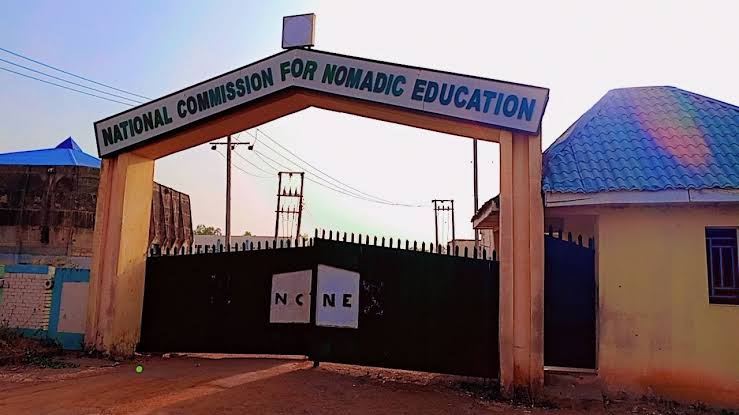
The National Commission for Nomadic Education (NCNE) says at least 5.2 million children from nomadic communities remain out of school nationwide.
Umar Ardo, director of extension education and skills development, disclosed this shortly after a stakeholders’ engagement and advocacy visit organised by the National Commission for Almajiri and Out-of-School Children Education on Monday in Kaduna.
Mr Ardo represented Bashir Usman, the commission’s executive secretary, at a high-level advocacy event on reducing the number of out-of-school and almajiri children.
He said the affected children included those of nomadic pastoralists, migrant fishermen and migrant farmers whose lifestyles limited access to conventional schools.
According to him, occupational mobility, climate change and other challenges have contributed significantly to the exclusion of nomadic children from formal education.
He said the commission was established to provide basic and functional education to disadvantaged and marginalised groups across the country.
Mr Ardo said the commission was working with state governments and development partners to reduce the number of nomadic out-of-school children.
He said recent research conducted by the commission in six states and the Federal Capital Territory (FCT) identified more than 61,000 nomadic out-of-school children in Jigawa, Gombe, Niger, Enugu, Cross River and Oyo, as well as the FCT.
Mr Ardo said urgent measures were required to address the challenge, particularly through alternative learning pathways suited to nomadic communities.
He identified the Accelerated Basic Education Programme (ABEP) as an approach that could help children complete basic education in a shorter period.
According to him, the programme requires adequate funding, trained teachers, infrastructure, facilitators and appropriate curriculum development.
He said conventional six-year primary education could be complemented with condensed programmes that provide equivalent learning outcomes within three years.
Mr Ardo said such programmes would enable learners to progress to secondary education or acquire relevant vocational skills.
He said the commission was developing strategies with states, including Kaduna, to establish learning centres closer to nomadic communities.
The director stressed the importance of reliable data in identifying the location and educational needs of nomadic children across the country.
He said available data would help governments engage parents, communities, local authorities and other stakeholders in bringing children back to learning.
Mr Ardo said education remained a collective responsibility involving federal, state and local governments, alongside non-governmental organisations.
He urged stakeholders to use available data to design interventions that reflected the peculiar circumstances of nomadic communities.
The director said children who could not proceed to secondary education should receive vocational training relevant to their communities and interests.
He listed livestock rearing, fishing and farming among skills that could be developed into sustainable livelihoods for nomadic learners.
Mr Ardo said combining education with vocational skills would enable beneficiaries to become self-reliant and potentially create employment opportunities for others.
He said the approach would help bridge educational gaps while preserving the productive skills and occupations of nomadic communities.
Mr Ardo expressed optimism that stronger collaboration among governments and stakeholders would significantly reduce the number of nomadic children excluded from education.
(NAN)

We have recently deactivated our website's comment provider in favour of other channels of distribution and commentary. We encourage you to join the conversation on our stories via our Facebook, Twitter and other social media pages.

More from Peoples Gazette

Agriculture
FG tasks ECOWAS on leveraging financing strategies for agroecology
The federal government has urged stakeholders in the agriculture and finance sectors in the West Africa region to leverage financing strategies to enhance agroecology practices

Politics
Katsina youths pledge to deliver over 2 million votes to Atiku
“Katsina State is Atiku’s political base because it is his second home.”

States
Man slumps, dies in Ondo
Mr Jimoh urged members of the public to contact the nearest police station for useful information.

Africa
Zambia shuts courts ahead of election appeal deadline
Under Zambian law, any challenge to the election results must be filed within seven days.

States
Gov Aiyedatiwa flags off 2.38km flyover project in Akure
Mr Aiyedatiwa described the project as a strategic intervention.

World
India targets $44 billion space economy by 2033
Mr Shekhawat said the sector’s growth should not be measured solely by economic value.

States
Ondo speaker hails Gov Aiyedatiwa over ex-lawmakers’ severance pay
Mr Oladiji said the payment extended to past chairmen and members of the Ondo State House of Assembly Service Commission.

World
Trump govt proposes fresh H-1B visa fee hike to more than $100,000
Trump’s administration has proposed a $103,265 fee for new H-1B visas for highly skilled foreign workers.


