


FG reviews agricultural land, soil policy to achieve national food security

The federal ministry of agriculture and food security, on Wednesday, began a regional consultation on reviewing Nigeria’s Agricultural Land and Soil Management Policy.
The two-day North-West zonal workshop in Kano seeks stakeholders’ contributions towards developing a sustainable framework for managing agricultural land and soil resources.
Olanipẹkun Oshadiya, director, Agricultural Land and Climate Change Management Services, said the review was crucial to achieving national food security.
Mr Oshadiya, represented by his personal assistant on gender and innovation, Wasiu Oyediran, described land and soil as the bedrock of Nigeria’s food system.
He said soil productivity and sustainability were critical to increasing food production, improving livelihoods, protecting the environment and advancing national development.
According to him, agricultural resources face growing threats from degradation, erosion, nutrient depletion, deforestation, climate change and population growth.
He also cited urban expansion and competing land demands among factors undermining the sustainable management of Nigeria’s agricultural resources.
Mr Oshadiya said the consequences were already evident in declining soil fertility, reduced productivity and farmers’ increased vulnerability to climate-related shocks.
He added that soil organic matter loss, erosion and desertification were further threatening the country’s agricultural productivity and food security.
“If soil quality deteriorates, agriculture will inevitably suffer,” Oshadiya said, warning of wider consequences for food availability and industrial development.
“A decline in agriculture means a lack of food for our citizens, insufficient raw materials for industries and a deficit in commodities for foreign exchange,” he added.
He said Nigeria could not afford to maintain the situation or continue relying on food imports for its estimated 230 million population.
Mr Oshadiya said the review would go beyond amending an existing document to establish an inclusive, science-driven and actionable framework.
He said the framework must address current challenges while preparing the agricultural sector for emerging threats to land and soil resources.
He urged stakeholders to prioritise sustainable soil management, climate-smart agriculture, land restoration, governance and land-use planning.
He also identified soil information systems, research, innovation, financing and investment as critical areas requiring attention under the revised policy.
Mr Oshadiya said the policy should promote practices that restore soil fertility, improve organic matter and strengthen agricultural systems against climate-related shocks.
These, he said, included droughts, floods, extreme temperatures and other challenges increasingly affecting farming communities across Nigeria.
He stressed stronger coordination among the federal, state and local governments, traditional institutions, communities, research institutions, development partners and the private sector.
According to him, reliable data on soil characteristics, land capability, degradation and suitability would support evidence-based agricultural planning.
He said the ministry was developing systems that would provide soil data and digital advisories at the Local Government Area level.
The system, he explained, would enable farmers to access information on soil pH, organic matter and appropriate fertiliser recommendations for their farms.
Mr Oshadiya said the ministry was integrating the National Fertiliser and Soil Health Strategy into the ECOWAS Regional Fertiliser Hub.
He also cited collaboration with the Bill and Melinda Gates Foundation on the GP Soil Matters initiative in Nigeria.
The ministry, he added, was providing modern laboratory equipment across 12 states to strengthen soil testing and management.
Mr Oshadiya said soil-testing laboratories would be revitalised across all 36 states and the Federal Capital Territory.
He added that Agricultural Development Programme agents would receive retraining in soil health diagnostics to improve extension services.
The director said the ministry remained committed to making the revised policy farmer-centred, affordable, locally appropriate and gender-responsive.
He said the policy would ensure accessibility for smallholder farmers while supporting the development and expansion of commercial agriculture.
Joshua Arogunyo, country director, Soil Values Programme, said the initiative would work with Nigerian institutions to strengthen soil management.
He said soil management must become an integral component of agricultural development and national food security.
Sanusi Mohammed-Gaya, director, Centre for Dryland Agriculture, Bayero University, Kano, described the consultation as timely.
Mr Mohammed-Gaya said climate change and growing pressure on agricultural resources made effective soil management increasingly important.
He urged stakeholders to ensure that the workshop’s recommendations translated into practical interventions capable of benefiting farmers.
The Kebbi State permanent secretary, ministry of agriculture, Faruk Sarki, commended the federal government for initiating the policy review.
Sarki, who spoke on behalf of North-West states, said agriculture remained central to the region’s economies and livelihoods.
He called for policies capable of strengthening agricultural resilience and promoting sustainable land management across the region.
Jibrin Mohammed Jibrin, president, Soil Science Society of Nigeria, also stressed sound soil management as essential to sustainable food production.
James Jayeoba, lead consultant, NALSMP, presented an overview of the policy development process, objectives and expected outputs.
Mr Jayeoba also led discussions on agro-ecological, land and soil zones, focusing on priorities and local realities.
Representatives of agriculture commissioners from Kaduna, Kano, Katsina, Jigawa, Zamfara, Kebbi and Sokoto attended the workshop.
Farmers’ organisations, AFAN, Sasakawa Africa Association, small-scale farmers and other stakeholders also delivered goodwill messages during the consultation.
(NAN)

We have recently deactivated our website's comment provider in favour of other channels of distribution and commentary. We encourage you to join the conversation on our stories via our Facebook, Twitter and other social media pages.

More from Peoples Gazette

Agriculture
FG tasks ECOWAS on leveraging financing strategies for agroecology
The federal government has urged stakeholders in the agriculture and finance sectors in the West Africa region to leverage financing strategies to enhance agroecology practices

Politics
Katsina youths pledge to deliver over 2 million votes to Atiku
“Katsina State is Atiku’s political base because it is his second home.”
Abuja
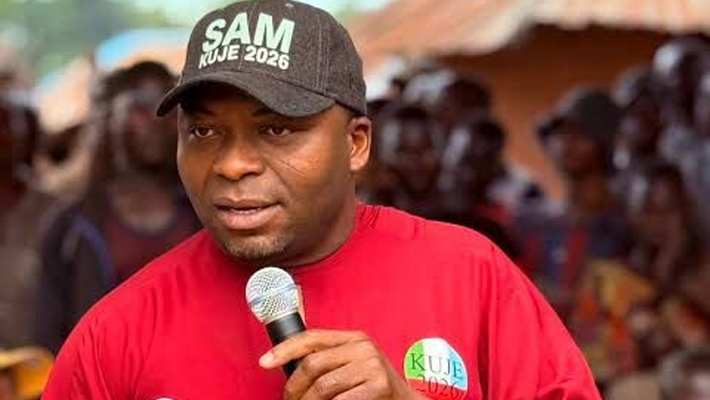
‘Vote APC or leave Kuje’: Shekwolo says comment aimed at promoting ‘development’
Human rights organisation Amnesty International strongly condemned Mr Shekwolo’s threat.
Africa
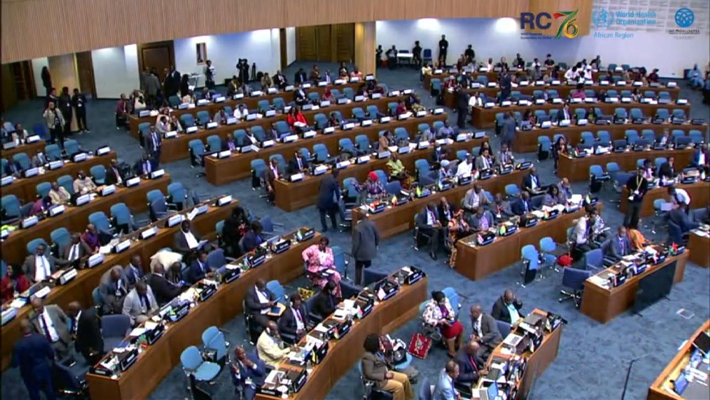
CAR, DRC, Uganda, Congo, South Sudan commit to stop Bundibugyo Ebola spread
The countries made the agreement in Bangui, C.A.R., on Wednesday.

Heading 5
Jackrich writes Tinubu, seeks urgent implementation of Senate resolution on 2,000 amnesty slots for Egberipapa camp
According to the petition, the Senate committee conducted legislative hearings on the matter.

States
Troops rescue two kidnap victims in Plateau
He said the operation was conducted on Tuesday at about 9:00 a.m.

Hot news Home top
Subsidy: Atiku confused, spewing ignorance; inflation not driven solely by petrol prices, presidency fires back
The former vice-president contested but lost to Mr Tinubu in 2023.
Agriculture
FG reviews agricultural land, soil policy to achieve national food security
Mr Oshadiya said the review would go beyond amending an existing document.


