

Association calls for greater attention to geriatric healthcare in Nigeria
The Islamic Medical Association of Nigeria has called for urgent policy and service reforms “to address growing healthcare needs of older persons in Nigeria”.
The association’s national president, Ibrahim Oreagba, made the call at a news conference held at the end of the 27th National Annual General Meeting and Scientific Conference in Ilorin.
He explained that geriatric healthcare is specialised care for people aged 60 and above to address multiple age-related health issues, including chronic diseases, mental health, rehabilitation and end-of-life support.
“It also focuses on healthy ageing, dignity and social-spiritual needs to help older adults live independently with quality of life,” he said.
Mr Oreagba added that the conference identified geriatric healthcare as one of the most overlooked areas in the Nigerian health system.
“Participants noted that Nigeria’s ageing population requires more deliberate attention to healthy ageing, management of chronic diseases, rehabilitation, cognitive health, palliative care and social support.
“Geriatric healthcare remains an overlooked area within the Nigerian healthcare system.
The increasing population of older persons requires more deliberate attention to dignity, spirituality, caregiver needs and end-of-life care,” he said.
According to him, the conference resolved that health institutions should strengthen age-friendly primary and specialist care, expand caregiver support programmes and integrate spiritually sensitive services for older persons.
He therefore urged the government to support research and implementation on ageing, in line with Islamic values of compassion and preservation of human dignity.
Mr Oreagba explained that earlier, IMAN had provided free medical and surgical services to 1,811 people across Kwara as part of its community outreach.
“Other highlights included symposia on healthcare chaplaincy, women’s health, insecurity and the ethical use of artificial intelligence in medicine,” he said.
He disclosed that a pharmacist, Muhammad Audi-Kongila, was elected national president of IMAN for the 2026 to 2029 tenure.
(NAN)

We have recently deactivated our website's comment provider in favour of other channels of distribution and commentary. We encourage you to join the conversation on our stories via our Facebook, Twitter and other social media pages.

More from Peoples Gazette

States
Independence: NBA urges Nigerians to expect better future
The NBA said that ordinary Nigerians should be deriving benefit from the subsidy removal rather than hardship.

Agriculture
FG tasks ECOWAS on leveraging financing strategies for agroecology
The federal government has urged stakeholders in the agriculture and finance sectors in the West Africa region to leverage financing strategies to enhance agroecology practices

Politics
Katsina youths pledge to deliver over 2 million votes to Atiku
“Katsina State is Atiku’s political base because it is his second home.”

NationWide
Debt recovery not your core mandate, NSCDC cautions officers
The commandant said that building a well-trained workforce would add value to public service.
States
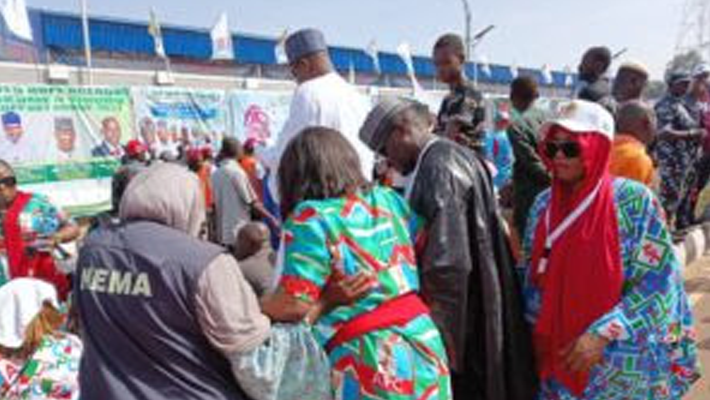
NEMA treats two women injured at APC campaign inauguration in Kaduna
The two women were injured at the crowded venue of the event.

Abuja
2027: NSCDC organises fitness walk for officers to boost operational efficiency
The commandant noted that the corps had intensified its security operations across the FCT.

States
Abia APC coordinator lists Tinubu’s achievements in South-East
Mr Anaba described the reforms as a work in progress.
States
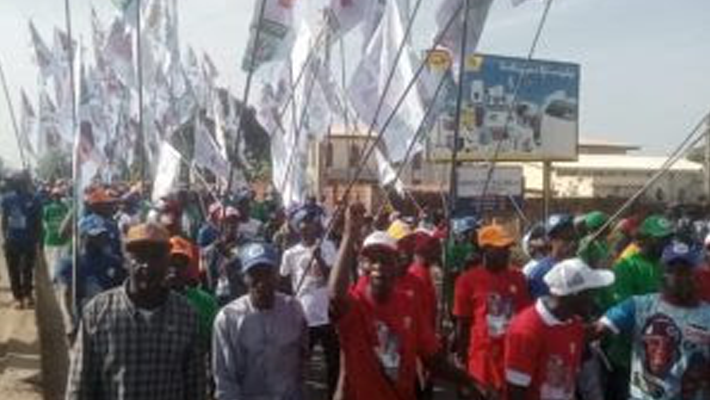
APC supporters troop out for Tinubu’s campaign inauguration in Kaduna
The influx of supporters into Kaduna underscores the significance attached to the rally by party members.
Hot news Home top
Kaduna govt disowns letter allocating N2.3 trillion for Tinubu’s campaign
Mr Maiyaki warned that the deliberate fabrication of official correspondence was criminal and punishable.


