

9/11: Terrorism threat remains high in U.S., UK, other democracies, says British don

Professor Anthony Glees, an intelligence expert, says liberal democracies like the U.S. The UK, and other Western nations face significant threats 20 years after the bombing of the American twin-tower on September 11 (9/11).
The don from Britain’s University of Buckingham, gave the warning in an interview with Xinhua.
Mr Glees there could be more Killings and bombings of people in terror atrocities.
“Terrorism remains a very significant threat” to both Western and Eastern countries 20 years after the U.S.-led military operation started in Afghanistan in the wake of 9/11 attack,” he said.
What the United States and other Western countries did in Afghanistan “was in its own terms not a success,” he said.
“We’ve left Afghanistan in such a way that on the 20th anniversary of 9/11, Islamists worldwide can claim the war they started in 2001 and ended in 2021 was their victory.
“That is a direct consequence of the way we fled from Kabul,” Mr Glees added
As an expert on security issues and intelligence, the don believes that the attack on the twin towers in New York in 2001, as well as the rapid victory of the Taliban in Afghanistan, both resulted from America’s massive failures of intelligence.
Following the 9/11 twin-tower attacks, Mr Glees persuaded his university bosses to create Britain’s first faculty for the academic study of intelligence.
But as the world headed toward its second decade of the 21st century, Mr Glees said there were more intelligence failures and the world ”is still facing the threat of terrorism”.
He said that some research statistics would imply the world is a safer place today as the number of those who die from terror attacks is much less than people killed by road accidents.
“But I would say that terrorism remains a very significant threat to liberal democracies such as the UK and the democracies of the West,” Mr Glees said, adding that China and Russia and the West were facing a common enemy of terrorism.
According to him, the reason for the declining number of people killed by terror attacks in recent years is largely due to the massive amount of money spent on intelligence and security activity over the past 20 years, rather than the military interventions in Muslim countries.
He said the jury was still out in the search for the reason for America’s failure in Afghanistan.
“If it has been a failure by the U.S., which I believe it to be, who is responsible for the failure?” he asked.
(Xinhua/NAN)

We have recently deactivated our website's comment provider in favour of other channels of distribution and commentary. We encourage you to join the conversation on our stories via our Facebook, Twitter and other social media pages.

More from Peoples Gazette

Agriculture
FG tasks ECOWAS on leveraging financing strategies for agroecology
The federal government has urged stakeholders in the agriculture and finance sectors in the West Africa region to leverage financing strategies to enhance agroecology practices

Politics
Katsina youths pledge to deliver over 2 million votes to Atiku
“Katsina State is Atiku’s political base because it is his second home.”

Rights
NBA urges Kaduna political actors to seek legal redress, shun violence
NBA has urged political parties, candidates and their supporters to resolve electoral disputes lawfully rather than resorting to violence.

States
TCN begins rehabilitation of four vandalised towers on Afam-IPP-Elelenwo
The Transmission Company of Nigeria says it is currently rehabilitating four vandalised towers on the Afam-IPP-Elelenwo 132 kilovolt double-circuit line.
NationWide
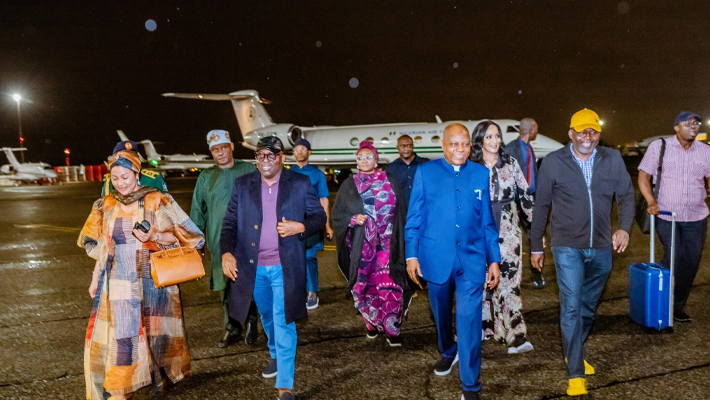
Nigeria’s engagements at UNGA81 will be guided by national interest: Shettima
Vice-President Kashim Shettima says Nigeria’s engagements at the 81st Session of the United Nations General Assembly will be guided by the country’s national interest.
World
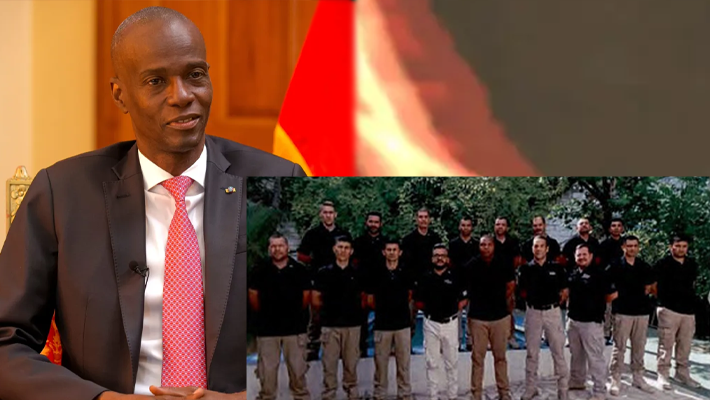
U.S. extradites 18 suspects linked to Haitian President Jovenel Moïse’s assassination
The suspects include Joseph Badio, a former employee of the Haitian justice ministry who worked in the anti-corruption department.

States
Kebbi govt vows justice for slain village head
The Kebbi government has vowed to track down and bring to justice the killers of the village head of Lafagu in Bagudo council area, Saidu Mujeli.

Africa
Alleged rapist Achile Ndumbe flees to Cameroon; UK police launch international manhunt
Ndumbe Achile Ndumbe, a rape suspect, released on bail, has fled the UK to Cameroon after he was released on bail and allowed to keep his passport.


