


WHO warns Ebola outbreak in DRC spreading rapidly
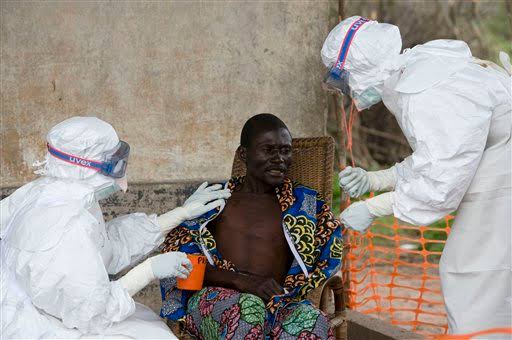
The World Health Organisation says the Ebola epidemic in the Democratic Republic of Congo has surpassed 6,000 reported cases and 3,000 deaths, warning that the outbreak is spreading rapidly.
WHO director-general Tedros Ghebreyesus raised the alarm during a news conference shared on the Organisation’s website regarding the Ebola update in Kinshasa. He said the outbreak was now the second-largest Ebola epidemic recorded and the fastest-moving outbreak WHO had ever seen.
“The epidemic affects 60 health zones across six provinces, covering a vast geographic area and creating significant challenges for response teams. Ituri province remains the epicentre, accounting for 85 per cent of reported cases and 88 per cent of deaths.
“Most Ebola deaths are occurring in communities rather than treatment centres, raising concerns about undetected transmission and delayed access to care,” he said.
According to him, many people who die are not being safely buried, a situation fuelling continued transmission of the virus. He said that many deaths also involve people who were not identified as known contacts, indicating that unknown transmission chains remain active.
The WHO chief warned that the epidemic would continue until every transmission chain was identified and broken.
“The ongoing outbreak poses a threat not only to the Democratic Republic of Congo but also to neighbouring countries and the wider region. The Ebola response is unfolding amid conflict, displacement, poverty and hunger, making disease control more difficult for affected communities.
“Communities are also facing diarrhoeal diseases, malaria, malnutrition and conflict, contributing to mistrust about the international focus on Ebola,” he said.
Mr Ghebreyesus said rebuilding and maintaining community trust and ownership remained the most important factor in changing the epidemic’s trajectory.
According to him, the organisation and partners plan to triple treatment capacity to 3,000 beds across the Democratic Republic of Congo within three months.
He said that the organisation has also issued emergency guidance on using an approved Zaire Ebola virus vaccine during Bundibugyo virus outbreaks.
(NAN)

We have recently deactivated our website's comment provider in favour of other channels of distribution and commentary. We encourage you to join the conversation on our stories via our Facebook, Twitter and other social media pages.

More from Peoples Gazette

Agriculture
FG tasks ECOWAS on leveraging financing strategies for agroecology
The federal government has urged stakeholders in the agriculture and finance sectors in the West Africa region to leverage financing strategies to enhance agroecology practices

Politics
Katsina youths pledge to deliver over 2 million votes to Atiku
“Katsina State is Atiku’s political base because it is his second home.”

Economy
How KADIRS improved IGR, tax compliance in Kaduna: Jerry Adams
Governor Uba Sani provided the political will that enabled the Kaduna State Internal Revenue Service (KADIRS) to increase internally generated revenue.

Economy
NITDA says Nigeria must control digital infrastructure to unlock economy
NITDA says Nigeria must control its critical digital infrastructure to fully harness the economic value of its digital economy.

Africa
Ebola outbreak in DR Congo still serious, warns Africa CDC
The Africa Centres for Disease Control and Prevention (Africa CDC) said the Ebola outbreak in the Democratic Republic of Congo remains extremely serious.

World
Putin orders closure of Germany’s Goethe-Institut centres in Russia
President Vladimir Putin has ordered the shutdown of all Goethe-Institut centres across Russia in retaliation for Germany’s closure of a Russian cultural centre in Berlin.

Economy
Global Crisis: Dutch central bank moves billions in gold from U.S. to UK
The Dutch central bank has relocated 86 metric tonnes of gold worth billions of dollars from the U.S. and Canada to the Bank of England, citing “geopolitical unrest”.

World
Pentagon issues new, mandatory testosterone screening for active-duty, reserve service members
Female service members would be assessed for any symptoms of hormonal dysregulation, which can link to disrupted menstrual cycles.


