

So what if Ikemefuna Okeke is now Karl Von Batten?
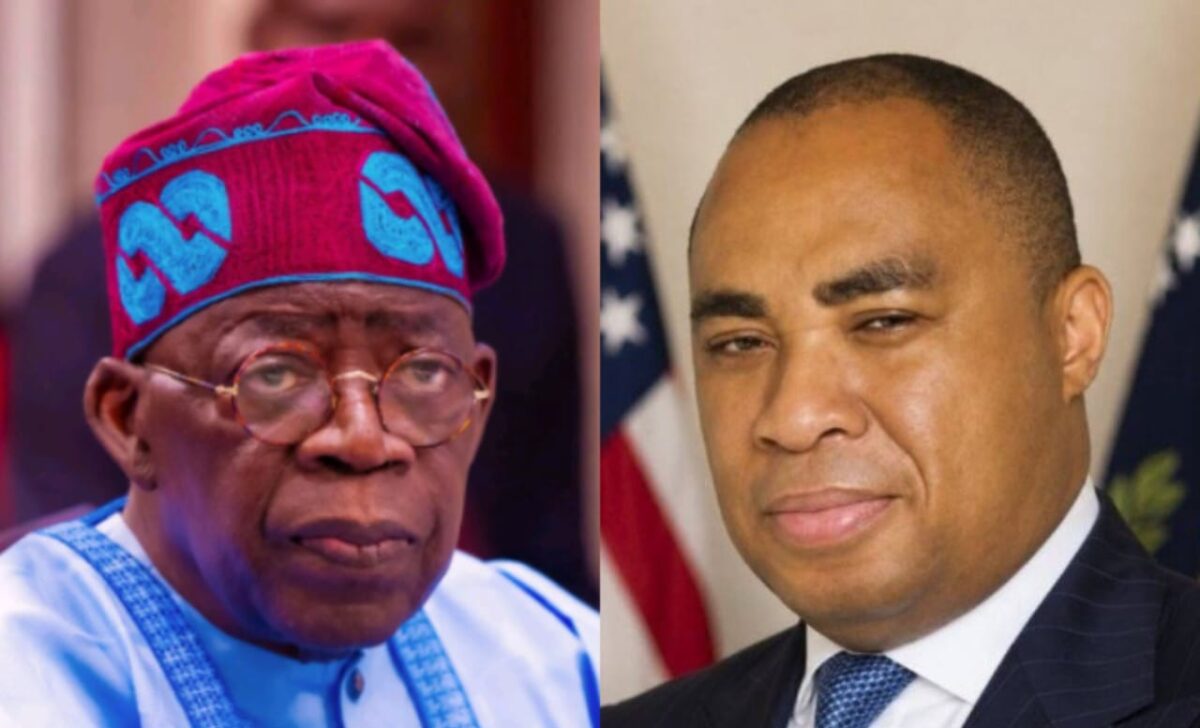
“”Karl Von Batten” walks in a Blackman with a forced accent, formerly named Ikemefuna Okeke. Ironically, Okekes are known to be very brilliant individuals who are extremely proud of their roots. Alhaji Atiku has always been a generous leader I respect greatly. Oga, ask for your refund.” So wrote Akin Olaoye on X, evidently believing that he had stumbled upon the political equivalent of the discovery of a new continent, and the enthusiasm with which supporters of President Bola Tinubu have seized upon the revelation that the Washington-based political lobbyist, Karl Von Batten was born Ikemefuna Okeke, has been remarkable, not because the revelation settles anything of consequence, but because of what it tells us about the peculiar politics of the times.
They have behaved as though they were Archimedes, running naked from the bathroom and through the streets of Syracuse, Sicily, after an intellectual breakthrough and screaming, “Eureka, Eureka -I have found it”, except that poor Archimedes is being made to bear the embarrassment of their public nakedness. What exactly have they found?
A man changed his name. So what?
Names change for all sorts of reasons, and nothing is inherently sinister about adopting a different name, whether for professional purposes, personal preference and family circumstances, migration, marriage, religious conversion, or a desire to construct a different public identity. People change names every day without the Republic collapsing into a constitutional crisis. The mere fact that a person born Ikemefuna Okeke now goes by Karl Von Batten may invite curiosity, but curiosity is not evidence, and a name is not a substitute for an investigation into conduct; though there’s nothing in his conduct that should elicit the ululation of Tinubu’s supporters.
The more troubling question, therefore, is why supporters of the President appear so invested in making the name-change the story when the real story lies elsewhere. If questions have been raised about President Tinubu’s alleged connection to a drug-trafficking ring in Chicago, those questions do not disappear because attention is diverted to the identity of a political lobbyist or because someone discovers that the lobbyist once answered to a different name. The issue is not the lobbyist’s ethnic or personal identity; it is whether the questions surrounding Tinubu’s past have been properly answered. Accountability does not become less necessary because the person under scrutiny once had an Igbo birth name.
Indeed, the sudden ethnicisation of the controversy looks less like an argument than an evasion. Hang an Igbo name on the gentleman, and suddenly a question of political accountability becomes a question of ethnicity. A matter that ought to be investigated on the basis of documents before the FBI is being trivialised by dragging an entirely irrelevant identity question into it.
The easiest way to avoid answering an uncomfortable question is to change the subject from what someone did to who he supposedly is. This is where Tinubu’s supporters are majoring in the minor. They have found something not material to the central controversy and elevated it into the main argument. Their excitement over the name-change therefore resembles a magician celebrating the discovery of his own distraction. The audience is being invited to look at the name while the more important questions remain standing somewhere outside the frame.
Even the peculiar emphasis on an alleged “forced accent” reveals the argument’s poverty. Accents are acquired, modified and sometimes consciously cultivated. Nigerians alter their accents for professional reasons, social reasons and sometimes simply because they have lived for years in different linguistic environments. A person’s accent may be affected by where he lives, who he associates with or how he wants to present himself, but accent is not evidence of wrongdoing. Neither is a European-sounding name.
What, then, is in a name-change?
Perhaps a story, curiosity, or an explanation worth seeking if evidence shows the change was connected to fraud, deception, or misrepresentation. But there is nothing in the mere act of changing a name that answers the substantive questions being asked about Karl Von Batten. If he rendered legitimate services, let the contracts and records establish that. If money changed hands, let the accounts show it. If representations were made, let those representations be examined. If misconduct occurred, let the evidence expose it. The ethnicisation of the matter serves nobody except those who would rather have Nigerians quarrel over whether Ikemefuna Okeke should have remained Ikemefuna Okeke than examine what Karl Von Batten actually did.
Such tactics are familiar in our politics: when scrutiny becomes uncomfortable, identity is summoned to the rescue. No one should be distracted by the shenanigans of Tinubu’s supporters. Nigerians are entitled to ask questions about people who operate at the intersection of money, lobbying and political power, regardless of the names they were born with or those they may subsequently have adopted; but the proper questions here are about the man whose identity has become sufficiently important for a judge to examine his deeds privately and, one suspects, to wonder about the fate of a country entrusted to his leadership. Having one’s name appear in the records of the FBI naturally raises questions, particularly when the context concerns drug trafficking crimes. Those questions don’t disappear simply because some supporters would rather talk about something else. But then, what does this writer know?
So, once again, what’s in a name-change?
Changing a name neither answers questions about conduct nor absolves anyone from scrutiny; if anything, the furious effort to make the name the story only exposes the weakness of the case being made by those who would rather discuss identity than accountability. The real embarrassment is not that Ikemefuna Okeke became Karl Von Batten. The embarrassment lies in watching those presented with a question about accountability run naked into the public square, waving a name-change as though they have discovered the secret of political physics.
Poor Archimedes. He never asked for this.
Abdul Mahmud, a human rights attorney in Abuja, writes weekly for The Gazette

We have recently deactivated our website's comment provider in favour of other channels of distribution and commentary. We encourage you to join the conversation on our stories via our Facebook, Twitter and other social media pages.

More from Peoples Gazette

States
Independence: NBA urges Nigerians to expect better future
The NBA said that ordinary Nigerians should be deriving benefit from the subsidy removal rather than hardship.

Agriculture
FG tasks ECOWAS on leveraging financing strategies for agroecology
The federal government has urged stakeholders in the agriculture and finance sectors in the West Africa region to leverage financing strategies to enhance agroecology practices

Politics
Katsina youths pledge to deliver over 2 million votes to Atiku
“Katsina State is Atiku’s political base because it is his second home.”

Rights
Africa CDC says global health agencies ‘not interested’ in Bundibugyo Ebola vaccine
The deadly strain has killed over 4,500 people across the DR Congo, Uganda and most recently, Kenya.
Heading 2
FG upgrades Katsina transmission network to boost power supply
The minister said that the project represented practical progress under Mr Tinubu’s administration.
Lagos
Lagos agency seeks stronger laws against digital violence on women
Ms Odekunle warned that online abuse could spread rapidly across multiple platforms.

Heading 4
My administration delivered 10,623 homes in seven years: Sanwo-Olu
The governor said his administration remained committed to improving access to homeownership.
Heading 2
Lagos police detain four officers over harassment of young man in Ikorodu
Mr Fatai had also ordered the disbandment of the tactical team.
States
AHIP, IOM train 50 stakeholders on safe migration in Kano
The director called for intensified public awareness campaigns to discourage irregular migration.


