

Anambra, Ebonyi communities call for state of emergency on erosion
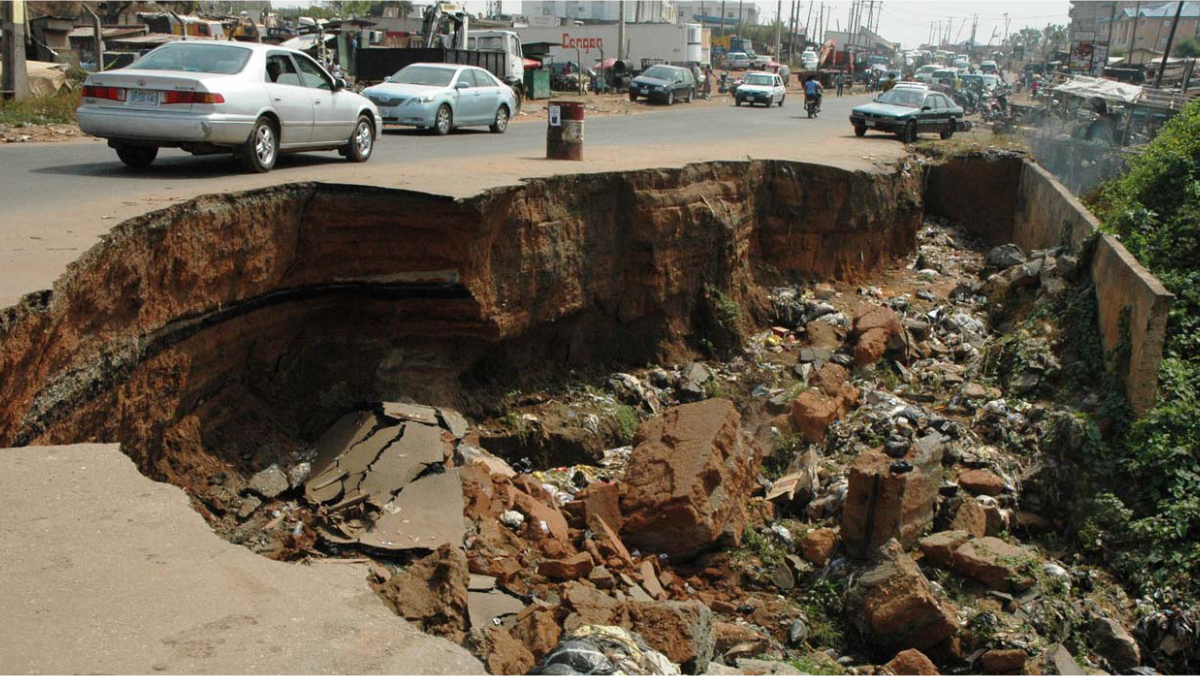
Some communities in Anambra and Ebonyi states have appealed to the government to declare a “state of emergency” over worsening erosion and floods threatening lives and property.
They said homes, roads, schools, hospitals, and other critical infrastructure in the states were under threat.
Residents in the affected communities, in their appeal, said homes, roads, schools, hospitals, and other critical infrastructure in the states were adversely affected by the erosion menace.
Some of the affected communities in Anambra include Obiofia Ibolo in Oraifite, Ekwusigo council area; Ugamuma in Obosi, Idemili North LGA; Ezi-Awka in Awka; and Enugwu Agidi in the Njikoka council area. Other areas were around Iyienu University Teaching Hospital, Ogidi.
Speaking in Obiofia Ibolo, the president-general of Oraifite, Vincent Dike, said at least seven houses had been destroyed by erosion, while roads, schools, and other community facilities were under serious threat.
Mr Dike said the erosion menace in the area was due to inadequate drainage provided during the construction of the Onitsha-Owerri Expressway. According to him, a World Bank-assisted hanging bridge serving the community risks collapsing if urgent measures are not taken.
Some residents of Ugamuma said the expanding gully at the end of a road leading to the Anambra State School of Health Technology, Anti-Cult Police Station and Union Secondary School could cut off the area at any moment.
The principal of Union Secondary School, Ugamuma, Ebele Onugha, said nearby homes and public facilities were under serious threat.
Stanley Abanofor said the erosion had destroyed farmlands and residential property over the years. Deborah Okeke, another resident, said property owners had spent substantial resources trying unsuccessfully to control the menace.
At Ezi-Awka Community Secondary School, the principal, Eucharia Ogbunyi, said erosion had destroyed two classroom blocks and threatened four others as well as the staff room. She said the development had forced some students to withdraw from the school, while those remaining and their teachers faced danger from the threatened structures.
An engineer, Alex Chukwunwike, proposed an integrated erosion-control project involving landscaping, concrete works and drainage construction to channel floodwater to Obibia Stream, about 1.25 kilometres from the school.
Some residents of the Enugwu-Agidi community said erosion had severely affected the Mgbachala and Irugaga areas of Ifite village, making movements difficult during the rainy season.
Benjamin Ejinaga, vice-chairman of Ifite village, warned that continued degradation could force residents to abandon their ancestral lands.
At Iyienu University Teaching Hospital, erosion destroyed parts of the perimeter fence and threatened about 10 buildings, including male and female hostels and administrative blocks.
Humphrey Udechukwu, legal secretary of the Diocese on the Niger, attributed the erosion to illegal stone-mining activities behind the institution and called for government action against the miners.
Ifeanyi Nwasinoke, the acting managing director of the Anambra State Erosion, Watershed and Climate Change Agency (ANSEWCCA), said the agency had assessed the affected sites and would forward its reports and recommendations to the appropriate authorities.
He said the agency had proposed five solar-powered catchment pits to divert floodwater away from the affected hospital environment.
Speaking on the menace of erosion in the state, Vincent Ezekwueme, chairman of the Civil Liberties Organisation, Anambra branch, said the government needed to intervene aggressively.
“I am calling on President Bola Tinubu to urgently declare a “state of emergency” on erosion in Anambra state,” he said.
Mr Ezekwueme identified Ugamuma, Ekwulobia, Oba, Ogidi, and Umuchu, among others, as areas requiring urgent attention.
The organisation urged the federal government to provide emergency palliative measures and called on the National Emergency Management Agency (NEMA) to assess the situation and provide relief to affected communities.
It also advocated stronger collaboration among government agencies, traditional rulers, town unions, civil society groups, and residents on environmental protection, proper waste disposal, and tree planting.
In the same vein, Chioma Awuzie, the rector of Federal Polytechnic, Oko, has similarly appealed for the federal government’s intervention, describing erosion as a serious threat to the institution’s infrastructure.
In his reaction, the state commissioner for environment, Clem Aguiyi, categorised the causes of gully erosion and landslides in the state into human and natural factors.
Mr Aguiyi listed the natural factors as friable and highly erodable soils, high rainfall intensity, topography and geology and poor soil structure.
He said that the human factors include poor waste management and drainage blockage, building on waterways and floodplains, deforestation and bush burning, unregulated sand mining and excavation, poor farming and land use practices.
According to him, Anambra has about 1,000 geo-referenced erosion sites, with recent state figures citing 62 critical sites, 550 very active sites, and over 1,000 total sites.
“Over 70 per cent of the state’s land is either ravaged or threatened by erosion, with about 500 gullies spread across rural communities,” he said.
The commissioner said notable hotspots include the Agulu-Nanka-Oko-Ekwulobia corridor, with gullies up to 120 metres deep and two kilometres wide, and Ebenato in Nnewi South, with a gully 250 metres long, 25 metres wide and 15 metres deep.
He warned that without stringent enforcement of environmental laws and behavioural change among people to keep to such rules and regulations, the natural vulnerability would keep occurring.
Mr Aguiyi said tackling erosion and landslides in the state would require a multilayered response involving federal, state, and international partners, as the menace was too enormous for the state government to handle alone.
The commissioner further said that the federal government, through interventions under the Ecological Fund office, had awarded a ₦1.4 billion contract to tackle gully erosion at Alor and Nnobi in the Idemili South Local Government Area of the state within 16 months.
Mr Aguiyi also said that under NEWMAP, the state partnered with the World Bank, the federal government and contractors on a ₦9 billion erosion control project, covering Enugwu-Ukwu, Abidi-Umuoji, Nnewi-ichi, Ojoto, Nkpor Flyover and Ire-Obosi with a timeline of 24 months.
According to him, under the 10-year NEWMAP, 13 sites were worked on and about eight were fully delivered.
“This saved 36,959 houses from collapse, reclaimed 4,255.4 hectares of land, and protected 350,677 people in erosion corridors from displacement. A total of 33,881 people benefited directly and indirectly from the project,” he said.
Mr Aguiyi said the state needs over N17 billion to tackle just 62 critical sites, with 1,000 active sites, adding that state finances alone cannot cover it and calling for the European Investment Bank (EIB) and a global partnership.
Meanwhile, experts and communities in Ebonyi have recommended intense awareness creation to control and tackle the erosion crisis across the state.
The experts said this became necessary to help people in erosion-prone areas understand the dangers and consequences of these sites.
They said both the federal and state governments need to map erosion- and landslide-prone areas and force residents to relocate to avoid deaths and other disasters.
Chima Njoku, head of the Department of Environmental Management at Ebonyi State University, urged governments to put more effort into curtailing the erosion in Ebonyi.
“Why people still live in such prone areas even after compensation is because they were not followed up to leave the area. Erosion is a serious disaster but could be controlled before it gets to gully erosion,” he said.
He said that tackling erosion at its early stage was the most cost-effective approach to land management. He said severe gullies require heavy emergency government intervention but could be avoided through early action, protecting residents from losing their lives and property.
He advocated replanting trees when deforestation occurs to reduce and control erosion. He commended the federal government for the NEWMAP intervention in recovering Nguzu Edda, Azuiyoku, Iyiudele, and many other erosion- and flood-prone areas of the state.
“Nguzu-Edda was taken over by gully erosion as a result of development. It started with tree cutting, and erosion erupted,” Mr Njoku said.
Another expert, Chijioke Ama, said gully erosion would lead to landslides if left uncontrolled. Mr Ama urged residents to evacuate refuse from drainage systems to avoid erosion.
A resident, Darlington Ekuma, said seasonal downpours caused structural sinkholes and directly threatened residents. According to Mr Ekuma, erosion and landslide crises could start with simple perimeter cracks and escalate into total structural obliteration.
“You can see shallow holes here; this is how it starts. We urge the government not to end the NEWMAP interventions on flood and erosion control,” Mr Ekuma said.
(NAN)

We have recently deactivated our website's comment provider in favour of other channels of distribution and commentary. We encourage you to join the conversation on our stories via our Facebook, Twitter and other social media pages.

More from Peoples Gazette

Agriculture
FG tasks ECOWAS on leveraging financing strategies for agroecology
The federal government has urged stakeholders in the agriculture and finance sectors in the West Africa region to leverage financing strategies to enhance agroecology practices

Politics
Katsina youths pledge to deliver over 2 million votes to Atiku
“Katsina State is Atiku’s political base because it is his second home.”

Politics
Labour Party lawmaker Agbese leads new coalition in support of Tinubu
Mr Agbese said the organisation was a cross-party platform of visionary politicians and activists backing Mr Tinubu’s re-election bid.

World
Ukraine ready to halt energy strikes, if Russia does same
Ukraine said it was ready to halt attacks on energy infrastructure if Russia does the same, following U.S. President Donald Trump’s call for both sides to suspend such strikes.
Economy
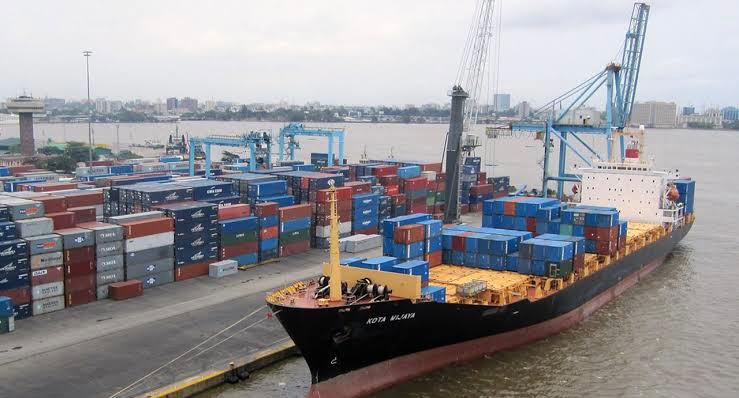
30 ships of imported fuel, food arrive at Lagos ports
The vessels are expected to discharge bulk urea, petrol, diesel, crude oil and bulk salt.

Rights
Germany campaign for seat on UN human rights
Foreign minister Johann Wadephul plans to campaign for a German seat on the UN Human Rights Council for the 2027-2029 term in Geneva on Tuesday.

Politics
Commuters hail Tinubu, Wike’s Karu road project
The construction also covered key feeder roads, including DSS Road, NIA Road, EFCC Road, Primus Hospital Road and Old CBN Quarters Road, all of which were fully rehabilitated.

World
Iran says no talks with U.S. until conditions are met
A top Iranian security official on Tuesday said that Iran would not negotiate with the United States until its conditions were met.


