

Azu Ishiekwene: What shall we do about South Africa?
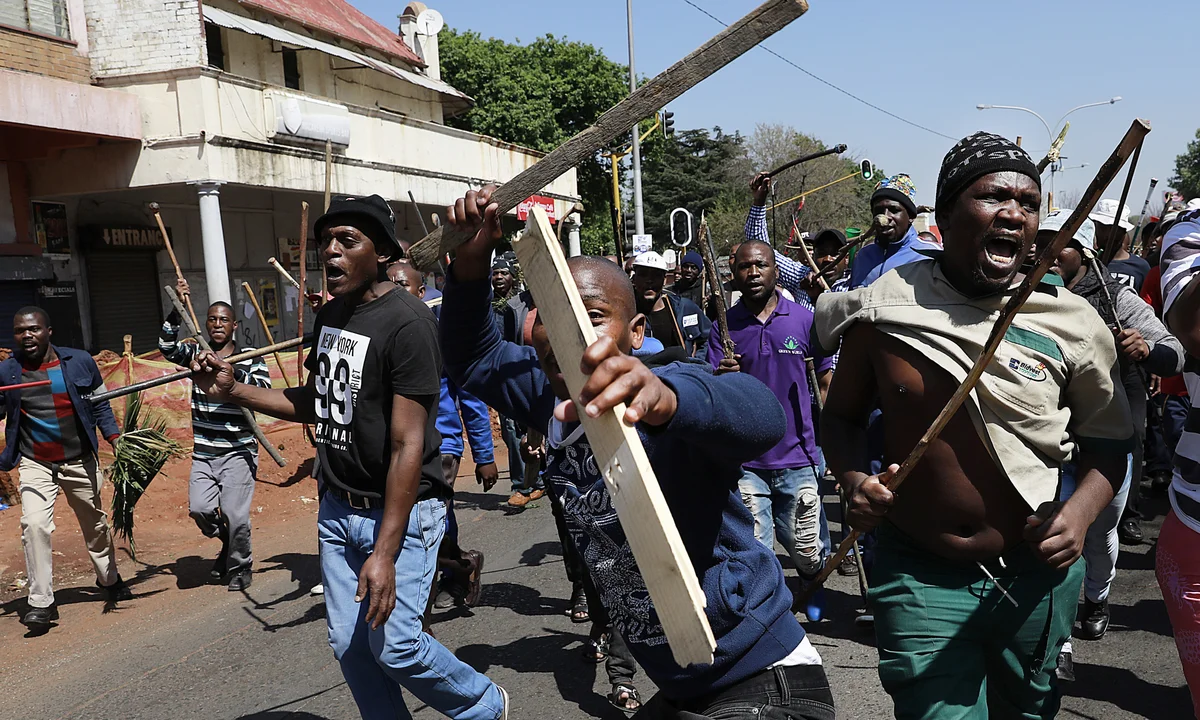
If South Africa needed any serious signal that the mobs roaming the streets of its cities and townships in search of immigrants were a disgrace, the FIFA World Cup in June 2026 provided a large screen.
But the country is not looking. Or is looking but cannot see.
In the last three years, according to Xenowatch, about 50 people have been killed in xenophobic-related incidents in South Africa. That’s not counting the displaced and wounded or the hundreds forcibly repatriated, and those whose businesses have been destroyed.
Between June 2026 and now, there have been eight verified deaths linked to xenophobic attacks on Africans. Two of them, Bishop Taiwo Michael Fakunle and James Uchechukwu Nwankwo, were Nigerians. The Ghanaian News Agency reported that two Ghanaians were killed between July and August.
Scapegoating Bafana
What will it take to end this madness, which has set one of Africa’s most promising countries against the rest of the continent?
During the World Cup, Bafana Bafana was the unfortunate target of African fans worldwide who could barely disguise their animosity. The fans wanted Bafana to lose even against less-fancied opponents and would have willed it if they could. A competition that should have united the continent was, in effect, a continuation of war by other means.
Root of the matter
It’s not exactly a new thing. Xenophobic outbursts began in 1994, the year Nelson Mandela was sworn in as the country’s first black president in its first-ever multi-racial elections and popular suffrage.
The attacks were then construed as part of the negative offshoots of the prolonged apartheid rule. The expectation followed that, somehow, they would fizzle out, one way or the other. They have not.
After localised incidents in Alexandra Township in 1994, the first significant blowout happened in 2008. And ever since, xenophobia has acquired a life of its own, with sustained cycles of recurrence up to the present.
It must have been the biggest embarrassment that accompanied Nelson Mandela to his grave – this prolonged moral shock that South Africa can no longer stand other Africans in their neighbourhoods. It’s a continental disgrace for which people like Julius Malema of the Economic Freedom Fighters are repeatedly calling out in vain.
It’s unbelievable that almost 15 years after his passing, Mandela’s successors have only responded with half-hearted gestures, often appearing helpless while mobs take the law into their own hands.
Local grievances
I understand the practical challenges that sometimes feed the xenophobic demons. In a recent letter shared with me, my friend and one of South Africa’s most outstanding editors, Ferial Haffajee, wrote, with a heavy heart, about how Mayfair, Johannesburg, where she grew up, has changed from a serene neighbourhood into a precinct of chaos with immigrants who bribe city planners, turning every street corner into a commercial jungle. That hurts.
It gets even worse. With an unemployment rate of 33.6 per cent, politicians whose job it is to fix the system have mobilised sentiments against immigrants.
They blame foreigners for “taking the jobs,” putting pressure on healthcare and other services, and contributing to crime. On top of these, Nigerian targets are also accused of drug-running, and the mortal sin of libido levels that put their hosts at a social disadvantage, as if life were a sex Olympiad. It’s not a laughing matter, especially as many of these sentiments were mobilised by politicians during the 2024 elections in South Africa.
Where the truth lies
The truth, however, is far more nuanced than politicians are willing to admit. UN figures estimate that, of the 304 million international migrants worldwide (3.6 per cent of the global population), South Africa (pop. 65 million) had about 2.63 million immigrants as of mid-2024.
The bulk of immigrants there were born in the SADC region, while about 25 per cent are from the rest of Africa. Of this non-SADC immigrant population, only about one per cent, or 24,718, are Nigerians. And the trope about job hijacking needs to be stripped of its false covering.
Black South Africans control the state and constitute most workers and consumers. But white South Africans remain disproportionately influential in private-sector ownership, wealth, and senior corporate management. And this is despite the affirmative black economic empowerment programme that has been in place for 32 years.
A 2024 employment equity data showed that white employees held 61.1 per cent of top management posts; Africans held 18 per cent; Indians held 11.9 per cent; coloured people held 6.2 per cent; and other foreign nationals held 2.8 per cent.
The household income data is even starker. It shows that the average income of white-headed households was nearly five times that of black-African-headed households in 2022/23.
The large screens at World Cup viewing centres that the lynch mob wouldn’t look at are staring back at them, if only they cared to lift their heads.
Metamorphosis of Ramaphosa
President Cyril Ramaphosa, one of the most documented beneficiaries of the Black Economic Empowerment (BEE) programme, has been disappointing. It would be unfair to accuse him of stoking the deadly xenophobic attacks.
Yet, it would seem that, knowing what he benefited from BEE through Shanduka Resources, along with prominent figures such as Patrice Motsepe, Tokyo Sexwale and Saki Macozoma, he is comfortable not taking a tough stand, lest the Black oligarchs become the targets of the vigilantes.
The African Union, the continent’s prefect, is helpless. Nigeria’s President, Bola Ahmed Tinubu, reporting South Africa to the AU to list the matter for discussion in January 2027, means nothing. If the AU has lost its voice or the capacity to stamp its feet, where are the African leaders in the mould of Sekou Toure, Kwame Nkrumah, Léopold Senghor, Murtala Muhammed and several others?
Nigeria’s former President Olusegun Obasanjo was right when he said in a recent interview that African leaders had not done enough to stop the xenophobic attacks in South Africa.
Whether it was São Tomé and Príncipe, where Obasanjo rebuked soldiers who toppled the elected government in 2003 or The Gambia, where the regional ECOWAS faced down President Yahya Jammeh in 2016, whenever the continent’s leaders stood together, the outcomes have been commendable. Nothing demonstrated that lesson as profoundly as the end of apartheid in South Africa, a lesson which Obasanjo had to remind South Africa once again.
Not a new problem
Tensions arising from migration have been, and will continue to be, a reality of human existence. Even between Nigeria and Ghana, two neighbouring countries and friendly foes, the first major mass deportation of Nigerians happened in 1969, when the military government targeted Nigerians as the cause of the country’s woes. Only for Nigeria to retaliate 14 years later in the infamous “Ghana-must-go,” which affected nearly one million Ghanaians, accused of “taking Nigerian jobs.”
Yet, looking back today, both countries have seen, as Thomas Sowell said in his epic book, ‘Migrations and Cultures’, that “migrations are not always permanent resettlements.”
“Even during the era of mass migrations across oceans during the past century and a half,” Sowell wrote, “vast numbers of people have continued to return home. It has been estimated that, between the mid-1830s and the late 1930s, approximately 30 million people left the Indian subcontinent and nearly 24 million returned.”
No condition is permanent
Anti-immigrant scapegoating may seem normal, especially among politicians in the post-Trump era. Still, I share the sentiment expressed on the back of the proverbial mammy wagon that often travelled East of Nigeria in the old days: “No condition is permanent.”
I will recommend this banner to the mobs in KwaZulu-Natal, Gauteng and the Western Cape, some of the deadliest xenophobic crime scenes in recent times.
Ishiekwene is the Editor-in-Chief of LEADERSHIP and author of the book, Writing for Media and Monetising It.

We have recently deactivated our website's comment provider in favour of other channels of distribution and commentary. We encourage you to join the conversation on our stories via our Facebook, Twitter and other social media pages.

More from Peoples Gazette

Agriculture
FG tasks ECOWAS on leveraging financing strategies for agroecology
The federal government has urged stakeholders in the agriculture and finance sectors in the West Africa region to leverage financing strategies to enhance agroecology practices

Politics
Katsina youths pledge to deliver over 2 million votes to Atiku
“Katsina State is Atiku’s political base because it is his second home.”

NationWide
Tinubu’s 4D policy revived Nigeria’s soft power: NTAC DG
Mr Yakub noted the growing visibility of Nigerian volunteers occupying positions of responsibility.

World
EU restricts children’s social media, AI chatbots
The European Parliament and EU member states are expected to scrutinise and amend the proposal.

Africa
Dementia becoming major health challenge in Africa; costing families $15.6 billion annually: WHO
The WHO said, “The number is expected to rise significantly as populations grow and life expectancy increases.”
States
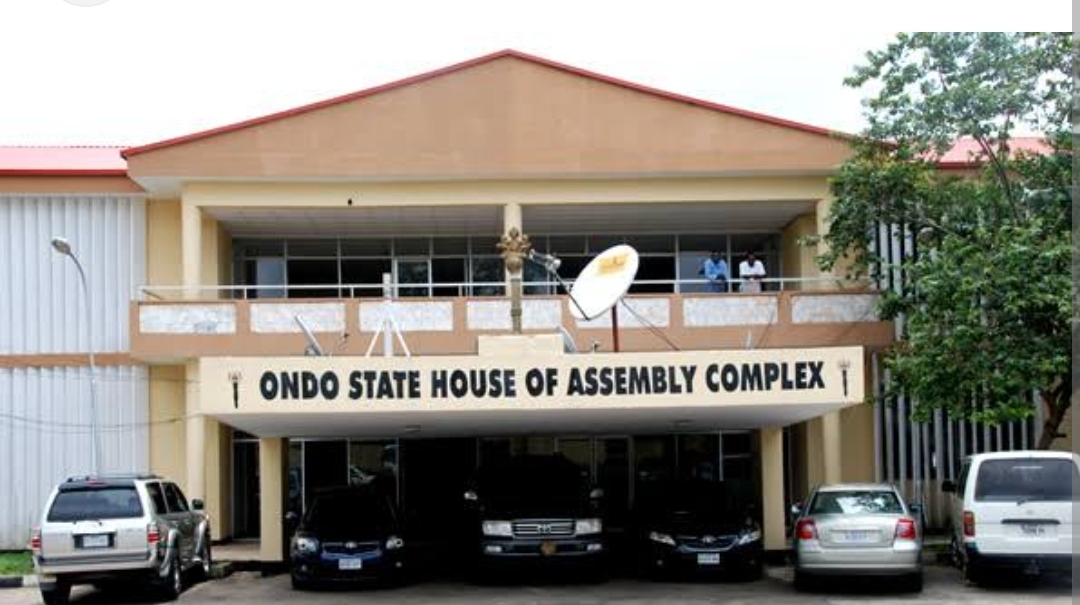
Ondo 2026 revised budget will target infrastructure, workers’ welfare, says assembly
Mr Ogunmolasuyi urged stakeholders to cooperate with the legislature throughout the consideration process.

Diaspora
Nigeria’s consulate urges vigilance after eight South African women found dead
The SAPS quarterly crime statistics said 1,223 murders and 2,369 sexual offences were recorded in Gauteng between January and March 2026.
Heading 3
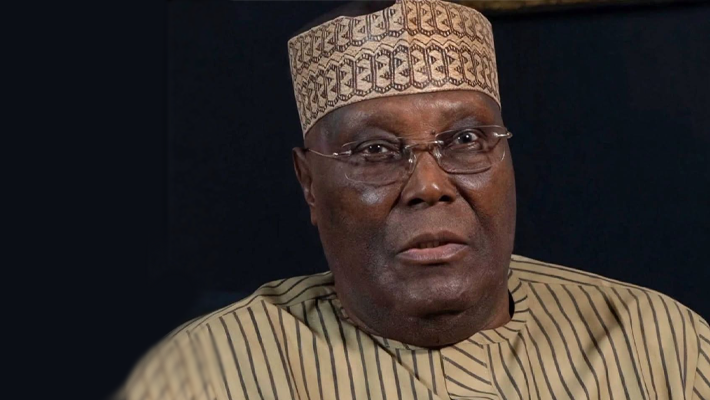
Tinubu’s policies caused malnourishment of 41% Nigerian children: Atiku
Mr Atiku said, “A child does not understand inflation figures. A child only knows whether there is food on the table.”


