

BOI seeks rethinking of capital mobilisation to drive industrial growth

The Bank of Industry (BOI) has called for a rethink of how capital is mobilised and deployed to drive Nigeria’s inclusive economic transformation.
The Managing Director of BOI, Olasupo Olusi, made the call on Tuesday in Abuja at the bank’s 2026 Annual Public Lecture themed “Rethinking Capital for Inclusive Economic Transformation.”
Mr Olusi said Nigeria needed long-term capital to support industrial growth, reach underserved businesses and attract private investment into productive sectors of the economy.
He stated that the theme was apt as it focused on how capital could be mobilised, structured and deployed more effectively to deliver measurable development outcomes.
The managing director said the annual lecture, which began in 2024, was established as a platform for informed discussion on issues shaping Nigeria’s economic and industrial development.
He recalled that the maiden edition examined how micro, small and medium enterprises (MSMEs) support and financing could address poverty and food insecurity, while the 2025 edition focused on development finance imperatives for Nigeria’s growth.
Mr Olusi said the third edition would build on previous discussions by examining how development finance could be leveraged to unlock greater private sector investment.
He said BOI disbursed N645 billion in 2025, supporting over 12,000 businesses and impacting 1.68 million jobs, noting that the scale of opportunity ahead remained significant.
According to him, achieving inclusive transformation will require mobilising more long-term capital, extending financing to underserved sectors and ensuring that financing translates into economic impact.
He commended the guest lecturer, Asad Alam, former World Bank Director and Adjunct Professor at Georgetown University, for honouring the bank’s invitation to share his insights.
Mr Olusi thanked the federal government, state governments, development partners and the private sector for their continued support for the bank’s mandate of driving sustainable and inclusive industrial development.
The guest lecturer, in his lecture titled “Rethinking Capital for Inclusive Economic Transformation – Some Reflections,” said Nigeria must move beyond capital accumulation to efficiency, productivity and human capital to achieve inclusive transformation.
Mr Alam said the lecture was framed around three questions: how important capital is for economic growth, what global evidence shows on the role of capital and other factors, and how countries can maximise the impact of capital for inclusive transformation.
He noted that while capital remained important, efficiency of capital was what drove impact on growth, and as economies mature, total factor productivity (TFP) becomes the key driver of sustained growth.
“Global evidence shows that as countries grow, TFP becomes more important than physical capital, while human capital contribution remains modest but holds huge potential given existing gaps with high-income countries,” he said.
According to him, greater equity can support potential growth, as higher inequality correlates with lower physical and human capital and lower productivity.
Mr Alam stressed that investments in technology and climate action had the potential to spur productivity and structural transformation if capital was deployed efficiently, incentivised by strong institutions and inclusive policies.
He said the debate on growth had moved beyond the simplistic notion that poor countries only needed more capital, a thinking that dominated development economics in the 1940s.
According to him, early models such as the Harrod-Domar model assumed that countries were poor because they lacked capital and the solution was to channel capital to them through multilateral development institutions.
Mr Alam said, “But that did not do the trick,” noting that the failure of capital alone to deliver growth forced economists, including Nobel Prize winners, to rethink growth models.
He explained that in the 1950s, the Solow growth model introduced technology, innovation and ideas as critical drivers, beyond physical capital and labour.
Mr Alam said the 1980s and 1990s marked a shift away from central planning and sectoral interventions towards market efficiency, addressing distortions and allowing creative destruction to drive productivity.
He said subsequent decades brought new perspectives on human capital, institutions, inequality, technology and climate change as fundamental determinants of long-run growth.
The guest lecturer said inclusive economic transformation should be understood as a development process that benefited the majority of the people, not an elite group with political connections or economic concentration.
He noted that Nigeria had been on the path of economic transformation since independence, but the degree of success and whether growth was widely shared remained a subject of debate.
On efficiency, Mr Alam said practitioners in finance understood that the efficiency of capital deployment determined its impact on growth, employment and development outcomes.
He described TFP as the efficiency with which all inputs – capital, labour, land and natural capital – are combined to produce output, stressing its growing importance in modern economies.
Mr Alam said human capital remained central, saying that individuals in positions of responsibility have benefited from investments in education and skills, and such investments must be scaled across the population.
He warned that inequality had become a defining challenge globally, both across and within countries, and could undermine growth if left unaddressed.
Mr Alam added that technology, particularly artificial intelligence (AI), and climate action were now central to growth discussions and had the potential to transform economies, but their impact depends on supporting policies and institutions.
The Special Adviser to the President on Economic Affairs, Tope Fasua, challenged economists in Nigeria and Africa to go beyond classical factors of production and isolate key elements inside TFP for the continent’s growth.
He said the time had come for Africa, especially Nigeria, to break down TFP further and recognise new factors such as technology, information, knowledge and AI as stand-alone factors of production.
According to him, while Mr Alam spoke about human capital as Nigeria’s asset, with an average age of 16.9 years, the country must develop its own way of measuring human capital instead of waiting for the rest of the world.
Mr Fasua disagreed that capital’s role was becoming less important, noting that issues like power, logistics and infrastructure raised during the lecture all required financing.
He added that capital should not be viewed narrowly as money alone, as information, knowledge and other intangible assets were also capital.
The lecture featured a panel session anchored by Nancy Illoh-Nnaji, with panellists including Adeyemi Folorunsho, Director, Abuja Zonal Office of the Manufacturers Association of Nigeria and Daniel Mueller, Executive Director, InfraCredit.
The Executive Director, Policy Innovation Centre, Osasuyi Dirisu, and Titus Owoeye, who represented the Group Managing Director of Flour Mills Nigeria, Omoboyede Olusanya, were also panellists.
The session commended BOI for supporting economic growth through disbursement of facilities to small and medium enterprises (SMEs) and financing the industrial sector and called for more funding for the bank to enable it to meet its obligations.
(NAN)

We have recently deactivated our website's comment provider in favour of other channels of distribution and commentary. We encourage you to join the conversation on our stories via our Facebook, Twitter and other social media pages.

More from Peoples Gazette

Agriculture
FG tasks ECOWAS on leveraging financing strategies for agroecology
The federal government has urged stakeholders in the agriculture and finance sectors in the West Africa region to leverage financing strategies to enhance agroecology practices

Politics
Katsina youths pledge to deliver over 2 million votes to Atiku
“Katsina State is Atiku’s political base because it is his second home.”

Heading 5
U.S. Supreme Court gives nod to Trump govt to restart third-country deportation of migrants
The Supreme Court’s 6-3 ruling halts an earlier appeals court ruling, pending a hearing on the policy in December.

States
EFCC arrests man with undeclared $265,000 at Kano airport
The Kano Zonal Directorate of the EFCC arrested a suspect, Adam Musa Adam, with $265,000 at the airport.
Economy
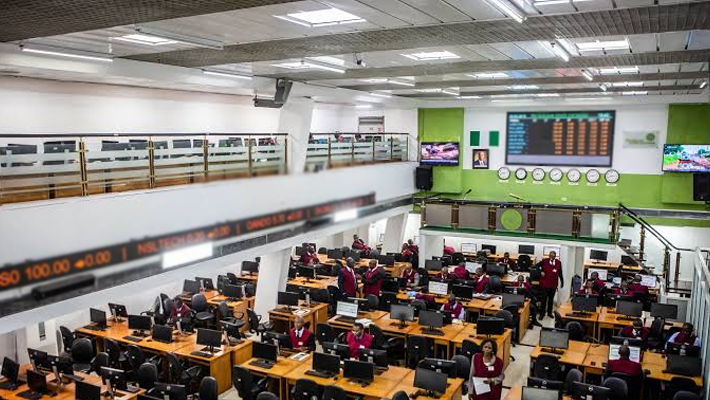
Stock market reverses gain, loses N469 billion
Nigeria’s equities market lost N469 billion at the close of trading on Tuesday amid profit-taking.
Heading 1
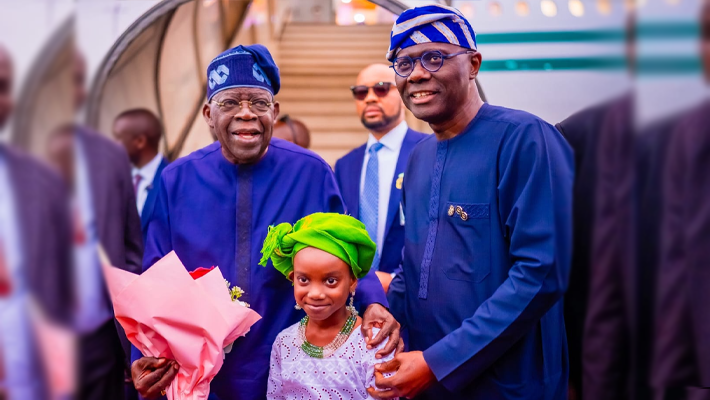
I enjoyed myself in Europe; I’m back, healthy, fit for work: Tinubu
“I am back. Ready to kick. Ready to work,” Mr Tinubu said.

Heading 2
Tennessee to execute woman for first time in 200 years over killing of classmate
Ms Pike was convicted of first-degree murder in 1996 and was sentenced to death, becoming the youngest woman ever to be placed on death row.
Africa
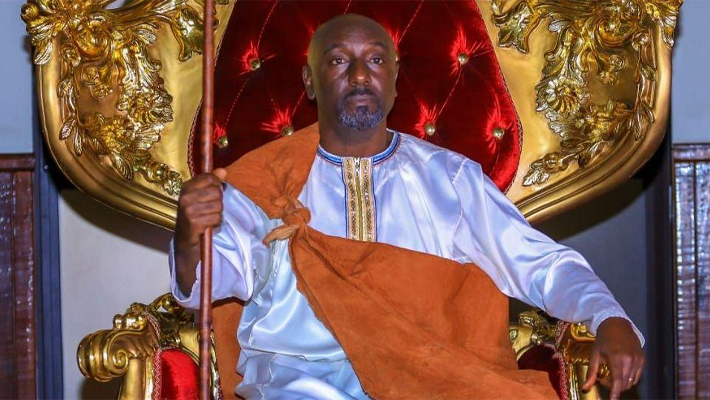
Ugandan broadcaster crowned king of Tooro kingdom
A 21-member committee from the royal Babiito clan selected Mr Kijanangoma, who is Oyo Nyimba’s cousin.


