

Scrap scavengers seek stronger recycling policies in Lagos
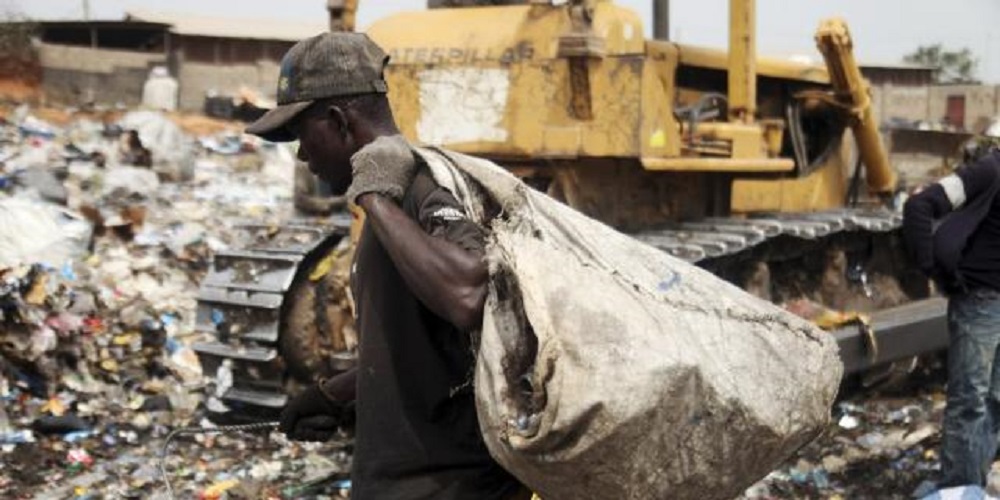
Waste pickers in Lagos have called for stronger implementation of recycling policies to improve livelihoods and create cleaner communities as Nigeria marks its 66th Independence anniversary.
The president of the Association of Scrap and Waste Pickers of Lagos State (ASWOL), Friday Oku, made the call in an interview on Wednesday in Lagos.
Mr Oku said developments in extended producer responsibility (EPR), plastic-waste management and circular economy had created opportunities for waste-sector operators.
He said the federal government paid greater attention to environmental regulation, circular economy development and plastic pollution during the first three years of President Bola Tinubu’s administration.
“From the perspective of waste pickers, recyclers and other informal-sector operators, I would describe the last three years as a period of important policy development,” he said.
Mr Oku, however, said a gap remained between policy development and implementation, stressing that effective waste management required collaboration among the three tiers of government. He identified EPR, plastic-waste management, e-waste, and circular-economy initiatives as notable areas of progress in the sector.
According to him, EPR was particularly important because it required producers to take responsibility for their products after consumption.
He said the National Environmental Standards and Regulations Enforcement Agency recognised EPR arrangements covering plastics, used tyres, e-waste, and used batteries.
Mr Oku also cited the National Policy on Plastic Waste Management and the GEF-funded Circular Solutions to Plastic Pollution in Nigeria project as federal government interventions. He identified the National Environmental (Battery Control) Regulations, 2024, also known as S.I. No. 11 of 2024, as another development.
He said enforcement against non-compliant recycling facilities was important for safer recycling and better management of environmentally hazardous materials.
Mr Oku, however, cautioned against declaring a major nationwide improvement in recycling without sufficient evidence.
“There are signs of progress, but I would be cautious about claiming that Nigeria has achieved a major nationwide improvement in recycling based on the available evidence,” he said.
He cited Nigeria’s export of about 5.85 million kilogrammes of certain plastic waste and scrap in 2024 as evidence that recyclable materials entered recycling markets.
Mr Oku said the figure alone could not establish the overall impact of government interventions because Nigeria lacked sufficiently reliable national waste data.
“Without reliable national data, it is difficult to accurately measure the overall impact of government interventions,” Mr Oku said.
He identified waste collection and material recovery at the community level as major areas requiring greater attention. According to him, better data would enable the government to measure policy effectiveness and determine whether interventions were improving environmental conditions.
Mr Oku called for increased investment in waste infrastructure, source separation and stronger recycling systems across cities and communities.
“Separating recyclable materials at source would reduce contamination and prevent valuable materials from ending up in dumpsites,” he said.
He also called for stronger implementation of EPR, with producers contributing financially and operationally to the collection and recycling of products introduced into the Nigerian market.
Mr Oku said effective EPR could strengthen recycling while encouraging producers to consider the environmental impact of products and packaging after use. He said waste pickers could contribute more effectively to material recovery if properly recognised and supported.
He called for training, occupational safety equipment, access to finance and opportunities for informal operators to participate in recognised waste-management programmes, advocating greater investment in recycling enterprises, saying this could expand material recovery and create green employment opportunities.
The ASWOL president called for clear national targets on waste collection, source separation, recycling, open dumping and burning, stating that the targets should also cover plastic waste entering waterways, producer participation in EPR, and the number of properly regulated recycling facilities.
(NAN)

We have recently deactivated our website's comment provider in favour of other channels of distribution and commentary. We encourage you to join the conversation on our stories via our Facebook, Twitter and other social media pages.

More from Peoples Gazette

Agriculture
FG tasks ECOWAS on leveraging financing strategies for agroecology
The federal government has urged stakeholders in the agriculture and finance sectors in the West Africa region to leverage financing strategies to enhance agroecology practices

Politics
Katsina youths pledge to deliver over 2 million votes to Atiku
“Katsina State is Atiku’s political base because it is his second home.”

States
Group writes Gov. Mbah over removal of APC executives in Enugu LG
The group said it was among those who welcomed the governor and other former Peoples Democratic Party (PDP) leaders and members into the APC.

States
Yobe cleared N6 billion pension, gratuities, says SSG
Mr Goje commended Governor Mai Mala Buni for his commitment to the welfare of retirees.

States
Adamawa tea seller beaten to death, police hunt suspects
The state commissioner of police, Kabir Umar Hassan, condemned the act.

Heading 5
Kensington Killing: Charles Egonye charged with murder after man found dead on North Pole Road
Officers visited the scene alongside the London Ambulance Service but the man was pronounced dead at the scene.

States
Five men arraigned over alleged theft of N7 million tricycle
The prosecutor alleged that the defendants stole a tricycle valued at N7 million, belonging to Gamma Mobility Company.

Abuja
Abuja businessman in court for allegedly forging land documents
The defendant pleaded not guilty to the charge.


