

Nigeria shown how to turn global economic disruptions into prosperity
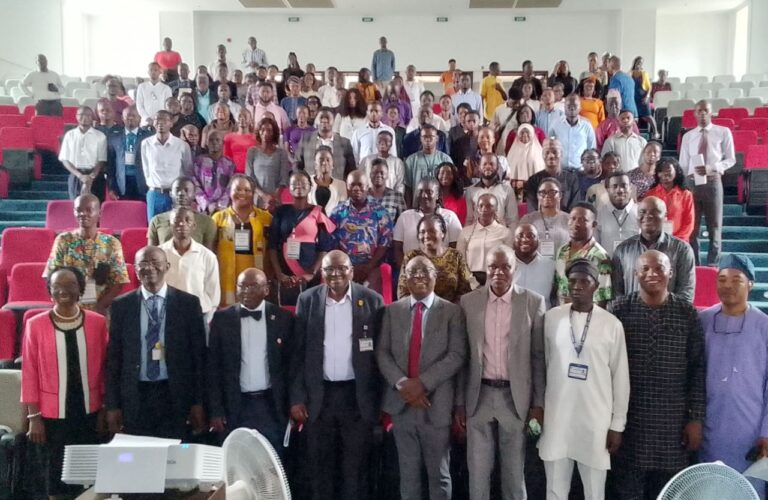
Economic and financial experts at the University of Ibadan have highlighted how Nigeria can turn global economic disruptions into shared prosperity.
The experts spoke on Monday at the opening of a maiden International Conference on Economics, Finance and Business organised by the Faculty of Economics and Management Sciences, University of Ibadan.
Host and dean of the faculty, Akanni Lawanson, said the faculty deliberately organised the conference to move from the gallery to the centre of national economic debate.
Mr Lawanson said global economic disruptions were no longer abstract, noting that the International Monetary Fund had cut world growth to 3.0 per cent for 2026. According to him, this is due to the war in the Middle East, with oil prices at 89 dollars per barrel and shipping through the Strait of Hormuz disrupted.
He explained that while higher oil prices lifted reserves to $55.05 billion and helped Nigeria grow 4.43 per cent in Q2 2026, they also raised fuel and fertiliser costs for market women and farmers.
Mr Lawanson listed reforms since May 2023, including subsidy removal, forex unification, and the MPR, which rose to 27.5 per cent and now peaks at 23 per cent. He said that bank recapitalisation and new tax laws were not enough for survival, stressing that sacrifice must buy transformation.
Mr Lawanson said inflation fell to 15.39 per cent in August, but prices were still rising, with food inflation at 19.57 per cent. He added that debt was currently N166.79trn and 63 per cent of Nigerians, about 140 million, were living in poverty, saying, “The market woman does not eat reserves.”
Keynote speaker Adeola Adenikinju, former president of the Nigerian Economics Society, said Nigeria was living two realities. He explained these were macro healing, with reserves at $55.25 billion, and households hurting, with poverty rising from 56 per cent in 2023 to 63 per cent in 2025.
Mr Adenikinju said Nigeria was vulnerable because 71 per cent of its exports were still crude oil, with over 80 million people lacking electricity, growth bypassing agriculture where the poor work, and most jobs informal.
He drew lessons from South Korea, Indonesia, Malaysia, Botswana and Mauritius, saying they saved windfalls, fixed agriculture first, tied support to exports and built power, clusters and skills.
He proposed a Nigeria Competitiveness Compact that would stabilise the economy with an oil windfall rule, fix power and logistics, add value to agriculture and minerals, build skills, deploy AI, finance production, and use AfCFTA for exports.
Second keynote speaker Afolabi Olowookere, IMF executive director (alternate) for West Africa, said disruption is now evident in Africa’s food and energy prices, debt service, and employment. Mr Olowookere listed six forces rewiring the world, including geopolitics, changing trade rules, AI, the energy transition, high debt, and climate, noting they hit at the same time and must be tackled as a system.
He said Africa could turn disruption into opportunity only if it built six capabilities: macro stability, credible institutions, power and logistics, skills and technology, regional scale, and patient finance.
Mr Olowookere warned that Africa must avoid being merely a consumer of imported AI, urging investment in local problem-solving for agriculture, health, education and tax administration. He said reliable power, implementing AfCFTA with interoperable payments and standards, and diversifying funding beyond expensive $12 billion Eurobonds were key to turning fragmented markets into continental scale.
Secretary to the Oyo state government, Musibau Babatunde, said the solution lay in infrastructure linked to productivity and providing security for farmers and their crops.
Declaring the conference open, the vice-chancellor of the university, Kayode Adebowale, said geopolitical tensions, inflation and debt made the theme urgent. He urged universities to shape policy tools by translating research into policy briefs, not just observe.
(NAN)

We have recently deactivated our website's comment provider in favour of other channels of distribution and commentary. We encourage you to join the conversation on our stories via our Facebook, Twitter and other social media pages.

More from Peoples Gazette

States
Independence: NBA urges Nigerians to expect better future
The NBA said that ordinary Nigerians should be deriving benefit from the subsidy removal rather than hardship.

Agriculture
FG tasks ECOWAS on leveraging financing strategies for agroecology
The federal government has urged stakeholders in the agriculture and finance sectors in the West Africa region to leverage financing strategies to enhance agroecology practices

Politics
Katsina youths pledge to deliver over 2 million votes to Atiku
“Katsina State is Atiku’s political base because it is his second home.”

Politics
Otti pledges accelerated work on Abia Industrial Park project
Governor Alex Otti on Tuesday assured that the government will accelerate construction work at the Abia Industrial Innovation Park “in the coming weeks and months”.
Politics
INEC gives political parties 14 days to challenge exclusion of candidates from 2027 elections
INEC has given political parties affected by its recent decision to delist several governorship candidates contesting the 2027 elections 14 days to file a formal challenge.

World
Gambari hails Nigeria’s historic UN budget leadership, advises Jimoh on consensus-building
Mr Gambari, a former UN under-secretary-general, said Nigeria’s assumption of the influential position was particularly significant amid mounting financial pressures.
Rights
Nigeria condemns attacks on fellow Africans, demands action against xenophobia
Nigeria has condemned rising xenophobic attacks against Africans, warning that discrimination threatens continental solidarity, integration and peaceful coexistence.
Economy
Sokoto govt dismisses poverty ranking, lists empowerment strategies
Bashir Achida, the budget and economic planning commissioner in Sokoto, has dismissed claims that poverty has worsened under the present administration.
Economy
Sokoto ranked third poorest state, ADC candidate slams govt over misplaced priorities
ADC has criticised Sokoto government over rising poverty and poor accountability that allegedly hindered development.


