

IMF advises countries to replace fuel subsidies with targeted support for poor people
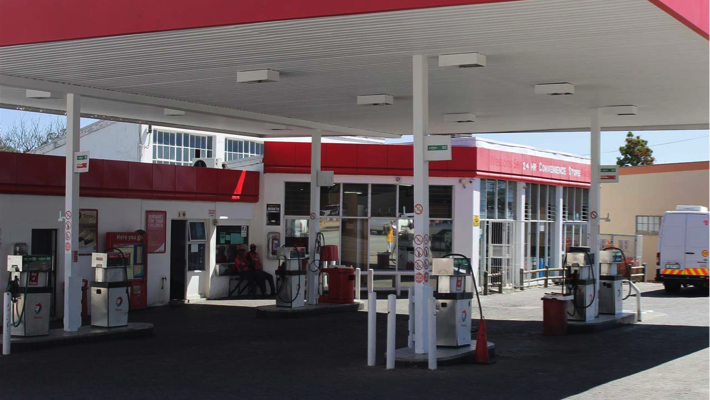
The International Monetary Fund has urged countries to replace blanket fuel subsidies with targeted support for vulnerable households.
The IMF warned that keeping fuel prices artificially low was costly and regressive and could worsen pressures on global energy markets.
Rodrigo Valdés, at IMF’s Fiscal Affairs Department, said this while fielding questions from journalists at the IMF/World Bank fiscal monitor news briefing on Wednesday in Bangkok.
He said fuel subsidies were not the most effective way to protect citizens from rising energy prices because they often benefited higher-income households that consumed more fuel, while diverting public resources from people who needed assistance most.
“It’s very, very expensive for a typical country in the world,” Mr Valdés said.
Mr Valdés added that governments had better options for cushioning the impact of higher fuel prices on households and businesses.
He urged countries to use available fiscal resources to strengthen social safety nets and provide direct assistance to vulnerable households, particularly where governments have reliable data to identify those in need.
“It is easy to see that that subsidy is relatively regressive in many places. So it’s not the best tool. There are better tools to cope with the shock. If you have fiscal space, you can deploy your safety net. You have data of the households who need help,” he said.
Mr Valdés also suggested targeted interventions to ease transportation costs, including subsidising public transport fares, instead of keeping gasoline and diesel prices artificially low for all consumers.
“Gasoline could go up, and perhaps bus fees may be subsidised in a way. That is a much better policy at the end of the day than just a blanket subsidy,” he said.
He noted that recent government responses to energy price shocks had improved compared with policies implemented during the 2020 and 2022 crises, although some countries still relied on fuel subsidies.
Mr Valdés warned that fuel subsidies could also have consequences beyond national borders by preventing domestic demand from adjusting when global fuel supplies decline.
According to him, this could force other consumers to absorb more of the adjustment and contribute to higher prices in international markets.
Meanwhile, Davide Furceri, division chief of the IMF’s fiscal affairs department, said governments should complement better-targeted spending with stronger domestic revenue mobilisation to address fiscal pressures while protecting long-term economic growth.
Mr Furceri said countries with low tax revenues, including Ethiopia and Nigeria, needed to broaden their revenue bases to meet rising debt-servicing costs and generate resources for development.
“It is important to have sufficient revenue for tourism. One, because this revenue will help the countries to pay high interest rate costs, and second, because it will generate sufficient resources the countries can use to spend for growth,” he said.
He added that governments should improve tax systems by removing distortions that undermine economic activity while protecting spending on education, healthcare and public investment.
On social protection, Mr Furceri said countries should gradually develop national registries and digital payment systems to improve assistance delivery.
“In the short term, however, governments could use existing mechanisms such as school feeding programmes, geographical targeting and support for vulnerable farmers,” he said.
(NAN)

We have recently deactivated our website's comment provider in favour of other channels of distribution and commentary. We encourage you to join the conversation on our stories via our Facebook, Twitter and other social media pages.

More from Peoples Gazette

States
Independence: NBA urges Nigerians to expect better future
The NBA said that ordinary Nigerians should be deriving benefit from the subsidy removal rather than hardship.

Agriculture
FG tasks ECOWAS on leveraging financing strategies for agroecology
The federal government has urged stakeholders in the agriculture and finance sectors in the West Africa region to leverage financing strategies to enhance agroecology practices

Politics
Katsina youths pledge to deliver over 2 million votes to Atiku
“Katsina State is Atiku’s political base because it is his second home.”
Politics
Kano’s only female governorship candidate vows to tackle drug abuse
Ms Ahmad, who is contesting on the Because Of Our Tomorrow party platform, said this in an interview on Wednesday in Kano.

Health
NGO, National Park Service sign MoU to promote health, environmental sustainability
Mr Goni explained that the MoU was not sacrosanct and could be amended by mutual agreement between both parties.
Economy
Palm Oil: Experts advocate gene editing, improved field management
Oil palm breeding experts have advocated integrating conventional breeding methods, modern biotechnology, and gene-editing technology to boost productivity.

Abuja
NAF band strategic to communication, operations, says Aneke
Sunday Aneke, the chief of air staff, says the 2026 Nigerian Air Force music workshop is timely and forward-looking in repositioning military music beyond ceremonial duties.

States
Only nine women among 60 candidates for Kaduna Reps seats
Nine women are among 60 candidates contesting for House of Representatives seats in six Kaduna constituencies ahead of the 2027 elections.

Agriculture
FG distributes fertilisers to 5,040 Bauchi farmers
The federal government distributed fertilisers to 5,040 farmers in Bauchi State under the National Agricultural Development Fund.


