

In Bille, even home is no longer safe
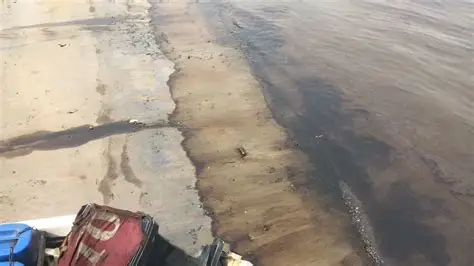
There are some stories you report and eventually move on from. There are others that follow you home, settle somewhere inside you and refuse to leave. For me, Bille has become the latter.
I have tried to forget the images, the voices, the fear in people’s eyes and the strange sight of water bubbling as though something beneath the earth is desperately trying to escape. But I keep returning to Bille. And lately, I keep thinking about Miss Joy.
There is something about her story, and the memory of her voice, that I have not been able to get out of my head. Perhaps because her death was so cruel. Perhaps because she was simply resting in her room, the one place where every human being should feel safe.
Joy Amos was only 28. In September 2026, an explosion tore through her room in Bille, leaving her with terrible burns. An account I heard suggested that a mobile phone may have triggered the ignition, although the actual cause has not been established. She struggled to survive, but on 22 September, Joy died from complications of her injuries.
I cannot imagine her pain. I cannot imagine what her family endured watching someone they loved suffer so terribly. And I cannot stop thinking about the possibility that another family in Bille may be living with the same danger tonight. Because the gas is still a threat. And the people are still there.
It began around October 2025, when fishermen and residents of Bille Kingdom, Degema Local Government Area of Rivers State, noticed something unusual. Water in surrounding creeks and swamps was bubbling. There was a strange smell, and gas appeared to be escaping from beneath the earth. What initially seemed like an isolated occurrence began appearing in wells, waterways, residential compounds and even school premises.
Imagine waking up one morning to discover that the ground around your house is releasing flammable gas. Imagine finding bubbles rising from the well your family has depended on for years. Imagine wondering whether lighting your cooking stove could cause an explosion. Now imagine living with that fear for almost a year.
This is what has become of Bille, a historic fishing community surrounded by water, whose people can no longer trust many of the wells and underground water sources they once depended on.
Government investigations have acknowledged groundwater contamination. Families now struggle to access safe drinking water, a particularly cruel reality for a community accessible largely by boat. Water must be transported, purchased or sourced from elsewhere.
Imagine being surrounded by water and having none you can safely drink.
Then there are the children. Reports have emerged of pupils becoming ill, vomiting and being moved to other communities for safety. Residents have also recounted incidents of students fainting in classrooms. More recently, I heard of a woman, said to be about sixty years old, who suddenly collapsed. The medical causes of these individual incidents still require investigation, but the broader pattern of reported illness should alarm anyone paying attention.
In December 2025, tests reportedly conducted by the National Oil Spill Detection and Response Agency (NOSDRA) found methane at one affected location at approximately 10,000 times the normal background level, according to Amnesty International. Methane is highly flammable and can displace oxygen in enclosed spaces. Other gases associated with environmental seepage may present additional health risks.
Yet perhaps one of the most disturbing accounts I encountered was that some young people had reportedly connected pipes to escaping gas and channelled it towards their generators.
Think about that for a moment. An entire community faces an uncontrolled gas emergency, and some young people are improvising ways to turn the escaping gas into electricity. We may call it ingenuity, but there is nothing reassuring about using an untested, uncontrolled gas source as domestic fuel. One spark, one faulty connection, one mistake could produce another tragedy.
And then there is the air itself. Through the environmental monitoring work of the Media Awareness and Justice Initiative (MAJI), air-quality readings from Bille are available on DataCab.io. One recorded PM2.5 concentration reached an extraordinary 721.3 micrograms per cubic metre. Another eight-hour monitoring period showed an average of 128.8 micrograms per cubic metre, with repeated pollution spikes.
For context, the World Health Organization recommends a 24-hour average PM2.5 concentration of no more than 15 micrograms per cubic metre. These are different measurement periods, and the sensors require independent verification, particularly under Bille’s humid conditions. But the warning is serious.
PM2.5 consists of tiny airborne particles capable of penetrating deep into the lungs. Repeated exposure to high concentrations increases the risks of respiratory illness, aggravated asthma, heart disease and stroke. Long-term exposure is also associated with chronic lung disease and lung cancer.
The monitor does not measure methane concentration directly, nor does it establish the source of the particles. But alongside the documented gas seepage, these readings demand a comprehensive and publicly accessible environmental health investigation.
And where are the institutions responsible for protecting the people? The Nigerian Upstream Petroleum Regulatory Commission (NUPRC), NOSDRA, the federal government and the Rivers State government are all aware of Bille’s emergency. Officials have visited. Investigations have been announced. Relief has been approved. There have been meetings, assurances and promises.
In July, the House of Representatives openly criticised the slow response of NUPRC and NOSDRA to the crisis. Yet Bille’s people continue waiting for the kind of intervention that actually makes their homes safe.
We have become remarkably efficient at responding to disasters with delegations. Government officials arrive, cameras roll, statements are issued, and everyone promises that something will be done. The gas, unfortunately, does not read press statements.
Bille’s suffering also exists against the background of its long-running environmental litigation involving Shell. For more than a decade, the community and individual claimants have pursued legal action in the United Kingdom over historic oil pollution and environmental damage. Shell has contested significant aspects of the claims. The current gas emissions have not been legally established as Shell’s responsibility, but the wider history exposes how painfully long communities can wait for environmental justice.
And perhaps this is what troubles me most.
Our LINCgreen team spent approximately seven days in Bille documenting Boiling Waters, a documentary recognised with an Africa Climate Story of the Year award in 2026.
We did not want to simply arrive, interview residents, capture their suffering and leave. We wanted to stay, to listen, to understand and to experience something of what the people were going through. We wanted to soak ourselves in their reality, not merely observe it through a camera lens.
We visited affected locations, watched the bubbling water, listened to frightened families and documented a community struggling to live with an invisible danger.
But there is something about that experience that almost nobody knows. After returning from Bille, every member of our team fell ill.
I cannot scientifically establish that our illnesses resulted from exposure during the visit. But the experience left me with a question I have never been able to shake.
We were there for seven days. The residents have been living with this emergency for almost a year. When we became ill, we were already home. We had left Bille. We could seek treatment, rest and recover somewhere else. What about those who cannot leave?
What about the fishermen who depend on those waters? The mothers preparing food for their children? The elderly who have spent their entire lives there? The families who cannot afford to relocate? And what about the next Joy Amos?
We should not have to wait for another death to establish that Bille is facing a serious emergency.
The immediate answer must include evacuation from areas assessed to be unsafe, alongside urgent independent gas testing, clean water, medical care and measures to stop the emissions. If the threat extends across the community, wider temporary relocation must be planned with residents, with housing, transport and livelihood support.
But who takes responsibility? The federal government? The Rivers State government? The regulators? The oil companies operating around the area?
Determining the source of the gas and any legal liability is essential. But that investigation cannot become an excuse for delaying the protection of human lives. The government has a duty to act now and recover costs from any responsible party once liability is established.
Bille is not an abandoned oilfield. It is a community of human beings, people with names, voices, histories, children, dreams and the simple desire to live safely in the place they call home.
I went to Bille hoping to tell a story that would make people pay attention. I returned with something heavier: the knowledge that documenting suffering is not the same as ending it.
Our documentary may win awards. The photographs may travel. The story may be shared across the world. But none of those things means very much if the people who trusted us with their stories remain exposed to the same danger.
I still hear Joy’s voice in my memory. And every time I think of her, I return to one question. If we already know that people may die simply by remaining in their homes, how many more deaths will it take before someone decides to move them to safety?
Bille is not asking for sympathy alone. Bille is asking to live. And in a country that has earned so much from the wealth beneath the Niger Delta, that should not be the hardest demand to meet.
- Tobechukwu Diolu is an environmental researcher and executive director of the LINCgreen Initiative.

We have recently deactivated our website's comment provider in favour of other channels of distribution and commentary. We encourage you to join the conversation on our stories via our Facebook, Twitter and other social media pages.

More from Peoples Gazette

States
Independence: NBA urges Nigerians to expect better future
The NBA said that ordinary Nigerians should be deriving benefit from the subsidy removal rather than hardship.

Agriculture
FG tasks ECOWAS on leveraging financing strategies for agroecology
The federal government has urged stakeholders in the agriculture and finance sectors in the West Africa region to leverage financing strategies to enhance agroecology practices

Politics
Katsina youths pledge to deliver over 2 million votes to Atiku
“Katsina State is Atiku’s political base because it is his second home.”

Sport
Ballon d’Or: Spain’s Luis de la Fuente wins ‘Men’s Coach of the Year’
Spain manager Luis de la Fuente won the ‘Men’s Coach of the Year’ award on Monday at the 2026 Ballon d’Or ceremony at the London Palladium, England.

Heading 4
Microsoft moves to lay off 60,000 employees to cut costs
Microsoft says it is offering buyouts to about 60,000 of its global workforce to cut costs and free up resources to fund its AI investments.

Health
Nigerians demand immediate return of N10 billion Ebola fund from Gbajabiamila
Nigerians are asking Femi Gbajabiamila, the chief of staff to President Bola Tinubu, to account for the ₦10 billion the administration approved for the Ebola emergency response.

Politics
Oyebanji asks Ekiti assembly to approve three commissioners, 10 advisers
Governor Biodun Oyebanji has sought the Ekiti State House of Assembly’s approval to reappoint three commissioners and appoint 10 special advisers.
World
Mother stranded after daughter evicts her from inherited home
The transfer left the mother vulnerable, as the daughter became the sole registered owner of the property.

Hot news Home top
2026 Ballon d’Or: Arsenal’s Bukayo Saka wins Socrates Award for humanitarian work
Bukayo Saka wins the 2026 Ballon d’Or Socrates Award for his support of charity and humanitarian services.


