

FG targets 20% increase in eye care workforce by 2030

The federal government says it is targeting a 20 per cent increase in Nigeria’s active eye care workforce and a 30-percentage-point rise in effective cataract surgical coverage (eCSC) by 2030.
The Minister of State for Health and Social Welfare, Iziaq Salako, said this in his closing address at the Global Summit for Eye Health held in St. John’s, Antigua and Barbuda.
Mr Salako said Nigeria would mobilise domestic resources and strengthen collaboration with Commonwealth and international partners to achieve the targets and ensure measurable progress in eye health.
“We pledge to take the resolutions forged here in Antigua back to our domestic health architecture, mobilising domestic public and private sector resources,” he said.
He added that Nigeria would work with Commonwealth and international partners “to track real, measurable progress.”
The minister said Nigeria would continue integrating primary eye care into the Basic Health Care Provision Fund, train 15,000 primary health care workers and provide five million pairs of ready-made reading spectacles.
He added that the government planned to deliver 25,000 fully subsidised cataract surgeries by 2027 as part of efforts to reduce avoidable blindness.
Mr Salako said the commitments reflected Nigeria’s determination to accelerate Universal Health Coverage and improve access to quality eye care, particularly among vulnerable populations nationwide.
He said Nigeria was among the beneficiaries of the World Health Organisation (WHO) Global Cataract Surgery Initiative, known as SEE 2045, which seeks to eliminate cataract-related blindness.
“Today, as part of the takeaway from this summit, we are setting our sights on an ambitious but feasible goal: eliminating cataract-related blindness through the WHO Global Cataract Surgery Initiative (SEE 2045), of which my country is a beneficiary.
“This project establishes cataract elimination as only the second global elimination target for a Non-Communicable Disease in WHO history,” he said.
The minister congratulated participating countries, including Antigua and Barbuda, Bangladesh, Tanzania and China, and urged them to show that equitable access to quality cataract surgery was achievable at scale.
He urged the countries to document successes, measure outcomes, and share implementation strategies to guide global efforts to eliminate avoidable blindness and improve eye health.
Mr Salako emphasised the importance of partnerships in addressing avoidable vision loss, noting that government alone could not shoulder the responsibility of improving eye health.
He said philanthropic partners had pledged $60 million to support assistive technology, while 15 private sector commitments represented investments exceeding $ 468 million to accelerate eye care implementation.
The minister added that organisations outside government had made about 143 other commitments, reflecting growing support for global eye health initiatives.
“Eye health cannot be the responsibility of government or of one sector alone,” he said.
Mr Salako said vision loss has far-reaching consequences beyond individual health, affecting education, household welfare, personal and road safety, and national productivity.
He recalled that about 25 years ago, he participated as a young medical officer in the JigiBola initiative introduced in Lagos State to provide free eye screening, eyeglasses and cataract surgery.
He said the initiative was now being modelled nationally through the Effective Spectacle Coverage Initiative Nigeria, also known as JigiBola 2.0.
Mr Salako said the summit had helped place eye health at the centre of global development and the Commonwealth agenda, urging participating countries to sustain their commitments.
He called on delegates to return to their respective countries as eye health advocates and ensure people in need could access spectacles, timely referrals and cataract surgery.
The Global Summit for Eye Health brought together government leaders, international organisations and partners to advance global efforts to eliminate avoidable vision loss.
(NAN)

We have recently deactivated our website's comment provider in favour of other channels of distribution and commentary. We encourage you to join the conversation on our stories via our Facebook, Twitter and other social media pages.

More from Peoples Gazette

States
Independence: NBA urges Nigerians to expect better future
The NBA said that ordinary Nigerians should be deriving benefit from the subsidy removal rather than hardship.

Agriculture
FG tasks ECOWAS on leveraging financing strategies for agroecology
The federal government has urged stakeholders in the agriculture and finance sectors in the West Africa region to leverage financing strategies to enhance agroecology practices

Politics
Katsina youths pledge to deliver over 2 million votes to Atiku
“Katsina State is Atiku’s political base because it is his second home.”
Hot news Home top
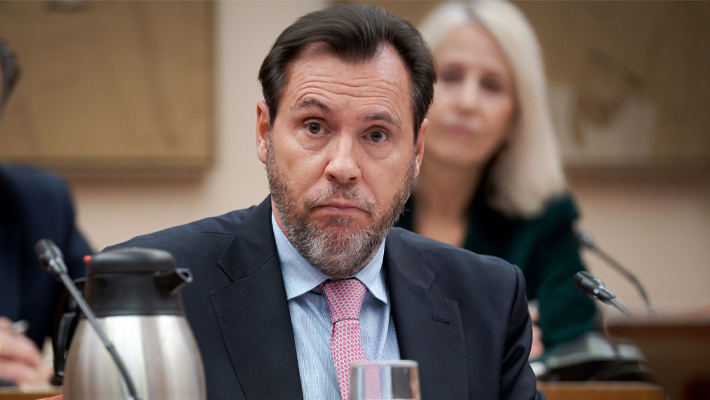
Spain’s transport minister resigns six days after train collision kills 68
Mr Puente announced his resignation in Congress when he appeared to speak about the deadly train crash that occurred last Wednesday.
Health
FG targets 20% increase in eye care workforce by 2030
Mr Salako said Nigeria would mobilise domestic resources and strengthen collaboration with Commonwealth and international partners to achieve the targets.

World
CHOGM 2026: Commonwealth foreign ministers seek stronger cooperation
The meeting was chaired by Everly Paul Chet Greene, Antigua and Barbuda’s Minister of Foreign Affairs, Trade and Immigration.

Hot news Home top
ADC, NDC accuse APC of political intimidation, violence in Edo
The ADC and NDC called for an immediate end to alleged political intimidation, violence, and attacks against opposition parties in Edo.

Abuja
Alleged Cyberbullying: SSS urges court to reject Sowore’s request to subpoena lead lawyer as witness
The SSS, through its lawyer, Kenneth Cyril-Ita, told Justice Mohammed Umar that Mr Sowore’s request was a ploy to delay his trial.

Economy
MAN unveils programme to reduce manufacturers’ energy costs
Mr Tegbe reiterated the government’s commitment to collaborating with manufacturers to address their electricity challenges.


