

GHIV Africa, UNICEF enrol 877 out-of-school children in Yobe
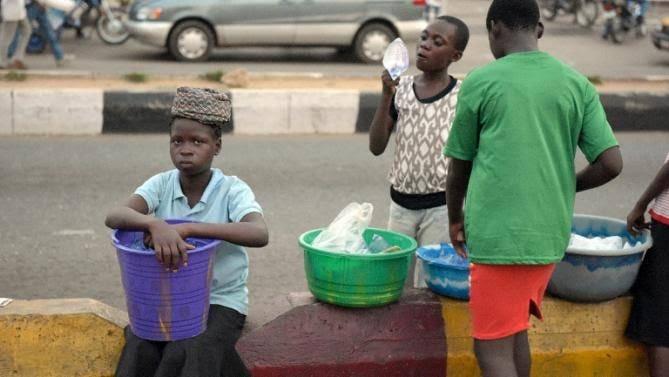
The Global Village Healthcare Initiative for Africa (GHIV Africa), an NGO supported by UNICEF, has facilitated the enrolment of 877 out-of-school children into formal schools in Jakusko Local Government Area of Yobe.
The intervention, implemented under the Education Cannot Wait (ECW)-funded Multi-Year Resilience Programme (MYRP II), also provided vocational and livelihood skills opportunities for beneficiaries.
This feat was announced at a mainstreaming ceremony held in Jakusko on Friday, where learners who completed the Accelerated Basic Education Programme (ABEP) and Tsangaya learning programmes were celebrated.
Speaking at the ceremony, the Yobe Commissioner for Basic and Secondary Education, Abba Adam, commended GHIV Africa, UNICEF and other development partners for supporting the state government’s efforts to address the challenge of out-of-school children.
Mr Adam, represented by the ministry’s Director of Quality Assurance, Adamu Garba, reaffirmed the government’s commitment to ensuring access to education for every child in the state.
He urged learning facilitators to intensify efforts to identify children still outside the education system, particularly those in rural communities, markets and other public spaces, and encourage them to enrol in learning centres.
The commissioner also called on parents, caregivers and community leaders to cooperate with implementing organisations, stressing that education was a fundamental right of every child.
Earlier, the Executive Director of GHIV Africa, Mulikat Bamidele, described the mainstreaming exercise as a significant milestone in the organisation’s efforts to expand educational opportunities for children affected by conflict, displacement and other barriers to schooling.
She said a total of 1,131 children were initially enrolled in the intervention, out of which 1,080 participated in the final examinations.
“Of the 1,080 learners, 877 would transition into formal schools, 150 would proceed to vocational and livelihood skills acquisition centres, while 53 learners from Tsangaya centres opted to continue their Islamic education.
“A breakdown showed that 911 learners were enrolled in ABEP centres, with 815 transitioning into formal schools and 96 proceeding to vocational and livelihood skills programmes.
“Similarly, 169 learners were enrolled in Tsangaya centres, out of which 62 would proceed to formal schools, 54 would undergo vocational and livelihood skills training, while 53 opted to continue their Islamic education,” Ms Bamidele said.
She said the intervention was a three-year programme currently in its second year, adding that plans were underway to enrol another cohort of learners and extend the initiative to additional communities.
She explained that the organisation’s responsibility would not end with the completion of the non-formal learning programme, noting that sustained support would be provided to ensure the successful transition of beneficiaries into their respective educational pathways.
According to her, GHIV Africa will strengthen follow-up activities through community volunteers, regular engagement with parents and teachers, and collaboration with school authorities to monitor attendance, address emerging challenges and prevent school dropout.
She acknowledged the support of UNICEF and Education Cannot Wait, as well as the cooperation of government education agencies, traditional institutions, parents and other community stakeholders.
Also speaking, the Secretary of the Yobe State Agency for Mass Education, Usman Gwasko, described the exercise as an important bridge between non-formal and formal education.
Mr Gwasko said non-formal education provided an alternative pathway for children and individuals who had missed opportunities for conventional schooling, enabling them to acquire foundational knowledge and progress.
In his remarks, the Executive Secretary of the Yobe State Arabic and Islamic Education Board, Umar Abubakar, represented by Usman Lawan, commended GHIV Africa for creating opportunities for children in Tsangaya learning centres to access broader educational pathways.
He said the integration of Tsangaya learners into additional educational opportunities would broaden their knowledge, improve their prospects and equip them with skills to contribute meaningfully to society.
Some beneficiaries, Abubakar Yusuf and Umaima Ahmed, expressed appreciation to GHIV Africa and its partners for providing them with the opportunity to pursue formal education.
They said participation in the programme had broadened their understanding of the importance of education and strengthened their determination to continue learning and make productive use of the opportunities provided.
Each learner who was mainstreamed was presented with a set of school uniforms, writing materials, footwear and certificates in recognition of their participation and achievements.
The intervention is being implemented by GHIV Africa with support from UNICEF through the Education Cannot Wait-funded Multi-Year Resilience Programme (MYRP II), which seeks to improve access to quality and inclusive education for conflict-affected and out-of-school children.
(NAN)

We have recently deactivated our website's comment provider in favour of other channels of distribution and commentary. We encourage you to join the conversation on our stories via our Facebook, Twitter and other social media pages.

More from Peoples Gazette

States
Independence: NBA urges Nigerians to expect better future
The NBA said that ordinary Nigerians should be deriving benefit from the subsidy removal rather than hardship.

Agriculture
FG tasks ECOWAS on leveraging financing strategies for agroecology
The federal government has urged stakeholders in the agriculture and finance sectors in the West Africa region to leverage financing strategies to enhance agroecology practices

Politics
Katsina youths pledge to deliver over 2 million votes to Atiku
“Katsina State is Atiku’s political base because it is his second home.”
NationWide
CBN Africa targets N10 million in telethon to support vulnerable Nigerians
The five-day fundraising broadcast, which began on November 9 and will end on November 13.
States
2027: Enugu community endorses NDC Reps candidate Arum
Mr Arum urged the stakeholders to participate actively in the electoral process.
Heading 2
GHIV Africa, UNICEF enrol 877 out-of-school children in Yobe
The commissioner reaffirmed the government’s commitment to ensuring access to education for every child in the state.

States
Oil Theft: Group rallies Niger Delta communities to support military
Mr Victor warned that oil theft and illegal refining were causing severe environmental damage, including pollution of rivers and groundwater.

Education
FUTA secures N6 billion Intervention funds as 256 students bag first class
She said N4 billion was secured from the Tertiary Education Trust Fund (TETFund) for engineering and technology development.

Faith
Cleric urges LASUED graduates to embrace humility, integrity
The cleric described education as a blessing from Allah.


