

Economist urges FG to tackle port delays
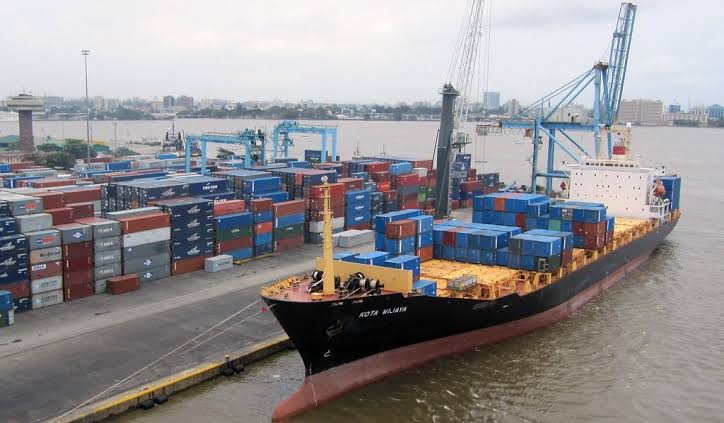
An economist, Bongo Adi, has urged the federal government to address port delays, high risks and legal uncertainty to improve the country’s maritime competitiveness and attract investment.
Mr Adi said the challenges were pricing Nigeria out of its own waters and discouraging carriers, insurers and lenders from investing in the country’s maritime sector.
He spoke at the 17th Lecture and Annual General Meeting of the Nigerian Maritime Law Association (NMLA) on Friday in Lagos.
He described Nigeria’s maritime challenge as a failure to convert its vast potential into economic gains, noting that investors were attracted by risk-adjusted returns rather than opportunities alone.
Using the O-ring theory of economic development by Michael Kremer, Mr Adi explained that competitiveness depended on the strength of interconnected activities, with the weakest link determining the overall outcome.
He said Nigeria’s ports handled 68.2 million tonnes of cargo and 815,236 twenty-foot equivalent units (TEUs) of containers in the first half of 2026, yet the country ranked 45th in global liner connectivity, behind smaller regional competitors.
According to him, quay infrastructure was no longer the weakest link, as Apapa, Tin Can and Onne ports had improved their vessel turnaround times compared with ports in Lome, Tema and Abidjan.
He, however, identified delays in cargo clearance as a major constraint to the sector’s competitiveness.
Mr Adi said shipping companies, insurers and lenders assessed Nigeria based on turnaround time, investment risks and the enforceability of legal agreements.
He called for a reduction in cargo clearance time from the current 21-day target to seven days.
The economist proposed that the NMLA introduce an annual Maritime Justice and Competitiveness Scorecard from November 2027, supported by a reliable official data system.
He also urged stakeholders to direct funding towards addressing the weakest links in the maritime value chain.
The president of NMLA, Mike Igbokwe, SAN, said the lecture provided an opportunity for stakeholders to share perspectives, raise questions and contribute to discussions on the development of the maritime sector.
Mr Igbokwe expressed optimism that the deliberations would produce useful outcomes, urging participants to engage actively and support stronger collaboration within the industry.
He said Nigeria had an adequate legal framework, particularly the Admiralty Jurisdiction Act, to protect the interests of maritime lenders.
He, however, identified delays in enforcement, prolonged judicial processes and statutory priorities that placed mortgage holders at a disadvantage as major challenges.
At a panel session titled “Bankability of the Nigerian Maritime Industry and What Lenders Really Want”, participants examined the conditions required to attract financing into the sector.
The moderator, a maritime lawyer, Ogochukwu Eze, said the discussion should focus on practical factors that encouraged lenders to provide capital, protect cash flows and enforce security in Nigeria.
Also, a maritime lawyer, Chibueze Moubuikwu, said lenders first examined the purpose of a vessel’s acquisition, its employment contract and the certainty of cash flows for loan repayment.
He said other considerations included vessel particulars, existing financial obligations, the borrower’s credibility, insurance coverage and the enforceability of ship mortgages.
Similarly, the division head, Institutional Banking Group, Sterling Bank Plc, Moyomade Akinsoye, said lenders assessed the credibility of sponsors, operators’ track records, contract terms, counterparties, vessel age, nationality and insurance arrangements.
Ms Akinsoye said maritime financing was possible but required careful assessment, particularly because long-term lending involved patient capital.
A legal counsel at Tere Maritime Ltd., Ogonnaya Emele, said shipowners must demonstrate that their vessels could generate sufficient revenue to cover operating costs, repay loans and deliver profits.
She identified market research, charter commitments, employment plans, technical capacity and predictable cash flows as essential requirements for bankable maritime projects.
A financial expert, Yewande Sebore, said bankability depended largely on legal certainty and clarity in financing agreements.
Ms Sebore, also a lawyer, said legal practitioners contributed to bankability through due diligence, assessment of sponsors’ credibility, contract reviews and examination of assignment rights and potential obstacles to cash flows.
A retired admiral of the Nigerian Navy, Niyi Labinjo, said maritime financing covered vessel acquisition, working capital, maintenance and operations, requiring appropriate financial structures from the outset.
He advocated blended financing involving commercial banks, development finance institutions and government intervention to provide concessional lending rates and sustainable funding for shipowners.
The event was attended by the President of the Maritime Arbitrators Association of Nigeria, Jean-Chiazor Anishere, SAN; NMLA secretary, Nneka Obianyor; the association’s first vice-president, Adewale Olawoyin and a member, Oluseyi Fajuyogbe.
Other participants included maritime lawyers, representatives of agencies under the Federal Ministry of Marine and Blue Economy, bankers, students and other industry stakeholders.
(NAN)

We have recently deactivated our website's comment provider in favour of other channels of distribution and commentary. We encourage you to join the conversation on our stories via our Facebook, Twitter and other social media pages.

More from Peoples Gazette

States
Independence: NBA urges Nigerians to expect better future
The NBA said that ordinary Nigerians should be deriving benefit from the subsidy removal rather than hardship.

Agriculture
FG tasks ECOWAS on leveraging financing strategies for agroecology
The federal government has urged stakeholders in the agriculture and finance sectors in the West Africa region to leverage financing strategies to enhance agroecology practices

Politics
Katsina youths pledge to deliver over 2 million votes to Atiku
“Katsina State is Atiku’s political base because it is his second home.”

Abuja
Worshippers, passersby stone Tinubu’s convoy at Abuja mosque, chant ‘Bamayi’
Security guards were also seen dispersing the worshippers and passersby who stoned Mr Tinubu’s convoy.
Economy
Economist urges FG to tackle port delays
He described Nigeria’s maritime challenge as a failure to convert its vast potential into economic gains.

Health
Kano confirms 12 diphtheria cases at boarding school
The KSCDC boss expressed concern over the inadequate supply of vaccines.

Heading 4
Super Eagles defeat Tanzania 3-1 in 2027 AFCON qualifier
Tolu Arokodare scored a brace, finding the net in the 52nd and 60th minutes.

States
Police nab five suspected armed robbers, recover pistol in Ibadan
The command’s spokesperson said the operation was conducted at about 11:16 a.m. on Wednesday.

Heading 1
FCC institutes criminal proceedings against customs boss over recruitment exercise
The FCC alleged that customs failed to provide requested recruitment records.


