


Cardoso projects doubling of private sector credit by 2030
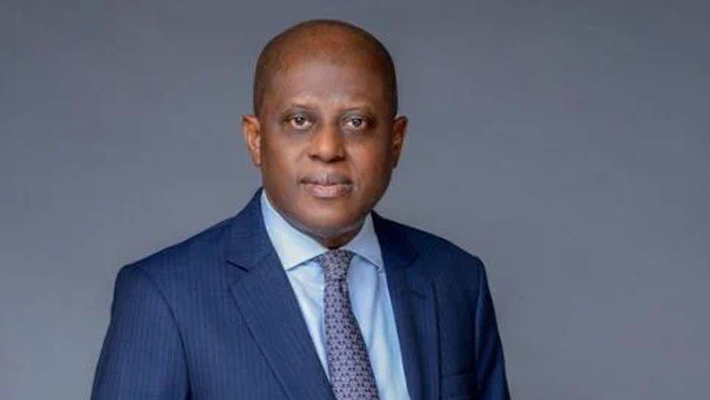
Governor of the Central Bank of Nigeria (CBN), Olayemi Cardoso, has projected at least a doubling of private sector credit by 2030.
Mr Cardoso said this on Friday at the 61st Annual Bankers Dinner, organised by the Chartered Institute of Bankers of Nigeria in Lagos, while outlining Nigeria’s financial sector priorities and economic outlook towards 2030.
He said that the increase in credit would support productive investment and accelerate economic growth.
According to him, achieving the target would require stronger domestic institutional investments, deeper capital markets and financial institutions capable of financing businesses at different stages of growth.
He said there was a need to consolidate recent reforms and translate macroeconomic stability into broader economic opportunities.
Mr Cardoso said that Nigeria’s financial system must become more resilient, innovative and responsive to the needs of a growing economy.
He said that the country must leverage its substantial domestic market, entrepreneurial population, dynamic fintech ecosystem and stronger banking industry to attract and deploy long-term capital.
Mr Cardoso said that the banking sector recapitalisation exercise, which concluded earlier in 2026, had strengthened the industry’s capacity to support economic development.
He said that 33 banks met the revised minimum capital requirements, with approximately N4.65 trillion in fresh capital raised through the exercise.
The CBN governor, however, noted that stronger bank balance sheets alone would not guarantee affordable credit, citing elevated lending risks, high interest rates and weaknesses in credit assessment and collateral systems.
He said that addressing these challenges would require sustained disinflation, stronger credit information infrastructure and improved collaboration between monetary and fiscal authorities.
Mr Cardoso said that Nigeria’s macroeconomic conditions had improved significantly, with inflation declining from 24.48 per cent in January 2025 to 14.06 per cent in October 2026.
He said that external reserves had reached their highest level in approximately 18 years, while foreign exchange market reforms had improved transparency, price discovery and investor confidence.
Mr Cardoso said that the economy recorded 4.43 per cent real Gross Domestic Product growth in the second quarter of 2026.
He stressed that the CBN’s priority was to institutionalise the gains of the past three years through credible monetary policy, regulatory transparency and stronger financial sector governance.
The governor said that the apex bank would introduce a comprehensive and accessible regulatory rulebook in 2027 to provide greater clarity on regulatory requirements and supervisory standards.
He reiterated the CBN’s ambition to achieve sustainable single-digit inflation, saying this would protect purchasing power, provide businesses with greater certainty and support long-term economic growth.
On financial inclusion, Mr Cardoso said that the 2026 Access to Financial Services Survey showed that 79 per cent of Nigerian adults used formal or informal financial services, while 64 per cent accessed digital financial services.
He, however, expressed concern that only 10 per cent of adults borrowed through formal financial channels, despite 53 per cent reporting formal savings.
Mr Cardoso said that the next phase of financial inclusion must focus on making financial services more useful to individuals and businesses, particularly by improving access to appropriate financing.
He also disclosed that the CBN’s Payments System Vision 2028 targeted 95 per cent financial inclusion by 2028, alongside improved payment security, interoperability and reduced fraud.
Mr Cardoso said that the apex bank would strengthen consumer protection, operational reliability and transparency in digital transactions to build confidence in the financial system.
Looking ahead, he said that artificial intelligence and digital assets, including stablecoins, would increasingly shape financial services through applications in credit assessment, fraud detection, payments and cross-border settlements.
The governor said that the CBN would ensure that financial innovation developed within appropriate regulatory safeguards to preserve monetary and financial stability.
He said that Nigeria’s ability to translate financial sector reforms into productive investment, stronger businesses and wider economic opportunities would determine the success of its financial development agenda towards 2030.
(NAN)

We have recently deactivated our website's comment provider in favour of other channels of distribution and commentary. We encourage you to join the conversation on our stories via our Facebook, Twitter and other social media pages.

More from Peoples Gazette

States
Independence: NBA urges Nigerians to expect better future
The NBA said that ordinary Nigerians should be deriving benefit from the subsidy removal rather than hardship.
Agriculture
FG tasks ECOWAS on leveraging financing strategies for agroecology
The federal government has urged stakeholders in the agriculture and finance sectors in the West Africa region to leverage financing strategies to enhance agroecology practices

Politics
Katsina youths pledge to deliver over 2 million votes to Atiku
“Katsina State is Atiku’s political base because it is his second home.”
Economy
Cardoso projects doubling of private sector credit by 2030
Mr Cardoso said that Nigeria’s financial system must become more resilient.

States
Zamfara: Lawal pledges more development projects if re-elected
He urged the people to vote massively for President Bola Tinubu and APC candidates at all levels.
States
SEDC to develop sports facilities in South-East schools, universities
Mr Okoye said it was also meant to stimulate the zone’s sports economy.
Economy
Lagos generates N1.7 trillion revenue to fund infrastructure, social services: Commissioner
Mr Omotoso said the administration had also improved the business environment through the harmonisation of taxes.

Heading 2
IGP urges security agencies to strengthen intelligence sharing, joint operations
According to him, no single agency possesses all the information.
States
Police nab suspected kidnapper, rescue 10-year-old victim in Yobe
Police said that during interrogation, the suspect reportedly confessed to his involvement in the crime.


