

Why Southwest farmers are abandoning food crops: Experts
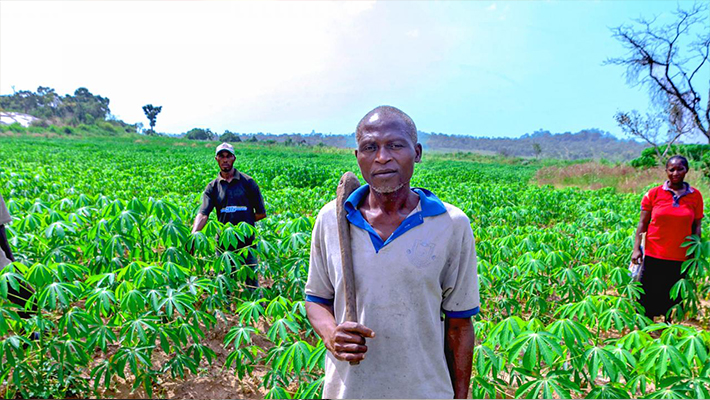
Practitioners in the agriculture value chain from the Southwest have attributed preference for production of cash crops by farmers to high profit, challenges of storage, access to finance, and inadequate security.
Speaking with NAN, they also identified lack of motorable roads from rural farm settlements to markets and activities of middlemen, as disincentives to cultivation of food crops.
A senior lecturer in the Faculty of Agriculture, University of Ibadan, Dr. Idris Badiru, says farmers are in the business to make profit, so they should not be blamed for being rational.
“People will always do what profit them, the government can only make the condition more conducive by subsidising production and providing the infrastructure to enable farmers reduce wastages and access market with ease,” Mr. Badiru said.
He said that hoarding of food might continue as long as farmers’ access to the market was impeded by infrastructure.
“Hoarding, in my view, is the cost we are paying for the past neglect of our basic infrastructure,” Mr. Badiru said. “Let the government invest more on farm to market roads, as well as other major roads and, the monopolistic tendencies of the hoarders will be drastically reduced.”
In his own view, a Crop Scientist with the Institute of Agricultural Research and Training, Ibadan, Dr. Julius Olasoji, said he did not see the need for farmers abandoning food crops for cash crops such as kola, oil palm, coconut, tea and coffee in the Southwest.
Mr. Olasoji said the government should make farming a profitable business to the youth by providing incentives and making policies that would make farming attractive.
“The average age of farmers in Nigeria now is about 60 years. For the country to be self sufficient in food, government at all levels need to support agriculture holistically not politically.
“The Anchor Borrowers’ Programme of the government has been hijacked by cabals. The cabals are now the ones buying back the harvested food crops, which they hoard in their different warehouses without allowing it to get to the consumers,” he alleged.
The crop scientist urged the government to open the various dams across the country and invest massively on irrigation systems.
Also, Samuel Akinade, Chairman, Rice Farmers Association of Nigeria, Oyo State branch, said price instability is one of the reasons why farmers engage in cash crop production.
Mr. Akinade added that insecurity and lack of storage facilities discourage farmers from engaging in food crop production while forcing them to sell immediately after harvest, thereby not allowing them to make profit.
“No farmer is sure that he will be the one to harvest his crop at maturity. It is either the herdsmen will come and graze all or the hoodlums will come with vehicles to harvest all,” he lamented.
Some farmers in Ekiti North, who spoke with NAN at Otun-Ekiti, said they focused on cultivation of cash crops because of the financial benefits.
They attributed lack of access to loans as a major constraint preventing them from cultivation of food crops.
One of the farmers, Ayodele Ibitoye, who is also the Chairman, National Production for Food Security in Moba Local Government Area, said most of the farmers are no longer committed to cultivating food crops because of low financial returns and high cost of investment.
Mr. Ibitoye said that the present day farmers, are more comfortable in cultivating cash crops such as cocoa, coffee, oil palm, rubber and cashew nuts because they are the most popular ones that fetch quick and huge profit for them.
According to him, the situation would have been different if famers had access to financial support from both private organisations and government.
In his own contribution, Chairman of Farmers Association in Ido-Ekiti, Babatope Aboluje, said most of the farmers deliberately invested in the cultivation of cash crops because government had abandoned them.
Mr. Aboluje said that the popular cash crops produced by the farmers are cocoa, coffee and cotton adding that they are making huge money from them.
He asserted that he and his colleagues could not afford to invest in food crops because of the financial implications.
Sulaimon Araokanmi, the Chairman, All Farmers Association of Nigeria (AFAN) in Osun, said that farmers in the state are now abandoning food crops for cash crops due to exploitation by middlemen.
Mr. Araokanmi said that many farmers had been recording losses due to exploitation by middlemen, adding that farmers did not have complete access to direct markets, where they could sell the produce without the help of middlemen.
The AFAN chairman said that recently farmers in the state had resorted to mechanised farming and now sell their produce directly to agro-allied and manufacturing companies, without the interefence of middlemen.
“We have pleaded with government on several occasions to create farmers markets, as it is obtainable in neighbouring states.
“Middlemen usually buy farm produce from farmers at very ridiculous prices and sell the same at very expensive prices in the market.
“Farmers have been operating at a loss with this system but they are now making profit with the planting of cash crops, which they sell directly without the involvement of middlemen,” Mr. Araokanmi said.
He said farmers now cultivate cash crops like cocoa, kolanut, cassava and rice, in large quantities and are making profit.
Adegbemisola Fayoyin, the Coordinating Director, Osun Ministry of Agriculture and Food Security, said the state government had created platform for farmers, where they sell their cash crops directly to manufacturing companies like Cadbury, Nestle, Flour Mills and others in commercial quantities.
Ms. Fayoyin said through the platform, farmers were given specifications by the companies of the kind of cash crops seeds they wanted them to plant and sometimes they gave them money to cultivate it.
The coordinating director said government is also partnering with farmers to revive the cotton industry.
Ms. Fayoyin added that farmers are presently assisted to get loans through the Anchor Borrowers’ Programne, as such, they are doing better now in their operations.
However, Muyiwa Ogungbe, Chairman, National Cotton Association of Nigeria, Ondo State branch, said that farmers in the state have not abandoned food crop production.
Mr. Ogungbe said the farmers now grow arable crops alongside cash crops.
He explained that he is into rice farming as well as cotton production.
“We started rice when nobody was ready to develop rice. I was harvesting over 100 tonnes at a time, but we faced a lot of problems before we could market our rice then.
“When cotton production came, we saw the potential in cotton and saw that developed countries such as China and India, used cotton to develop their economy.
“Then, when other arable crops could not give us what we wanted, that was why we went into cotton and we have so developed it to a reasonable level that we cannot go back.
“This dry season, I have the intention of planting 400 hectares of cotton, but the government is not providing us with an enabling environment.
“We don’t have enough land in Ondo State. There is nowhere we can find 500 hectares in a place in the state,” Mr. Ogungbe said.
He said that local government councils in the state were supposed to set aside at least 1,000 hectares for farming under normal circumstances.
Mr. Ogungbe also commended the Anchor Borrowers’ Programme of the Federal Government, saying that it has been of immense benefit to farmers.

We have recently deactivated our website's comment provider in favour of other channels of distribution and commentary. We encourage you to join the conversation on our stories via our Facebook, Twitter and other social media pages.

More from Peoples Gazette

Agriculture
FG tasks ECOWAS on leveraging financing strategies for agroecology
The federal government has urged stakeholders in the agriculture and finance sectors in the West Africa region to leverage financing strategies to enhance agroecology practices

Politics
Katsina youths pledge to deliver over 2 million votes to Atiku
“Katsina State is Atiku’s political base because it is his second home.”

Politics
FULL TEXT: Tinubu’s October 1 Independence Day speech
Our journey has not always been easy. In truth, it has generally been too hard for too many. We have known moments of great hope and periods of profound disappointment.

Economy
It’s time to share prosperity with Nigerians; my reforms have worked, Tinubu declares
“The emergency treatment is over,” the president declared. “The foundation has been repaired. The central economic task before us has changed.”

Economy
Tinubu shuts down ‘siren song’ of restoring fuel subsidy, says Atiku, others ‘regressive’
“Influential but regressive voices would have us abandon the treatment and return ourselves to the abuse of addictive subsidies, we must resist their siren song,” said Mr Tinubu.

World
Guterres condemns Flydubai mid-air attack, says tragedy averted
The UN chief condemned actions that could endanger passengers and compromise the safety of international civil aviation.

Economy
Obasanjo, Jonathan, Buhari bungled Nigeria’s economy; I’m doing things differently: Tinubu
“For too long, Nigeria’s leaders chose morphine while praying for a miracle that never came. They focused on symptoms while allowing the disease to take hold,” said Mr Tinubu.

Economy
Tinubu doubles down in national broadcast, says harsh reforms necessary to rescue Nigeria’s floundering economy
“The reforms that followed were difficult,” Mr Tinubu said. “The side effects were real. Yet, we must never confuse the medicine with the disease.”


