

UN Security Council lauds Obasanjo, AU’s intervention in Ethiopian crisis
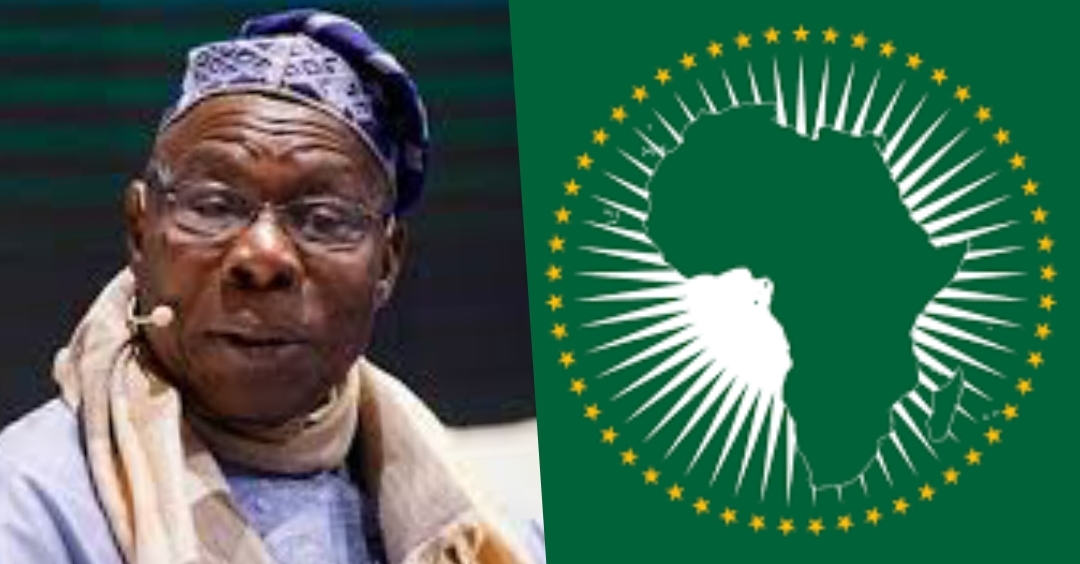
The UN Security Council has expressed support for Nigeria’s former President, Olusegun Obasanjo, for his role aimed at brokering peace in the troubled Ethiopia.
In a press statement, released in New York, members of the Council expressed “deep concern” about the expansion and intensification of military clashes in northern Ethiopia.
“Members of the Security Council reiterated their support for the role of regional organizations, namely the African Union (AU) and its High Representative for the Horn of African Region, Olusegun Obasanjo,” the statement read.
The 15-member Security Council noted the impact of the conflict on the humanitarian situation, as well as the stability of the country and the wider region.
They also welcomed the efforts of the UN Secretary-General António Guterres, who had earlier in the week, said: “The stability of Ethiopia and the wider region is at stake.”
Joining Mr Guterres’ appeal, council members asked parties to refrain from “inflammatory hate speech and incitement to violence and divisiveness.”
The statement called for the respect of international humanitarian law, for safe and unhindered humanitarian access, the re-establishment of public services, and the scaling up of humanitarian assistance.
The council members also called for an end to hostilities and a lasting ceasefire, saying it could be start of “an inclusive Ethiopian national dialogue to resolve the crisis and create the foundation for peace and stability throughout the country.”
The statement also reaffirmed the Security Council’s “strong commitment to the sovereignty, political independence, territorial integrity and unity of Ethiopia.”
After heavy fighting erupted in November 2020 between government troops and those loyal to the Tigray People’s Liberation Front (TPLF), some 5.2 million people remained in need of assistance across the Ethiopian regions of Tigray, Amhara and Afar.
Amidst allegations of widespread human rights abuses on all sides, thousands were feared killed and more than two million have been forced to flee their homes.
Over the past few months, killings, looting and the destruction of health centres and farms, including irrigation systems that were vital to production, had triggered an even larger surge in humanitarian need, the UN organ said.
(NAN)

We have recently deactivated our website's comment provider in favour of other channels of distribution and commentary. We encourage you to join the conversation on our stories via our Facebook, Twitter and other social media pages.

More from Peoples Gazette

Agriculture
FG tasks ECOWAS on leveraging financing strategies for agroecology
The federal government has urged stakeholders in the agriculture and finance sectors in the West Africa region to leverage financing strategies to enhance agroecology practices

Politics
Katsina youths pledge to deliver over 2 million votes to Atiku
“Katsina State is Atiku’s political base because it is his second home.”
Heading 4
Court grants N100 million bail to ex-CCT chairman Danladi Umar who tried Tinubu for assets fraud
The court, however, ordered that the former CCT chairman be remanded at Kuje Correctional Centre until he fulfils the bail conditions.

NationWide
FHC chief judge amends 2026 pre-election rules ahead 2027 polls
The Director of Information of the court, Catherine-Oby Christopher, made this known in a statement on Wednesday in Abuja.

States
Ibadan man pleads guilty of stealing spaghetti, milk, soap, other items worth N750,000
Adeyemo was charged with conspiracy, shop breaking and stealing, to which he pleaded guilty.

Economy
Stock market rebounds, gains N720 billion
The Nigerian stock market rebounded on Tuesday, with investors gaining N720 billion as renewed buying interest lifted key performance indicators.
Africa
UN special agent briefs Security Council on insecurity in Nigeria
On Tuesday, Leonardo Simão briefed the Security Council on political and security developments in Nigeria, West Africa, and the Sahel.

Health
45% of dementia risk preventable, says WHO
WHO released updated guidelines to reduce the risk of cognitive decline and dementia through evidence-based interventions across the life course.


