

Food inflation rises to 18.34% in October; headline inflation marks at 15.99: NBS
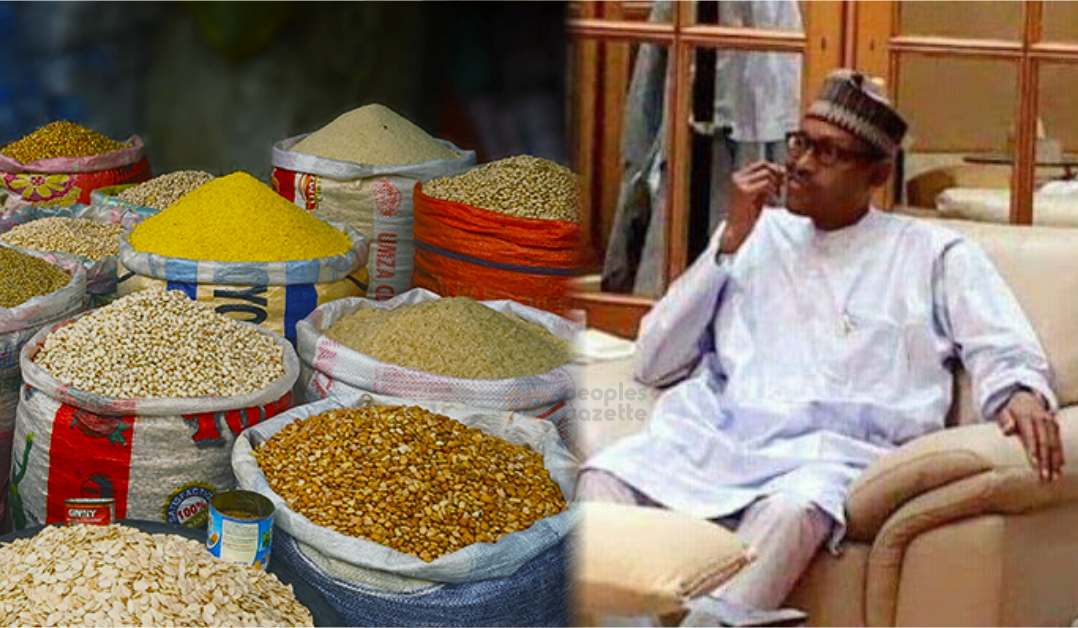
A new report by NBS, Nigeria’s statistics office, said that composite food index rose by 18.34 per cent in October 2021 compared with 17.38 per cent in October 2020.
The nation’s headline inflation was also put at 15.99 per cent, marking a second-month consecutive decline, the office said.
The data was relayed by Simon Harry, the Statistician-General of the Federation on Monday in Abuja at a media conference while presenting the October Consumer Price Index (CPI).
The report attributed the rise in the food index to increase in prices of food products such as coffee, tea and cocoa, milk, cheese and eggs, bread and cereals, vegetables and potatoes, yam and other tubers.
However, on month-on-month basis, the food sub-index increased by 0.91 per cent in October, down by 0.35 per cent points from 1.26 per cent recorded in September.
The ‘’All items less farm produce’’ or Core inflation, which excludes the prices of volatile agricultural produce stood at 13.24 per cent in October, up by 2.10 per cent points when compared with 11.14 per cent recorded in October.
According to the report, on month-on-month basis, the core sub-index increased by 0.80 per cent in October, down by 0.44 per cent point when compared with 1.24 per cent recorded in September.
“The highest increases were recorded in prices of gas, fuels and lubricants for personal transport equipment, vehicle spare parts, non-durable household goods, solid fuel, passenger transport by road, passenger transport by air, garments and cleaning.
“Others are repair and hire of clothing, major household appliances whether electric or not, wine, clothing materials, other articles of clothing and clothing accessories and Liquid fuel,” it said.
Mr Harry noted that the headline inflation reduced from 16.63 per cent recorded in September, indicating a 0.64 per cent decline.
He said, “With this it means that the declining trend for about seven months portends a positive signal given the favourable economic conditions, that rate of inflation in Nigeria would come down to a bearable level.
“So we are hoping that necessary measures will be put in place by government policymaking bodies to maintain this trend.”
Mr Harry, however, said that it was not expected that the downward trend of the inflation figures would be affected by disruptions to economic activities due to violence in some parts of the country.
He added that it was rather very difficult to have such consecutive decline in the trend affected, except there was a shock in the system.
“We pray that there would be no shock to change the narrative and as long as there is no shock we expect that the decline would continue and the inflation rate would continue to decrease rather than remain static or increase,” he said.
The report, on month-on-month basis, indicates that the headline index increased by 0.98 per cent in October, indicating a 0.17 per cent decline than the 1.15 per cent recorded in September.
It also said the percentage change in the average composite CPI for the 12 months period ending in October over the average of the CPI for the previous 12 months period was 16.96 per cent, showing 0.13 per cent point from 16.83 per cent recorded in September.
It said, “The urban inflation rate increased by 16.52 per cent (year-on-year) in October 2021 from 14.81 per cent recorded in October 2020, while the rural inflation rate increased by 15.48 per cent in October 2021 from 13.68 per cent in October 2020.
“On a month-on-month basis, the urban index rose by 1.02 per cent in October, down by 0.19 per cent than the rate recorded in September (1.21) percent, while the rural index also rose by 0.95 per cent in October, down by 0.15 per cent than what was recorded in September (1.10) per cent.
CPI measures the average change over time in prices of goods and services consumed by people for day-to-day living.
(NAN)

We have recently deactivated our website's comment provider in favour of other channels of distribution and commentary. We encourage you to join the conversation on our stories via our Facebook, Twitter and other social media pages.

More from Peoples Gazette

Agriculture
FG tasks ECOWAS on leveraging financing strategies for agroecology
The federal government has urged stakeholders in the agriculture and finance sectors in the West Africa region to leverage financing strategies to enhance agroecology practices

Politics
Katsina youths pledge to deliver over 2 million votes to Atiku
“Katsina State is Atiku’s political base because it is his second home.”

Abuja
ICPC hands over forfeited $65 million housing project to FMBN
The ICPC handed over 27.92 hectares of forfeited land linked to a diverted $65 million housing project to the Federal Mortgage Bank of Nigeria.

States
Police arrest seven suspected pipeline vandals in Adamawa
Police recovered 285 pieces of vandalised NNPC pipelines.

Heading 2
NIHSA issues flood alert for 1,841 Bauchi communities, 16 other states
The agency urged state governments, local authorities and residents of flood-prone communities to take immediate precautionary measures.

Economy
Lagos govt seeks assembly’s approval for ₦200 billion bond, FAAC-backed initiative for infrastructure financing
Speaker Mudashiru Obasa referred both requests to the Joint Committee on Economic Planning and Budget and the Committee on Finance for detailed scrutiny.

Rights
Lagos urges improved child adoption, fostering services
Mr Ogunlende described adoption, guardianship and fostering as pathways that provide vulnerable children with hope and stability.

Economy
First Lady donates N2 billion to promote Akwete weaving in Abia
She said the gesture was to support the development of the Akwete production site, with a view to creating more jobs and boosting the state’s economy.


