

We borrowed from CBN to pay salaries, other expenses in 2020: Zainab Ahmed
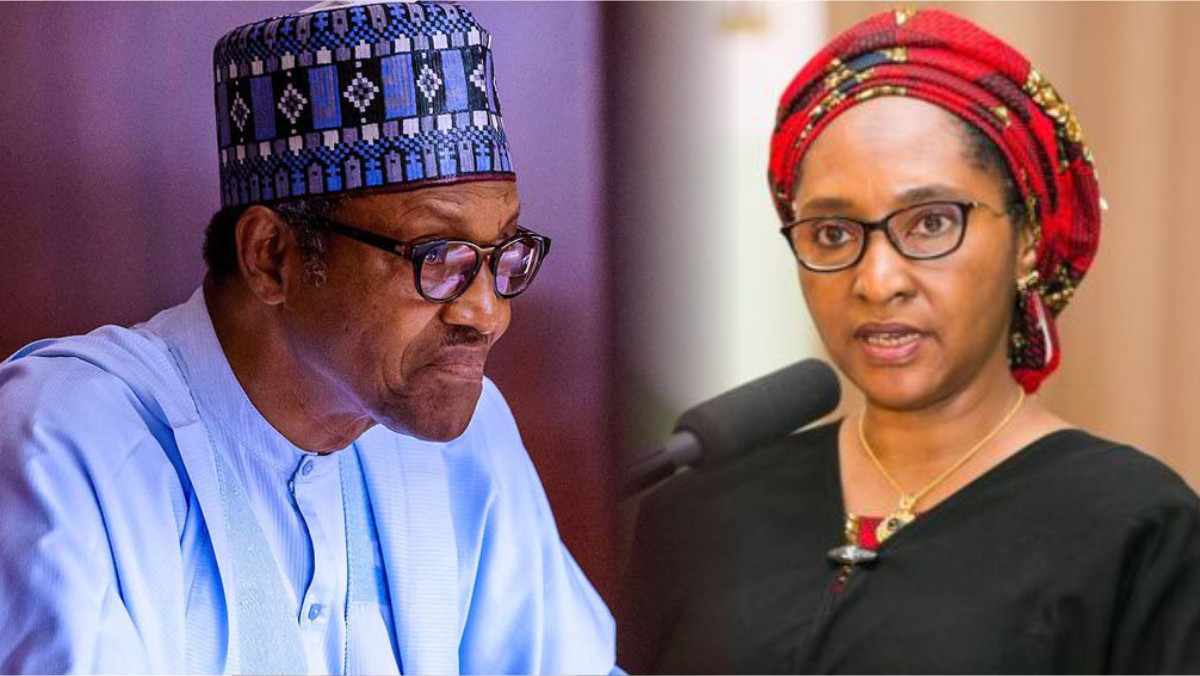
Zainab Ahmed says President Muhammadu Buhari borrowed from the Central Bank to run the government and finance payment of salaries in 2020.
The Minister of Finance said this happened because 90 per cent of Nigeria’s revenue went into debt servicing.
Asked in an interview with ThisDay how long Nigeria’s debt servicing will continue, Mrs Ahmed said the government resorts to loans from CBN when “revenue underperforms.”
“In 2020, we had a challenge, when revenues were very low, we had some months that the ratio was up to 90 per cent revenue-to-GDP.
“In that case, we had to get a short-term facility from the Central Bank, to be able to support the government in terms of running its day-to-day expenditure,” Mrs Ahmed said.
She added that the trend of Mr Buhari borrowing from the CBN to pay salaries and run day-to-day activities of the government stopped in March 2021.
“We are no longer in that position. From March this year, we didn’t have to borrow from the CBN and we were able to use our revenues to service debts,” Mrs Ahmed said.
She justified the borrowing spree of the Buhari-led regime, saying borrowings are invested in building infrastructure, however, Nigerians have criticised the regime’s borrowing spree.
In September when Mr Buhari wrote the National Assembly requesting for another $4 billion loan, former President Olusegun Obasanjo, whose administration is lauded for clearing Nigeria’s foreign debt, condemned the loan request as “foolish and criminal.”
According to the Nigerian Domestic and Foreign Debt report that was published this year by the National Bureau of Statistics (NBS), the country’s total public debt as of September 2020 stood at N32.2 trillion ($84.57 billion).

We have recently deactivated our website's comment provider in favour of other channels of distribution and commentary. We encourage you to join the conversation on our stories via our Facebook, Twitter and other social media pages.

More from Peoples Gazette

Agriculture
FG tasks ECOWAS on leveraging financing strategies for agroecology
The federal government has urged stakeholders in the agriculture and finance sectors in the West Africa region to leverage financing strategies to enhance agroecology practices

Politics
Katsina youths pledge to deliver over 2 million votes to Atiku
“Katsina State is Atiku’s political base because it is his second home.”

World
I’ve made UK better, stronger than my predecessor: Keir Starmer
Mr Starmer hailed himself for taking the Labour Party from “historic defeat” in 2019 to winning the country’s general election in 2024, when it ousted the Conservative Party.

Economy
CSCS declares N1 interim dividend after half-year earnings
The company noted that the interim dividend represented 56 per cent of the total dividend of N1.78 per share paid for the 2025 financial year.

Health
Mental health key to attaining excellence in children, says expert
He said children perform better academically and socially when the learning environment supports their emotional well-being.

States
Court dismisses Ned Nwoko’s suit challenging Okowa’s candidacy for Delta North senatorial district
The Federal High Court, Abuja, rejected Mr Nwoko’s suit seeking to void Mr Okowa’s emergence as the APC candidate for the Delta North senatorial district.

Heading 1
Reps begin review of state police bill
“The House and the Senate are working in tandem with each other to make sure that the significant amendments are achieved,” he said.

Economy
Nigeria’s $40 billion net foreign reserves validate Tinubu’s economic reforms: TSF
“The increase from about $3 billion to more than $40 billion within three years, therefore, represents a substantial strengthening of Nigeria’s financial buffers,” the group said.


