

Nigeria, other sub-Saharan nations’ economy to grow by 3.8% in 2022: IMF
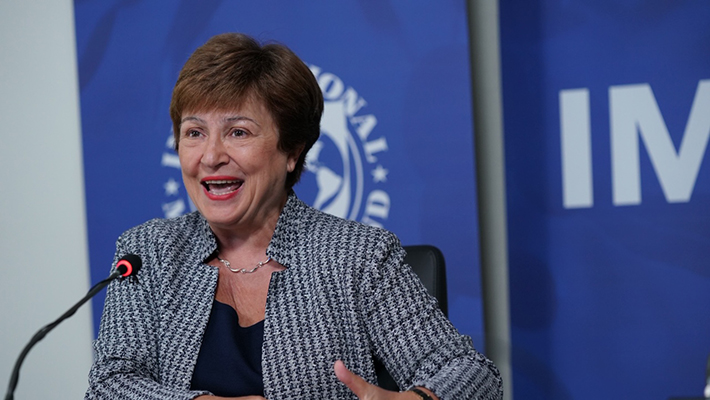
The International Monetary Fund (IMF) has predicted that the economy of Nigeria and other Sub-Sahara African nations will grow by 3.8 per cent in 2022.
Making this disclosure in a statement after a hybrid meeting with African ministers of Finance, Kristalina Georgieva, the Managing Director of IMF, echoed the projection of her organisation’s Global Economic Outlook released in October.
“The global economy is rebounding, with our October World Economic Outlook projecting 5.9 per cent growth this year and 4.9 per cent in 2022. However, we project sub-Saharan Africa to grow by 3.7 per cent this year and 3.8 per cent next year,” she said.
Ms Georgieva highlighted that the growth projection was in the wake of rising uncertainty around new COVID-19 variants and financial conditions.
She warned that the new COVID variant requires continued vigilance and a renewed global push to increase vaccine equity.
She also advised Sub–Saharan nations to continue to prioritise critical measures to overcome the ongoing health crisis and social assistance programs for vulnerable groups.
The hybrid meeting also emphasised the need to renew efforts towards deepening international cooperation, mobilise financing from the international community, and address challenges associated with fragility, insecurity, and persistent economic risks.
Peoples Gazette had in October reported that the IMF in its report released in October projected the region’s economy to grow by 3.7 per cent and 3.8 per cent for 2021 and 2022 respectively.
The outlook also predicted that the global economy will grow by 4.9 per cent in 2022.
Giving reason for the slow recovery, Abebe Aemro Selassie, director of the IMF’s African department, explained that the impact of the COVID-19 pandemic on the region’s economy is making a swift recovery difficult.
He also blamed slow vaccine rollout and stark differences in policy space for the laggard recovery.
The projection implies that the region will suffer the slowest recovery in the world as advanced markets grow by more than five per cent, while other emerging markets and developing countries grow by more than six per cent.

We have recently deactivated our website's comment provider in favour of other channels of distribution and commentary. We encourage you to join the conversation on our stories via our Facebook, Twitter and other social media pages.

More from Peoples Gazette

States
Independence: NBA urges Nigerians to expect better future
The NBA said that ordinary Nigerians should be deriving benefit from the subsidy removal rather than hardship.

Agriculture
FG tasks ECOWAS on leveraging financing strategies for agroecology
The federal government has urged stakeholders in the agriculture and finance sectors in the West Africa region to leverage financing strategies to enhance agroecology practices

Politics
Katsina youths pledge to deliver over 2 million votes to Atiku
“Katsina State is Atiku’s political base because it is his second home.”

World
Bolivia to increase ethanol proportion in petrol
The agreement will help support local farmers and develop ethanol production in the country.
Health
Ebola: UN expresses confidence in Nigeria’s containment efforts
Un has expressed confidence in Nigeria’s capacity to contain its newly confirmed Ebola case, pledging support to prevent further spread of the deadly disease.

States
Three Abuja men remanded for allegedly stealing goods worth N36 million
The case was adjourned until November 2 for hearing.

Uncategorized
Ebola: Adamawa intensifies preparedness, warns against fake news
The Adamawa government says it has intensified preparedness for a potential Ebola threat.

Africa
Ebola: Uganda activates screening at airport as Nigeria raises public health vigilance
Nigeria previously recorded an Ebola outbreak in 2014 after an infected traveller arrived in Lagos from Liberia.
Education
286 bag first class as ABUAD graduates 2,194 students
A total of 286 students of Afe Babalola University, Ado-Ekiti (ABUAD), bagged first-class honours as 2,194 graduated from the institution at its 14th convocation ceremony.


