

Ganjude praises anti-fake news initiative
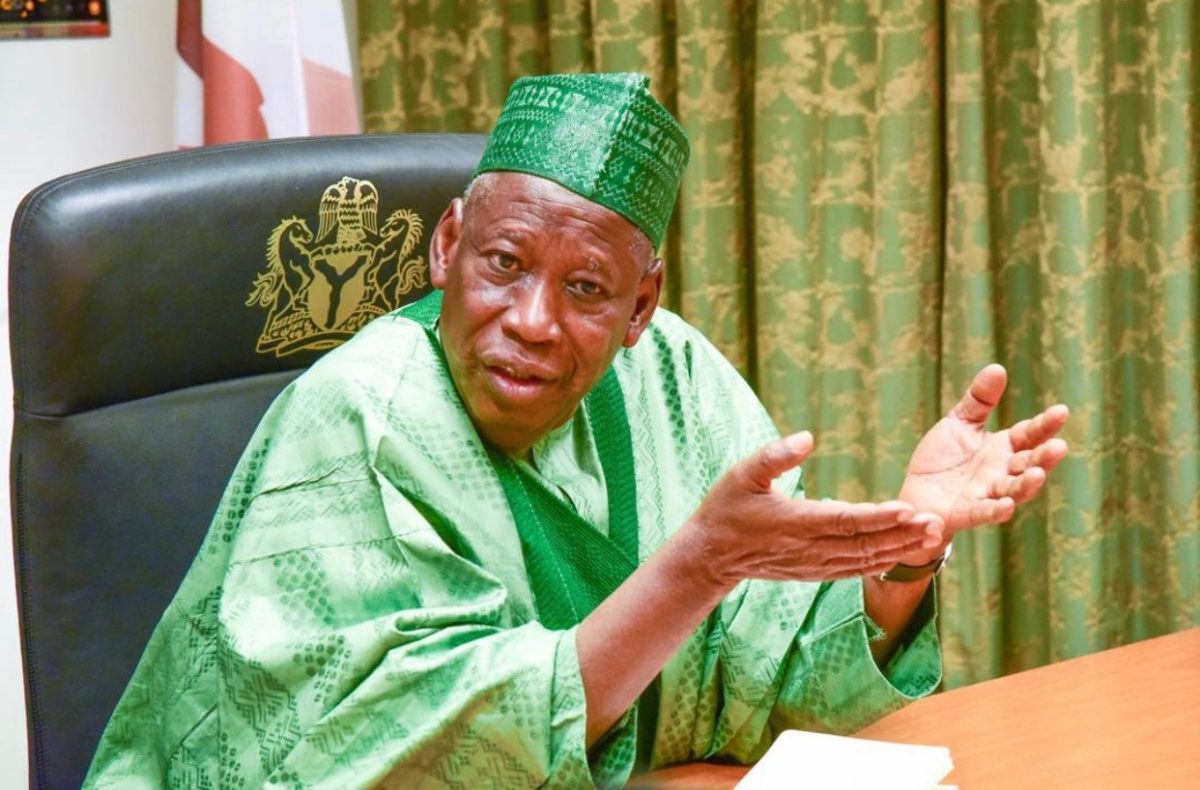
Governor Abdullahi Ganduje has commended a student from the University of Nigeria, Nsukka (UNN), Isah Nasidi, for developing a model that will tackle fake news.
The model, the Source, Agent, Message, Channel, Audience and Victim (SAMCAV), is the first of its kind to study information disorder. It also discovers the fourth typology of information disorder, which Mr Nasidi called dil-information.
Mr Ganduje, in a statement issued by his chief press secretary, Abba Anwar, on Sunday, said, ”As a young man who achieved this level in communication study, an indigene of Kano state and a PhD student of Mass Communication, from the University of Nigeria Nsukka (UNN).”
He added, “I am pleased to, on behalf of the government and people of the state, congratulate Nasidi. The young researcher developed what is needed the most in this era of information distortions for personal benefits or other reasons.”
Mr Gabnduje also praised the Nigerian media for popularising the author of the new communication model.
“It clearly indicates that Nigerian media practitioners are very much concerned about the raging fake news in the public domain,” he added.
The research resulted from the six-month research fellowship of the Kwame Kari-Kari Fact-checking and Research Fellowship, which selected 17 researchers from four West African countries to research information disorders.
The researcher, the secretary of the Communication History Division of the International Communication Association (U.S.), said the SAMCAV model linked six elements of information disorder (source, agent, message, channel, audience and victim.
These elements are involved in the production, distribution and consumption of information disorder. Each element plays a vital role in polluting information, making it unsafe for consumption.
He added the model would help researchers and policymakers to know how disordered information flows and the effects it causes in society.
“Conventional communication models such as Harold Lasswell depict communication as Who says What to Whom with what Effect,” explained Mr Nasidi. “However, as abnormal as it is, the information disorder model depicts the flow as who says what with what Intent through who and what channel to whom with what effect.”
(NAN)

We have recently deactivated our website's comment provider in favour of other channels of distribution and commentary. We encourage you to join the conversation on our stories via our Facebook, Twitter and other social media pages.

More from Peoples Gazette

Agriculture
FG tasks ECOWAS on leveraging financing strategies for agroecology
The federal government has urged stakeholders in the agriculture and finance sectors in the West Africa region to leverage financing strategies to enhance agroecology practices

Politics
Katsina youths pledge to deliver over 2 million votes to Atiku
“Katsina State is Atiku’s political base because it is his second home.”

World
I’ve made UK better, stronger than my predecessor: Keir Starmer
Mr Starmer hailed himself for taking the Labour Party from “historic defeat” in 2019 to winning the country’s general election in 2024, when it ousted the Conservative Party.

Economy
CSCS declares N1 interim dividend after half-year earnings
The company noted that the interim dividend represented 56 per cent of the total dividend of N1.78 per share paid for the 2025 financial year.

Health
Mental health key to attaining excellence in children, says expert
He said children perform better academically and socially when the learning environment supports their emotional well-being.

States
Court dismisses Ned Nwoko’s suit challenging Okowa’s candidacy for Delta North senatorial district
The Federal High Court, Abuja, rejected Mr Nwoko’s suit seeking to void Mr Okowa’s emergence as the APC candidate for the Delta North senatorial district.

Heading 1
Reps begin review of state police bill
“The House and the Senate are working in tandem with each other to make sure that the significant amendments are achieved,” he said.

Economy
Nigeria’s $40 billion net foreign reserves validate Tinubu’s economic reforms: TSF
“The increase from about $3 billion to more than $40 billion within three years, therefore, represents a substantial strengthening of Nigeria’s financial buffers,” the group said.


