

UN laments increasing ‘politicisation’ of media

UN Secretary General Antonio Guterres says journalists and media workers are facing increasing “politicisation” of their work and threats to their freedom for simply doing their jobs.
Mr Guterres said this in his message to mark World Press Freedom Day on Tuesday.
The World Press Freedom Day is annually observed on May 3, to inform the international community that freedom of the press and freedom of expression are fundamental human rights.
“The day shines a spotlight on the essential work they do, bringing those in power to account, with transparency, ‘often at great personal risk’,” the secretary-general said in a video message. “Throughout the COVID-19 pandemic, many media workers have been on the frontlines, providing accurate, science-based reporting to inform decision-makers and save lives.”
He added that journalists who cover climate, biodiversity and pollution “have succeeded in bringing global attention to this triple planetary crisis.”
According to him, the threats to their freedom to go about their reporting and story-telling fairly and accurately, are multiplying daily.
“From global health to the climate crisis, corruption, and human rights abuses, they face increased politicisation of their work and attempts to silence them from many sides,” the UN chief added. “Digital technology has democratised access to information. But it has also created serious challenges.”
Mr Guterres noted that many social media platforms made their money not through increasing access to fact-based reporting, but on boosting engagement, which often means provoking outrage, and spreading lies.
“Media workers in war zones are threatened not only by bombs and bullets, but by the weapons of falsification and disinformation that accompany modern warfare,” he declared. “They may be attacked as the enemy, accused of espionage, detained, or killed, simply for doing their jobs.”
Mr Guterres also mentioned that digital technology was also making censorship easier for authoritarian governments and others, seeking to suppress the truth, with many journalists and editors facing the prospect of their work being taken offline on a daily basis.
Digital technology is also creating new “channels for oppression and abuse,” with women journalists “at particular risk” of online harassment and violence.
The UN Educational, Scientific and Cultural Organisation (UNESCO) has found that nearly three-quarters of women respondents had experienced online violence.
Hacking and illegal surveillance also prevent journalists from doing their jobs.
“The methods and tools change, but the goal of discrediting the media and covering up ³the truth remains the same as ever. Without freedom of the press, there are no real democratic societies. Without freedom of the press, there is no freedom,” he said.
Ten years ago, the UN established a Plan of Action on the Safety of Journalists, to protect media workers and end impunity for crimes committed against them.
This year’s World Press Freedom Day Global Conference began on Monday, and will run until May 5 in Punta Del Este, Uruguay, built around the theme ‘Journalism under Digital Siege’.
Participants will discuss the impact of the digital era on freedom of expression, the safety of journalists, access to information and privacy.
(NAN)

We have recently deactivated our website's comment provider in favour of other channels of distribution and commentary. We encourage you to join the conversation on our stories via our Facebook, Twitter and other social media pages.

More from Peoples Gazette

States
Independence: NBA urges Nigerians to expect better future
The NBA said that ordinary Nigerians should be deriving benefit from the subsidy removal rather than hardship.

Agriculture
FG tasks ECOWAS on leveraging financing strategies for agroecology
The federal government has urged stakeholders in the agriculture and finance sectors in the West Africa region to leverage financing strategies to enhance agroecology practices

Politics
Katsina youths pledge to deliver over 2 million votes to Atiku
“Katsina State is Atiku’s political base because it is his second home.”

Showbiz
NTDA postpones maiden tourism expo
The Nigerian Tourism Development Authority postponed the maiden edition of the Naija Flavour International Tourism Expo to 2027.
Health
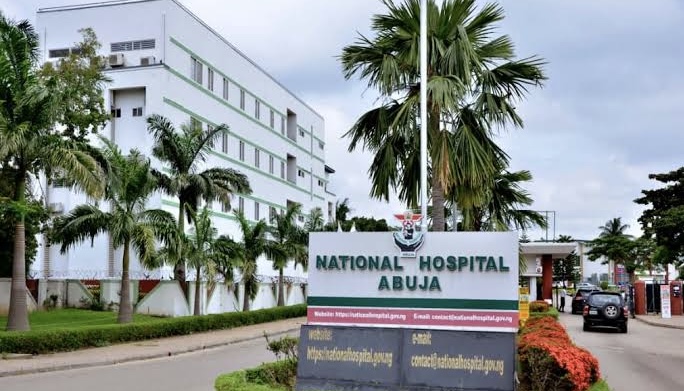
WHO warns fragmented records could delay lifesaving care in Nigeria, other African nations
Of the 47 member states in the WHO African Region, 43 have adopted digital platforms to collect and report routine health information.
Politics
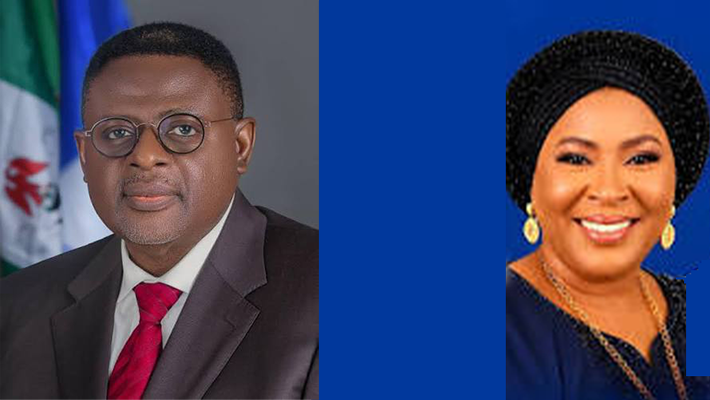
NDC candidate Stella Charles dumps party, backs Gov Otu’s re-election
The Nigeria Democratic Congress in Cross River has suffered a setback after its deputy governorship candidate, Stella Charles Archibong, backed Governor Bassey Otu’s re-election.

NationWide
Blackout: Expert seeks review of 300 containers of stranded power equipment
A maritime expert, Eugene Nweke, has called for a comprehensive review of about 300 containers of power equipment reportedly stranded at Nigerian ports for 20 years.
Politics
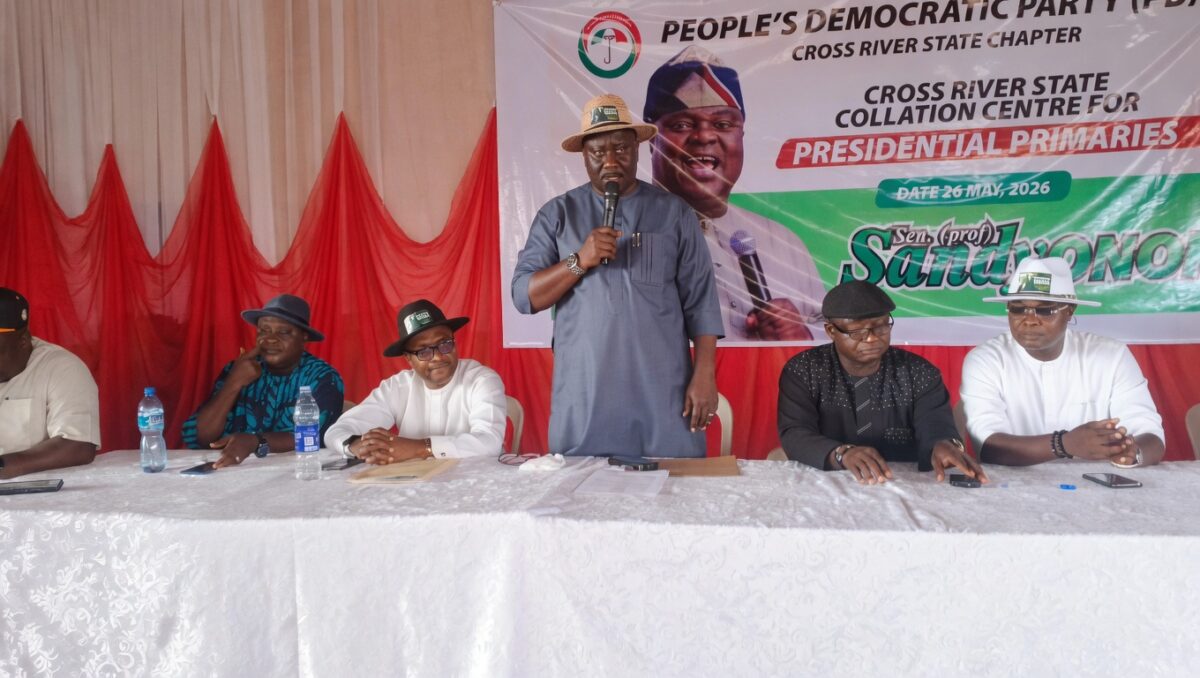
Cross River: PDP announces 20 campaign directorates ahead of 2027 elections
The decision was announced in a communiqué issued at the end of the party’s 40th State Working Committee.

Health
MRTB develops national standards for postgraduate physiotherapy specialisation
MRTB says it is developing national standards for postgraduate clinical specialisation to regulate advanced physiotherapy practice and strengthen professional capacity.


