


Our republic and its judges
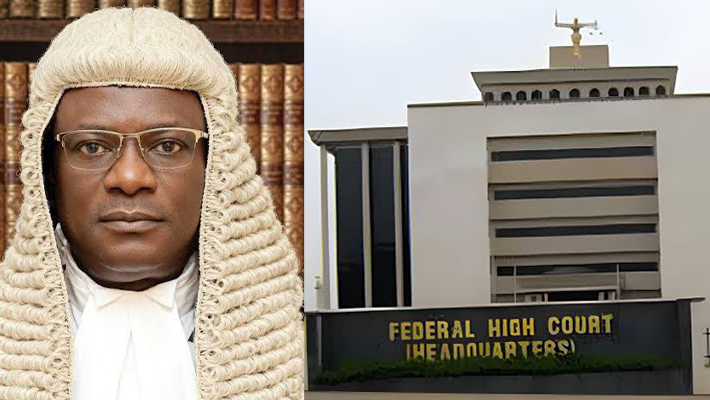
Two recent decisions of the Federal High Court have raised serious questions about the direction of constitutional democracy in Nigeria and about the role the judiciary is choosing for itself within that direction. The first involved Justice Uche Agomoh, who granted relief not sought by the plaintiff.
The second followed shortly afterwards: Justice Peter Lifu of the same court issued an order deregistering political parties while proceedings had been stayed by the Court of Appeal. Each decision may eventually attract appellate review and legal clarification, but its wider significance lies elsewhere. Together, they invite reflections on whether courts have stayed within their constitutional and judicial functions or strayed into a terrain reserved for them.
Courts occupy a peculiar place in constitutional government. They neither contest elections nor formulate policy. Their legitimacy derives from restraint, reasoned judgment, and fidelity to established rules. Citizens accept judicial authority because judges are expected to decide only the questions brought before them and only within the limits imposed by law.
That understanding explains the long-established principle that a court does not grant relief that parties did not seek. The court is not Father Christmas. The principle is not technical formalism. It exists because adjudication requires boundaries. Once a court begins to confer remedies outside the pleadings and reliefs before it, it ceases to function as an impartial arbiter and assumes powers that belong elsewhere.
Political disputes make this restraint even more important. Elections, party leadership contests, and questions concerning democratic participation already carry heightened public consequences. Judicial intervention in such matters must therefore proceed with exceptional care. Citizens must be able to distinguish between the resolution of disputes and the creation of outcomes.
The controversy surrounding the reported deregistration order raises a different but equally troubling concern. Hierarchy within the judicial process is essential to legal order. Where appellate intervention has stayed proceedings, lower courts are expected to exercise caution consistent with that appellate authority. Judicial disagreement is accommodated through appeals, not through simultaneous assertions of competing authority.
The concerns generated by such developments are larger than the correctness of any individual ruling. While democratic decline rarely announces itself through constitutional amendment or the formal abandonment of elections, it appears in institutional habits that gradually shift political decisions into structures not designed to carry them.
The patent danger is that the surreptitious enlargement of the precinct of judicial powers, beyond what the Constitution and Rules of practice grant, places the courts at the core of contentious and visceral politics. The point here is that democracy cannot be judicially administered. The courts’ departure from their assigned roles, as we have painfully experienced these past few weeks, merely signposts the slow and dangerous displacement of politics. The consequence is that democracy loses its boundaries.
Nigeria has encountered this problem before.
The collapse of the First Republic in 1966 is commonly explained through electoral violence, regional rivalry, and military intervention. Those explanations remain important but incomplete. The period was also marked by judicial choices that increasingly drew courts into struggles that citizens expected politics to resolve. Election petitions became instruments through which political combat continued after voting ended.
Courts were required to decide disputes whose legal dimensions could not be separated from wider battles over legitimacy and power. Public confidence weakened because judicial outcomes were read through partisan lenses rather than through legal reasoning. The judiciary did not cause the collapse of the republic, but its inability to maintain a visible distance from political conflict diminished one of the institutions capable of preserving public trust.
The experience of the Second Republic followed a similar pattern. The constitutional transition of military to civil rule in 1979 placed substantial expectations on the judiciary. The celebrated presidential election litigation concerning the constitutional requirement of spread across the states remains one of the most debated judicial decisions in Nigerian history.
Whatever one’s legal view of the judgment, its political consequences were profound. Large sections of the public concluded that constitutional interpretation had become entangled with political necessity.
Subsequent electoral controversies deepened the perception that legal institutions had become extensions of political competition rather than neutral forums for dispute resolution. By the early 1980s, democratic legitimacy had weakened considerably. Political actors distrusted electoral institutions. Citizens became uncertain that public authority rested on transparent rules.
The military seized power under the pretext of correcting institutional failures, but its intervention gave rise to a catastrophic subversion of the judiciary. The democratic experiment of 1993 was ultimately derailed by two key actors: the late Justice Bassey Ikpeme, who issued a highly irregular, late-night injunction to halt the polling process, and the late Justice Dahiru Saleh, whose subsequent rulings completed the betrayal of the law, bringing Nigeria’s most promising democratic project to a grinding halt.
History rarely repeats itself in an identical form. It does, however, preserve patterns.
One recurring pattern appears when courts begin to attract expectations that belong to political institutions. Once judges are viewed as capable of producing outcomes beyond the claims before them or altering political arrangements through expansive interim orders, litigants begin to treat courts as arenas for political victory rather than legal adjudication. That shift carries consequences.
Political parties reduce investment in persuasion and organisation because judicial routes appear more effective. Citizens begin to interpret judgments according to political preference rather than legal merit. Public confidence in electoral processes weakens because outcomes seem provisional until courts speak. Judicial authority itself suffers because every controversial decision acquires political meaning.
Nigeria’s democratic journey has already endured long interruptions. The present constitutional order has survived longer than previous republics, largely because institutions have developed habits of coexistence even amid intense disagreements. Courts have played an important role in sustaining that continuity.
This role needs to be protected with vigour.
Judicial courage is indispensable. Judicial restraint is equally indispensable. A court demonstrates strength not only by intervening where the law requires intervention but also by declining invitations to govern. Recent developments therefore deserve careful public scrutiny and, where appropriate, appellate correction.
Democracy depends on elections, legislatures, parties, and courts performing different constitutional functions. The health of the republic depends less on the power of each institution than on each institution recognising where its authority begins and ends.
The danger for Nigerian democracy does not lie in judges making controversial decisions. Courts have always delivered controversial decisions. The danger begins when the courts are willing to decide more than the law requires.
Abdul Mahmud, a human rights attorney in Abuja, writes weekly for The Gazette

We have recently deactivated our website's comment provider in favour of other channels of distribution and commentary. We encourage you to join the conversation on our stories via our Facebook, Twitter and other social media pages.

More from Peoples Gazette

Agriculture
FG tasks ECOWAS on leveraging financing strategies for agroecology
The federal government has urged stakeholders in the agriculture and finance sectors in the West Africa region to leverage financing strategies to enhance agroecology practices

Politics
Katsina youths pledge to deliver over 2 million votes to Atiku
“Katsina State is Atiku’s political base because it is his second home.”

Opinion
Azu Ishiekwene: Unusual moments in the World Cup
The tournament has so far offered stories on several levels, all at once: good football, major upsets, compelling human moments, and dramatic fan culture.

Sport
Drama as Portugal edge Croatia in 2026 FIFA World Cup
Goncalo Ramos scored a late, late winner as Portugal came from behind to beat Croatia at the 2026 FIFA World Cup.

NationWide
NCoS foiled attempts to smuggle bomb into Akwa Ibom prison: Official
Ms Osuji said the foiled IED smuggling attempt at the medium security custodial centre in Ikot Ekpene prevented what could have been a major security breach.

Heading 1
Court orders forfeiture of more properties linked to ex-power minister Saleh Mamman
The anti-graft agency prosecuted the ex-minister for alleged N33.8 billion money-laundering offences.

States
Troops bust illegal firearms network in Kebbi, arrest two
Mr Danja said the operation was conducted in close collaboration with other security agencies.

Hot news Home top
Youths minister recants, says adire not replacing NYSC khaki
Mr Olawande acknowledged that he mentioned Adire and Ankara in the interview, but maintained that he cited them only as proposed choices.


