

Abdul Mahmud: The president who loves us too much to campaign
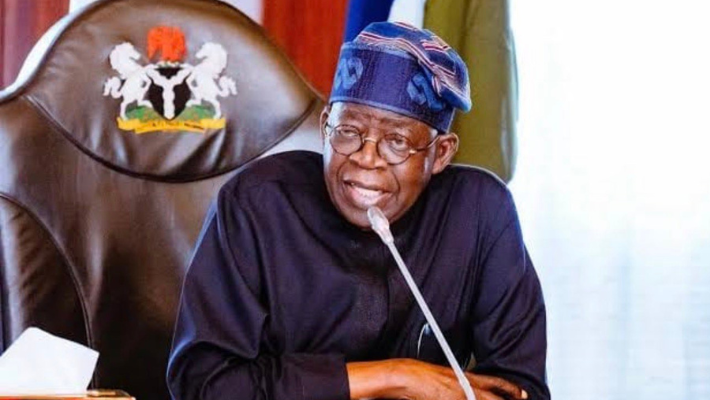
President Bola Ahmed Tinubu has offered Nigerians a remarkable demonstration of presidential affection, announcing that he may not travel to every state to campaign for re-election in 2027 because the business of governance demands his undivided attention; a declaration so touching that the nation might be forgiven for reaching instinctively for handkerchiefs, were it not for the memory of the many journeys the same president has undertaken abroad while the country he governs waited patiently for the good life he promised to deliver.
We must, of course, resist the temptation to misunderstand this extraordinary expression of devotion, because here is a president who has apparently discovered, in the middle of his tenure, that governing Nigeria is a full-time occupation, so demanding that it might leave him with insufficient time to persuade Nigerians to renew his mandate, and has therefore decided that the best way to demonstrate his commitment to Nigerians is to avoid meeting them.
What a glorious innovation in the history of presidential politics. Where incumbents have traditionally regarded election campaigns as opportunities to defend their records, explain their policies, confront public dissatisfaction and persuade citizens that another four years under their leadership would be preferable to the alternatives, President Tinubu appears to have discovered a more enlightened doctrine, under which the governing party can demand another mandate without necessarily subjecting its leader to the humility of asking the governed for one.
The president’s explanation deserves the closest examination, particularly his suggestion that the economic reforms and administrative responsibilities of his office require him to devote himself to governance rather than the rigours of a nationwide campaign. The argument might have been more persuasive had Nigerians not spent much of his presidency watching him travel overseas while the domestic economy struggled under the weight of policies whose costs ordinary citizens have been compelled to absorb with a stoicism that has sometimes looked indistinguishable from despair.
There is something almost absurd about a president who presided over the removal of the petrol subsidy, the depreciation of the naira and the extraordinary rise in the cost of living now invoking his responsibility to govern as a reason for limiting his exposure to the electorate, as though the people whose purchasing power has diminished, who have been buffeted by high transport fares and whose household budgets have been reduced to exercises in national survival were incidental characters in the grand production of economic reform.
One might reasonably ask what precisely the president intends to govern if he cannot spare the time to explain his governance to the citizens who must live with its consequences, since the purpose of democratic leadership is not simply to announce difficult decisions from the comfort of the State House but to account for them, defend their necessity, acknowledge their human costs and persuade the public that the sacrifices being demanded today will yield benefits more substantial than another round of presidential assurances.
Perhaps the president believes that governance and campaigning are mutually exclusive occupations, although the distinction would astonish political leaders elsewhere who understand that seeking re-election is not an interruption of public service but an opportunity to demonstrate that public service has been worth the privilege of holding office.
A leader confident in his record should ordinarily welcome the campaign trail, where he can explain what he has achieved, answer questions about what remains unfinished and present his plans for the future to the very people whose votes he hopes to secure.
But perhaps we have also been unfair to our president, because there is another possibility, one that his admirers may prefer not to contemplate: the campaign trail has become an uncomfortable destination for a government whose policies have produced so much hardship that the prospect of standing before Nigerians in their various states may require a degree of courage that cannot be supplied by presidential motorcades, security convoys or carefully managed political gatherings.
The North may have questions about insecurity, displacement and the persistent inability of the state to guarantee the safety of its citizens, while the South may wish to discuss the cost of living, unemployment, electricity and the diminishing value of wages, and citizens across the country may be curious to know when the promised dividends of reform will become visible in their homes rather than remain permanent fixtures of official speeches.
It is possible, of course, that these are precisely the conversations the president wishes to postpone, although it would be uncharitable to suggest that a decision to avoid campaigning might have anything to do with the reception awaiting him.
We should instead accept the official explanation at face value and congratulate the president for his uncommon sacrifice, since no previous administration appears to have elevated the avoidance of electoral engagement into such a compelling demonstration of executive responsibility.
Imagine the possibilities if this doctrine were extended throughout government: governors could decline to visit their states because they were too busy governing, legislators could remain permanently absent from their constituencies because they were too occupied with lawmaking, and elected representatives could spare themselves the ordeal of explaining their performance by declaring that accountability would interfere with the serious business of public office.
Democracy would become wonderfully efficient, with elections conducted by political parties, manifestos circulated through official channels and citizens invited to renew the mandates of leaders who had no time to meet them, while the difficult business of listening to complaints could be delegated to committees that would report their findings to other committees, until the entire country had been governed into a condition of administrative excellence that nobody could afford to experience.
There is a more serious point beneath the Tinubu absurdity, because the president is entitled to prioritise governance, but Nigerians are equally entitled to demand evidence that governance is being prioritised, and a declaration of good intentions cannot substitute for the tangible improvements against which a government must ultimately be judged.
If the economy is improving, the president should be able to explain how that improvement is reaching ordinary households, how his economic reforms are working and why his administration deserves another mandate. The case for re-election should not be so burdensome that he must contemplate avoiding the people whose votes he needs.
President Tinubu may yet campaign in every state, or he may decide that his schedule permits only a carefully selected itinerary. But the question Nigerians should ask is not how many states he visits, since physical presence alone is no measure of political courage. Whether he is prepared to face the consequences of his decisions and account honestly for the condition of the country under his watch is a different kettle of fish.
Perhaps we should take the president at his word and accept that his reluctance to campaign is the highest expression of his love for Nigerians and a new philosophy of presidential affection under which the leader loves his people so profoundly that he may spare them the pain of seeing him, loves governance so passionately that he may have to avoid the places where its failures are most painfully felt, or loves democracy so generously that he is considering a re-election campaign in which the electorate may have to make do with less of his presence on the campaign trail.
What a beautiful country Nigeria would be if every public official loved the people enough to avoid them, although one suspects that citizens might eventually prefer a different expression of affection: travelling to Aso Rock to assure the president of their undying love, defend his record by insisting that the pains they endure are merely an expression of the love he bears them, and pretend that the greatest obstacle to democratic renewal is not the president himself but the ingratitude of the people who elected him.
The joke truly writes itself.
- Abdul Mahmud, a human rights attorney in Abuja, writes weekly for The Gazette

We have recently deactivated our website's comment provider in favour of other channels of distribution and commentary. We encourage you to join the conversation on our stories via our Facebook, Twitter and other social media pages.

More from Peoples Gazette

States
Independence: NBA urges Nigerians to expect better future
The NBA said that ordinary Nigerians should be deriving benefit from the subsidy removal rather than hardship.

Agriculture
FG tasks ECOWAS on leveraging financing strategies for agroecology
The federal government has urged stakeholders in the agriculture and finance sectors in the West Africa region to leverage financing strategies to enhance agroecology practices

Politics
Katsina youths pledge to deliver over 2 million votes to Atiku
“Katsina State is Atiku’s political base because it is his second home.”

Agriculture
Gov Sani settles 10-year land dispute, communities get alternative plots, farmland, free fertiliser
Governor Uba Sani has vowed that no community will be rendered homeless in Kaduna because his administration believes in human dignity and the sanctity of life.
Lagos
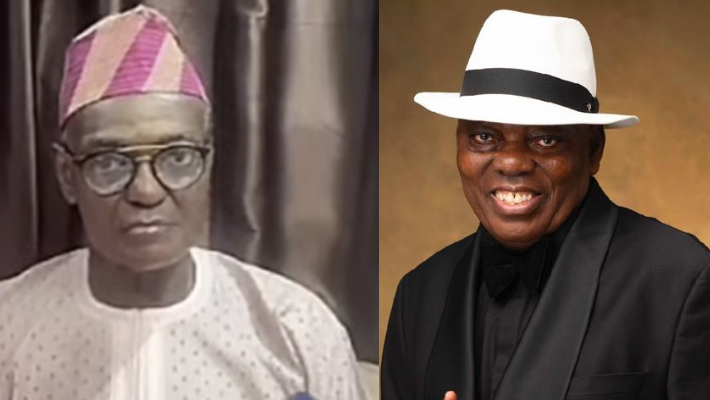
Fatai Okoya pens emotional letter, begs billionaire father after 40 years of estrangement
Fatai Okoya, who claims to be the first child of billionaire businessman Rasak Okoya, is begging his father for forgiveness after 40 years of estrangement.
Politics
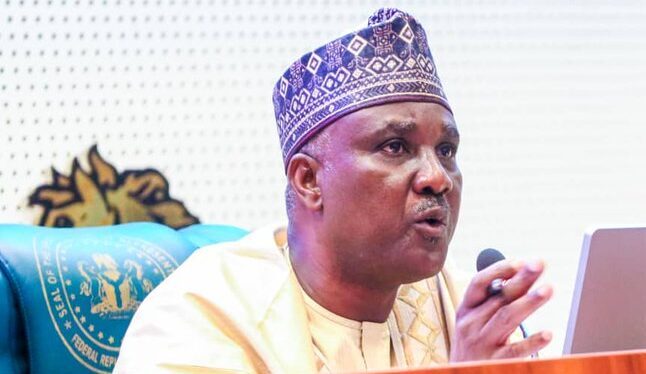
Abbas empowers Zaria youths, women with vehicles, motorcycles
Speaker of the House of Representatives, Tajudeen Abbas, has distributed empowerment materials, including vehicles and motorcycles, to youths and women in Zaria.
Heading 1
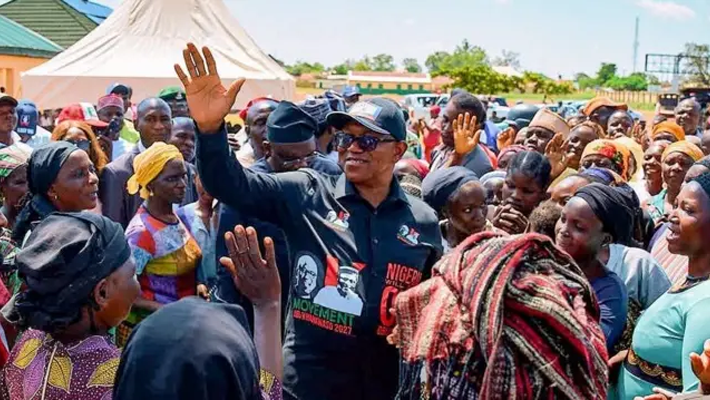
Obi took advantage of Nigerians’ frustrations in 2023, can’t win 2027 presidential poll: APC
The All Progressives Congress has dismissed the chances of Nigeria Democratic Congress 2027 presidential candidate Peter Obi in the forthcoming election.
World
China advocates global cooperation to modernise traditional medicine
China has called for stronger international cooperation, technological innovation and equitable access to traditional medicine to address emerging global health challenges.

Economy
Nigeria records 93% rise in AI micro-credential enrolments, 113% increase in critical thinking: Report
Enrolment in AI micro-credentials in Nigeria rose by 93 per cent in 2026, while enrolment in critical thinking certification surged by 113 per cent.


