

Anambra women top list of contraceptives users in Nigeria: Statistics Bureau
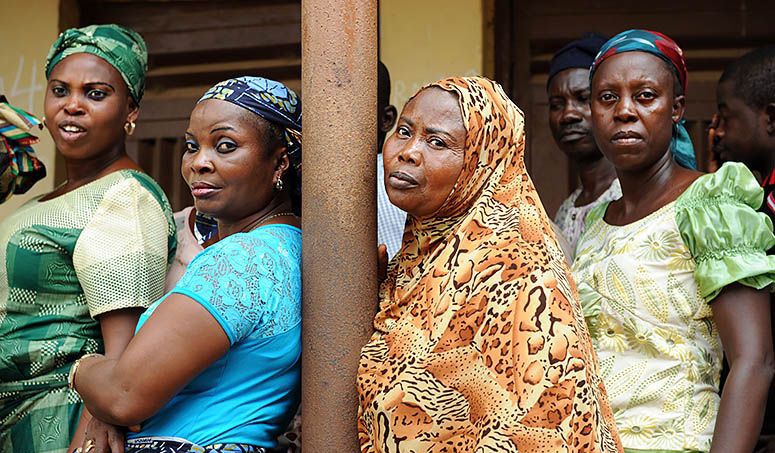
Recent statistics by the National Bureau of Statistics (NBS) have indicated that Anambra topped the list of states where married women use traditional contraceptives to control childbirth, with Yobe having the lowest figure at 0.3 percent.
This is contained in NBS’ demographic statistics for 2020 posted on its website on Sunday in Abuja.
The statistics showed that 98.1 percent of married women in Yobe did not use any contraceptives in the year under review.
It categorised the birth controls into traditional contraceptive methods, modern methods, and those not currently using any contraceptive at all.
NBS said that at the national level, the total number of women not using contraceptives to prevent childbirth was 83.4 percent, while those using the traditional method of contraceptives was 4.6 percent with the modern method standing at 12.0 percent.
Sokoto State at 97.7 percent follows Yobe in the category of women not using contraceptives with 0.2 using traditional methods, while 2.1 percent use the modern method.
The report said, however, that the Total Fertility Rate (TFR) for the year 2018 was 5.3 percent, indicating a decrease from previous years.
It added that women in the age group 25 to 29 had the highest fertility rate, while women aged 45 to 49 had the lowest rate.
The report noted, however, that the total national birth registrations between 2017 and 2019 stood at 18.46 million with 2017 accounting for 5.03 million, while in 2018, it was 6.58 million with 2019 recording 6.83 million.
At the state level in 2017, Kano had the highest registered live births with 415,598, while in 2018 and 2019, Borno recorded the highest having 863,592 and 879,524, respectively.
On the other hand, Bayelsa recorded the least total national birth registrations with 220 in 2017; 234 in 2018, and 199 in 2019.
The report indicates, however, that most of the birth registrations were done in urban areas with 63 percent in 2017, 59 percent in 2018, and 62 percent in 2019.
On the statistics of recorded deaths, NBS disclosed that burial or other means of deceased disposal was 38,727 between 2017 and 2019.
Giving a breakdown, it said that the total number of deaths registered in 2017 stood at 15,153 but was reduced to 13,329 in 2018 and further reduced to 10,245 in 2019.
By gender categorisation, the NBS said that 9,555 male deaths were registered in 2017, 8,842 in 2018, and 7,066 in 2019 while 5,598 female deaths were registered in 2017, 4,487 in 2018, and 3,179 in 2019.
(NAN)

We have recently deactivated our website's comment provider in favour of other channels of distribution and commentary. We encourage you to join the conversation on our stories via our Facebook, Twitter and other social media pages.

More from Peoples Gazette

States
Independence: NBA urges Nigerians to expect better future
The NBA said that ordinary Nigerians should be deriving benefit from the subsidy removal rather than hardship.

Agriculture
FG tasks ECOWAS on leveraging financing strategies for agroecology
The federal government has urged stakeholders in the agriculture and finance sectors in the West Africa region to leverage financing strategies to enhance agroecology practices

Politics
Katsina youths pledge to deliver over 2 million votes to Atiku
“Katsina State is Atiku’s political base because it is his second home.”

States
FG officially acquires Pandam Park from Plateau govt
The park had been partially shut down due to severe security challenges.

States
Take It Back Movement rejects police account of attack on Sowore in Ekiti
The movement accused the command of taking Nigerians for a ride.

NationWide
Military rescued 349 kidnapped victims, killed 217 terrorists in October: DHQ
The operations were conducted between September 30 and October 30.

States
Police probe alleged suicide of Ondo businessman
Police said the victim died in his office in Igba Town, Ondo State, on Thursday.

Economy
Moniebook engages merchants to improve business management services
Mr Osinowo said the platform was developed to support businesses.

Education
Stakeholders urge Oyo govt to prioritise education funding in 2027 budget
Mr Akanmu said that public schools account for 82 per cent of the state’s roughly 2.6 million students.


