

FG to fine DisCos ₦1000 for disconnecting customers’ electricity supply

The Nigerian Electricity Regulatory Commission (NERC) plans to fine electricity distribution companies (DisCos) for wrongfully disconnecting customers’ electricity supply.
The commission proposed that any DisCo that disconnected a customer’s electricity supply “in violation of this regulation commits an offence and is liable upon conviction to pay the customer a penalty.”
The penalties as specified in the regulation are residential ₦1,000, commercial ₦1,500, and industrial ₦2,000.
“A DisCo which disconnects a customer supply in violation of these regulations shall compensate the customer on equivalent of 100 per cent daily energy cap for every day the wrongful disconnection lasts. This shall be determined based on the previous month’s bill or consumption,” stated NERC.
“In the event of a property left unoccupied” for some time following the exit of the occupant, said the commission, “a new occupant of premises should contact the DisCo on their first day of moving into the premises, which the DisCos should take into consideration for billing such customers.”
The commission, however, noted that if a new occupant fails to inform the DisCo of the commencement date, it would be “deemed to be a continuation of the old occupant regime.”
NERC further explained that the new occupant would take responsibility for the payment of any outstanding bills.
The paper also proposed that when a DisCo “has overcharged a customer,” it should advise the customer in writing within five days of becoming aware of the error and repay “the amount” by crediting “the exact amount” of the overcharge to the customers’ next bill.
In addition, NERC proposed that, in the case of “undercharge from incorrect billing,” the DisCos might establish the undercharge and recover the amount for not less than three months.
On replacement of faulty or obsolete meter, NERC said, “A meter shall be considered faulty and not in compliance with the distribution metering code if it is determined that any part on that metering system does not comply with the code.”

We have recently deactivated our website's comment provider in favour of other channels of distribution and commentary. We encourage you to join the conversation on our stories via our Facebook, Twitter and other social media pages.

More from Peoples Gazette

States
Independence: NBA urges Nigerians to expect better future
The NBA said that ordinary Nigerians should be deriving benefit from the subsidy removal rather than hardship.

Agriculture
FG tasks ECOWAS on leveraging financing strategies for agroecology
The federal government has urged stakeholders in the agriculture and finance sectors in the West Africa region to leverage financing strategies to enhance agroecology practices

Politics
Katsina youths pledge to deliver over 2 million votes to Atiku
“Katsina State is Atiku’s political base because it is his second home.”

Africa
Morocco 2026: Flamingos edge Venezuela 1-0, face Brazil in Semi-final
Brazil had earlier secured a 2-1 win over China in their quarter-final encounter.
Faith
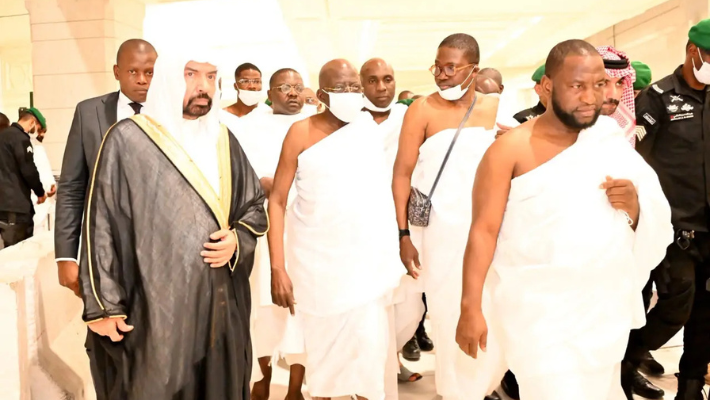
Makkah: Tinubu prays for Nigeria at dinner for members of delegation
The President also sought divine guidance for the country’s leaders and protection for Nigerians at home and abroad.

States
Kwara United suffer 2-1 defeat to Bendel Insurance
The defeat leaves Kwara United in 14th position on the NPFL table with 12 points from 11 matches.
NationWide
Negotiating council defends N70,000 monthly transport allowance for civil servants
Mr Gbenga said the allowance formed part of an agreement reached between the government and organised labour.

Faith
Some Lagos mosques risk demolition, say experts
Mr Abou-Nolla urged mosque managers to obtain title documents before commencing construction and comply with relevant legal procedures.

NationWide
Customs deploy AI tools to curb fake news, online scams
Mr Adeniyi noted that AI-assisted risk management helped assess imported goods and categorise them according to their respective risk levels.


