

Insecurity: UK pledges continued assistance to Nigeria

The UK government has pledged its willingness to continue to support Nigeria in its fight against insecurity.
British High Commissioner to Nigeria, Richard Montgomery, stated this during an interview in Abuja.
Mr Montgomery, who spoke on the defence relations his government shared with Nigeria, said: “We have very long-standing defence engagements and many of our high commands. They are organised on similar principles.
“The UK arms services and the Nigeria arms services really understand each other and since the creation of Nigeria, we have had very warm defence relations and in the past two, three decades, we have really been conscious of Nigeria as one of the biggest contributors of peace-keeping forces, its role in ECOWAS, as well as the AU.
“The Nigerian armed forces have played an important role in mobilising other countries in the region when the international community has asked it to help.”
The high commissioner also said the government “is working in collaboration with the Nigerian government on the Multinational Joint Task Force (MNJTF)”.
The MNJTF is a combined multinational formation, mostly military, from Benin Republic, Cameroon, Chad Republic, Niger Republic, and Nigeria.
It has its headquarters in N’Djamena, the Chadian capital and is mandated to bring an end to the Boko Haram insurgency.
“In relation to the present instability and terrorism in the North-East,” Mr Montgomery continued, “our main collaboration is with Nigeria as part of the multinational joint task force.”
“That obviously involves the government of Cameroon, and Niger but Nigeria is by far the biggest player; it is by far the biggest arms service provider.
“We have tried to provide support where possible to that multinational joint task force trying to stabilise the Lake Chad basin.
“In relation to the bilateral defence engagement, at the moment, we have a British military adviser in a training team well-established in this country for decades.
“It has always tried to evolve its relationship with the Nigerian armed forces depending on what the priorities are.”
He identified the UK government’s two levels of defence collaboration with Nigeria as strategic and practical.
According to him, at the strategic level, a security and defence partnership exists.
“I think it was signed in 2020. The Memorandum of Understanding of that is on our website www.gov.uk, and that explains some of the areas where we have been sharing lessons, sharing information, and where appropriate, there have been exchanges of personnel or information or training.
“This is quite a broad umbrella that provides the platform for our various agencies to work together.
“It is not just the armed forces, it also involves crime agencies.
“In the UK, the National Security Office is civilian. You may have officers posted in the offices of the Security Advisers in both our countries to try to liaise.
“This Security and Defence Partnership (SDP) is a strategic umbrella, it enlists the areas where we are collaborating.”
Mr Montgomery explained that the practical level deals with issues relating to things like improvised explosive devices (IEDs).
“The practical level includes things like sending British trainers to spend time with Nigerian Army personnel before they are posted to the North East on issues like how do you deal with an improvised explosive device.
“And we have a lot of very unfortunate experiences from Afghanistan and Iraq where we faced campaigns of improvised explosive devices and I think this is quite a moving practical training.
“This type of training on how to identify IEDs, how to approach IEDs, how to deal with it saves many infantry people’s lives and that is an example of a practical bit of training.”
The envoy further said the government had other trainings and sharing of lessons on small-scale violent extremist organisations.
He said the experiences of the British Armed Forces would share lessons with the Nigerian Armed Forces on intelligence-led operations.
“We have lessons to share on what you call intelligence-led operations, which I know that the Nigerian Police and the Nigerian Army are doing but we have lessons to share.
“This is when you make sure that military operations within civilian areas are carefully planned and shaped by the information that you have so that you are less likely to negatively affect the civilian population.”
He further said it was important for both armed forces to work in accordance with international humanitarian law and international human rights law.
The high commissioner added that it was part of military professionalism and a way to share lessons on the challenges of adhering to the rules of engagements and laws.
(NAN)

We have recently deactivated our website's comment provider in favour of other channels of distribution and commentary. We encourage you to join the conversation on our stories via our Facebook, Twitter and other social media pages.

More from Peoples Gazette

Agriculture
FG tasks ECOWAS on leveraging financing strategies for agroecology
The federal government has urged stakeholders in the agriculture and finance sectors in the West Africa region to leverage financing strategies to enhance agroecology practices

Politics
Katsina youths pledge to deliver over 2 million votes to Atiku
“Katsina State is Atiku’s political base because it is his second home.”
Economy
Dangote IPO will boost capital market, encourage more investments: Economist
Economist Nathaniel Oladunjoye says the Dangote Group’s IPO will deepen participation in Nigeria’s capital market and encourage more companies to offer shares.

Rights
ASUU: Strike continues as unions reject agreement with Ondo govt
JAC-ODSTI has rejected the agreement reached between some unions and the Ondo government on implementing the federal government agreement.

Rights
Alleged Phone-tapping: Court to rule in El-Rufai’s no-case submission in October
The Federal High Court, Abuja Division, on Tuesday fixed October 26 to rule on a no-case submission filed by former Governor Nasir El-Rufai in a phone-tapping case.

Economy
Ecobank opens channels for Dangote Refinery share offer
Ecobank says retail and institutional investors across Africa can subscribe to the Dangote Petroleum Refinery share offer through its digital and branch banking channels.
NationWide
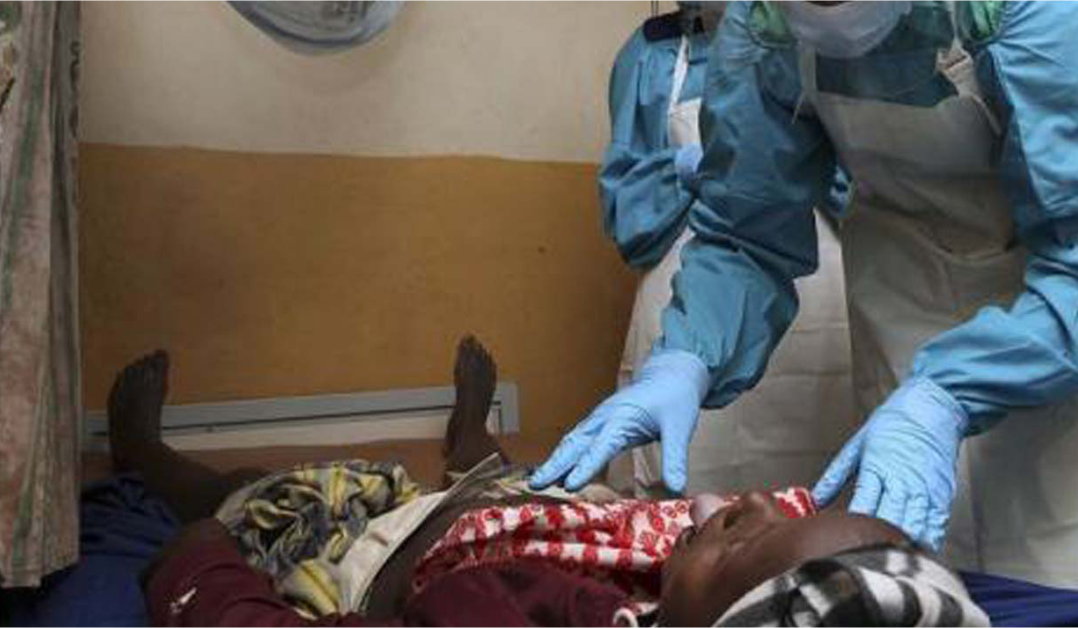
NCDC records over 1,000 Lassa fever cases
The Nigeria Centre for Disease Control and Prevention says Nigeria recorded 1,086 confirmed Lassa fever cases and 259 deaths across 24 states and 118 council areas in 2026.
World
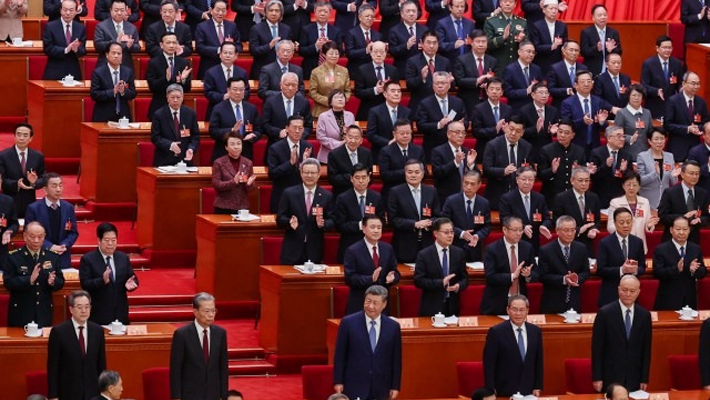
China’s Communist Party chieftains expelled over corruption allegations
The Communist Party has expelled former military leaders Zhang Youxia and Liu Zhenli over accusations of factionalism and disloyalty.


