

NAPTIP, French agency inaugurate anti-trafficking project
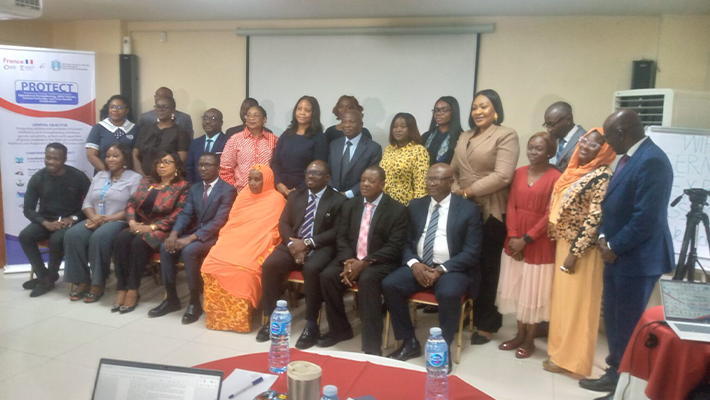
The National Agency for the Prohibition of Trafficking in Persons (NAPTIP) and Expertise France, a French Development Agency (AFD), have inaugurated the PROTECT project to strengthen anti-human trafficking efforts across Nigeria and West Africa.
The project was inaugurated on Monday in Abuja alongside a two-day workshop for NAPTIP intelligence and senior officers to validate inception-phase activities.
Modeste Krah, head of the PROTECT project, said the initiative was designed to strengthen institutional and operational capacities in combating human trafficking and promote cooperation across the Gulf of Guinea region.
Mr Krah said Expertise France worked closely with NAPTIP and regional stakeholders between 2019 and 2024 through the ALTP project to strengthen anti-trafficking institutions and enhance regional collaboration and coordination.
According to him, notable achievements include establishing the digital travel declaration platform (TICAP), the 627 toll-free reporting line, and renovating NAPTIP facilities in Ondo State.
He said the partnership generated significant progress while also revealing areas requiring stronger cooperation and additional support, adding that the PROTECT project was developed to address those gaps.
“PROTECT brings together five countries, Benin, Guinea, Nigeria, Sierra Leone and Togo, with a shared ambition to strengthen the prevention of human trafficking and the protection of victims and survivors.
“The project also seeks to strengthen the prosecution of perpetrators and deepen cooperation among institutions and stakeholders involved in combating human trafficking across participating countries within the West African sub-region.
“The project follows the well-established 4Ps approach: Prevention, Protection, Prosecution and Partnership, while placing particular emphasis on strengthening institutional capacities, gender-sensitive responses, cross-border cooperation, and the production and use of quality data,” he said.
Mr Krah said component one focused on strengthening coordination, gender sensitivity and effectiveness of national institutions involved in combating trafficking at both central and operational levels across participating countries.
“Component two supports the strengthening of the criminal justice chain, including gender-sensitive approaches, collaboration among relevant actors, and improved knowledge and ownership of applicable legislative frameworks,” he said.
He said component three focused on preventing trafficking and protecting victims and survivors, including voluntary repatriation support and socio-economic reintegration that reflected gender-specific experiences and needs of beneficiaries.
According to him, component four seeks to strengthen bilateral, cross-border and regional cooperation to prevent trafficking and dismantle criminal networks, while component five focuses on improving data production and analysis.
Mr Krah said human trafficking continued to evolve, emphasising that institutional responses must also adapt rapidly to match emerging trends, methods and technologies increasingly exploited by traffickers worldwide.
He said traffickers were increasingly exploiting digital technologies, social media platforms and online tools to recruit, manipulate and control victims, making detection and intervention more challenging for authorities.
According to him, trafficking networks are becoming more sophisticated and increasingly linked to other forms of organised crime, requiring stronger cooperation, better intelligence systems and more effective institutional responses.
Mr Krah said the challenge required strengthened investigative and prosecutorial capacities, alongside effective mechanisms for identifying, referring and protecting victims, which informed activities undertaken during the project’s inception phase.
He said PROTECT conducted diagnostic assessments covering institutional coordination, asset recovery and governance, digital systems and emerging trafficking trends, and gender considerations affecting anti-trafficking responses.
According to him, the assessments provide an evidence base for identifying priority areas and determining where the project can provide practical, targeted and sustainable support to stakeholders.
In her remarks, NAPTIP Director-General, Binta Adamu-Bello, said the workshop was taking place at a time when human trafficking continued evolving in complexity, sophistication and geographical reach.
She said human trafficking was no longer confined to identifiable physical spaces or traditional recruitment methods but increasingly exploited digital technologies and social media platforms to target vulnerable individuals.
“Human trafficking is now exploiting social media platforms, economic vulnerabilities, irregular migration channels, conflicts, displacement, unemployment and other circumstances that place individuals at risk.
“The implication is clear: our response must evolve as rapidly as the crime itself. The government of Nigeria, through NAPTIP and other relevant institutions, has continued to demonstrate its commitment,” she said.
Ms Adamu-Bello said NAPTIP had remained at the forefront of Nigeria’s response to human trafficking since its establishment, implementing its mandate through policy, prevention, protection, prosecution and partnership interventions.
“On the prevention front, NAPTIP has intensified public enlightenment and awareness campaigns across communities, schools, markets, transport corridors, religious institutions, vulnerable communities and other strategic locations.
“We have increasingly leveraged radio, television, digital platforms and social media to reach wider audiences, particularly young people who are among those most targeted by traffickers,” she added.
Ms Adamu-Bello said the PROTECT project could significantly strengthen NAPTIP’s counter-trafficking efforts by improving institutional coordination and enhancing collaboration among agencies and stakeholders nationwide.
She said the project would also strengthen capacity to respond to digital and emerging forms of trafficking and help improve NAPTIP’s data management and information systems.
(NAN)

We have recently deactivated our website's comment provider in favour of other channels of distribution and commentary. We encourage you to join the conversation on our stories via our Facebook, Twitter and other social media pages.

More from Peoples Gazette

Agriculture
FG tasks ECOWAS on leveraging financing strategies for agroecology
The federal government has urged stakeholders in the agriculture and finance sectors in the West Africa region to leverage financing strategies to enhance agroecology practices

Politics
Katsina youths pledge to deliver over 2 million votes to Atiku
“Katsina State is Atiku’s political base because it is his second home.”

States
Kwara women get ICT centre to boost digital, economic empowerment
The governor’s wife said many women in the state were behind in digital literacy.

Economy
Africa’s Biggest IPO: Dangote promises strong returns, generational wealth for investors
The IPO has been structured to encourage broad participation, with 4.1 billion ordinary shares offered at N525 per share.
States
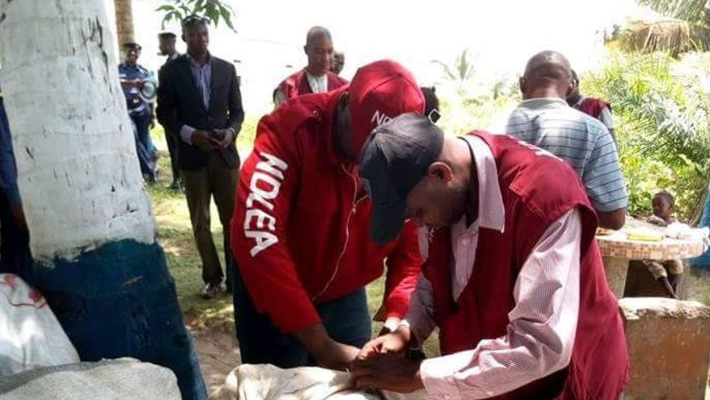
NDLEA destroys five marijuana farms, seizes 50,000 capsules of tramadol in Edo
Mr Ofoyeju said the command also arrested three drug trafficking suspects.
Diaspora
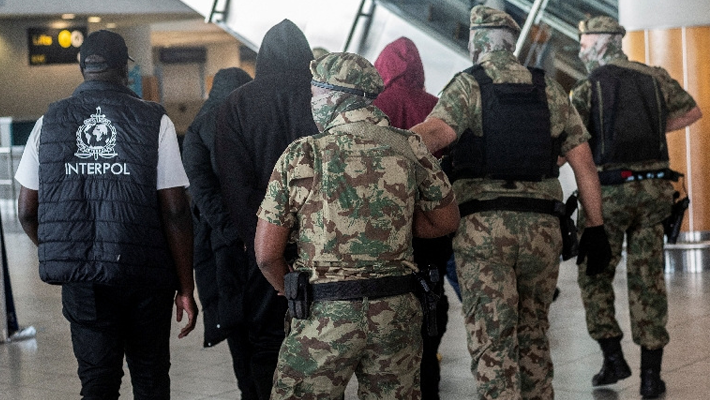
Five Black Axe chiefs extradited for internet scams, money laundering to appear in U.S. court today
All the five members were originally from Nigeria.

Heading 1
New tuberculosis vaccines to become available from 2029: Gavi
Gavi said the vaccines would generate up to $135 billion in economic benefits for low- and middle-income countries by 2050.

Health
Anambra inaugurates diphtheria awareness campaign
The director assured residents that no confirmed case of diphtheria had been recorded in Anambra.


