

No magistrate earns above N250,000 in Anambra, Ebonyi, Enugu: Survey
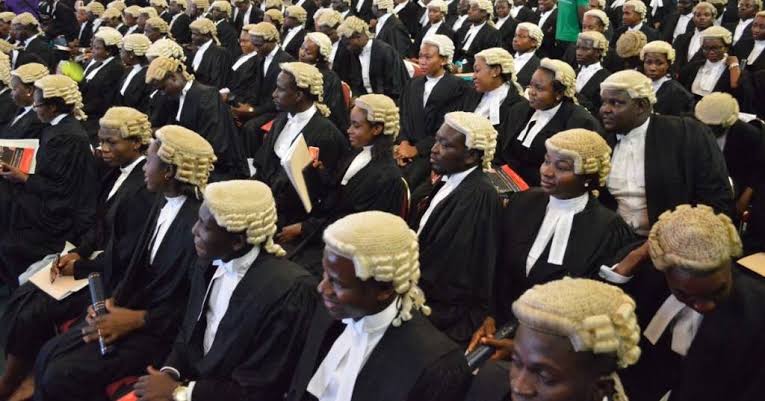
Lawyers and some judicial stakeholders are concerned that no magistrate in Anambra, Ebonyi, or Enugu earns more than N250,000 per month. The stakeholders made the observations separately while responding to a survey on the “Welfare of Magistrates in the country”.
They also decried the working conditions of the magistrates, including inadequate infrastructure and manpower in magistrates’ courts, saying that the situation hampered effective justice delivery in the zone.
In Anambra, a former Chairman of the Nigerian Bar Association, Awka branch, Ken Nwanna, said the shortage of court halls and magistrates was creating serious operational challenges, particularly in Awka.
Mr Nwanna noted that only four magistrates currently sit in Awka, a number, he said, was insufficient to handle the volume of cases in the jurisdiction.
According to him, the magistrates are compelled to share limited courtrooms, resulting in rotational sittings and disruptions to court proceedings.
He explained that the situation was affecting the delivery of justice, adding that other challenges included inadequate electricity supply, a shortage of law books, and poor furniture.
Mr Nwanna also expressed concern over the lack of official vehicles for magistrates, noting that it had been a long time since such support was provided. He stressed that increasing the number of court halls would enable the appointment of more magistrates and reduce workload pressures.
The former NBA chairman recalled that sustained advocacy had led to the ongoing renovation of high courts in the state and urged the government to extend similar efforts to magistrates’ courts.
He called on the government to prioritise the construction and renovation of magistrates’ courts to improve working conditions and enhance the administration of justice.
Kingsley Agbaenyi, the chairman of the Young Lawyers Forum, NBA Awka branch, described the working conditions in magistrates’ courts as poor, citing dilapidated structures and inadequate facilities.
Mr Agbaenyi said many court buildings were outdated and uncomfortable for magistrates, lawyers and the public. He said lawyers often had to procure basic materials such as files and seek external services for photocopying and printing because courts lacked equipment.
According to him, many courts lack basic amenities, including microphones, fans, and air conditioners.
Mr Agbaenyi urged the state government to prioritise judicial funding to address the challenges. He commended the government for ongoing renovation works in some high courts and appealed for similar interventions in magistrates’ courts.
Mr Agbaenyi also encouraged private individuals and corporate organisations to partner with the government to improve infrastructure within the judiciary.
Stanley Okafor, the executive director of the Leadership Orientation and Basic Rights Advocacy Centre, said the condition of magistrates in Anambra mirrored the poor state of magistrates’ courts across the country. Mr Okafor said that many magistrates’ courts had become subjects of ridicule due to prolonged neglect.
He said several magistrates’ and customary courts in Anambra resemble makeshift structures as a result of inadequate government attention to infrastructural development.
“Magistrates’ welfare nationwide remains poor. Those in Anambra earn between about N160,000 and N250,000 monthly, depending on rank, despite handling the bulk of litigation in the justice system. The continued neglect of magistrates has negatively affected justice delivery, leading to practices that undermine judicial integrity,” Mr Okafor said.
The civil society advocate said lawyers and activists have continued to demand improved welfare for magistrates nationwide, lamenting that, in some states, magistrates and judiciary staff are still employed by state civil service commissions rather than judicial service commissions.
Mr Okafor urged the chief justice of Nigeria to intervene by ensuring that funds allocated to the judiciary are released promptly to enable authorities to address the challenges facing magistrates across the country.
He also called for the National Judicial Institute to convene a national conference to develop strategies and legal frameworks to strengthen justice delivery at the magistrates’ level and ensure state judiciaries received their statutory allocations.
Mr Okafor further urged the Anambra government, in the short term, to improve magistrates’ welfare by increasing salaries, providing official vehicles, and renovating magistrates’ and customary court facilities across the state.
The stakeholders in the judicial system in Ebonyi have also decried the poor welfare conditions of magistrates and the dilapidated court facilities in many states of the federation. They urged the federal and state governments to prioritise the well-being of magistrates in the country.
Samuel Ede, the Ebonyi chairman of the NBA, said the welfare package situation would remain worrisome. Mr Ede, therefore, acknowledged that Governor Francis Nwifuru had given SUV cars to magistrates.
“A situation where a magistrate’s monthly take-home stands at less than N200,000. Where will such money take a person in the current Nigerian economy? Well, in Ebonyi state, as Oliver Twist says, thank you for what you have done, but we are asking for more, especially on the monthly pay of the magistrates, which is a little over N200,000,” said Mr Ede.
Emmanuella Otu, a legal practitioner, noted that the role of magistrates in the justice system could not be overemphasised and appealed to the three tiers of government to prioritise their welfare.
According to Ms Otu, empirical analysis reveals that it is not uncommon for a Magistrate to preside over a litany of cases in a single day’s sitting.
It is a similar situation in Enugu, where judicial stakeholders have urged the government to intervene by providing sufficient funds for magistrates’ welfare to ensure easy access to justice and quick delivery of justice.
A human rights lawyer, Olu Omotayo, said it was necessary for the Enugu government to intervene by providing sufficient funds for magistrates’ welfare to improve working conditions.
Mr Omotayo, the president of the Civil Rights Realisation and Advancement Network, appealed to the state government not to leave the welfare of magistrates solely to the state judiciary.
The rights activist urged the government to find a way to address their welfare, adding that the state judiciary could not do so alone.
Mr Omotayo noted that the magistrates’ welfare was based on the state’s financial capacity, while the high court judges were paid by the National Judicial Council.
The stakeholders lamented that many magistrates operated under poor conditions, including inadequate salaries, security, and a lack of basic logistical support, compared to those of high court judges.
John Ugwu, a legal practitioner, decried the poor welfare conditions of magistrates in the state and nationwide and called for urgent government intervention. He noted that proper welfare for magistrates would boost their morale, enhance performance and strengthen the justice delivery system.
Mr Ugwu said that many magistrates suffer in silence, a situation that affects their ability to perform optimally without drawing public attention to their challenges.
According to him, the Magistrates Association of Nigeria has a responsibility to do more to advocate improved welfare for its members to boost their morale.
(NAN)

We have recently deactivated our website's comment provider in favour of other channels of distribution and commentary. We encourage you to join the conversation on our stories via our Facebook, Twitter and other social media pages.

More from Peoples Gazette

Agriculture
FG tasks ECOWAS on leveraging financing strategies for agroecology
The federal government has urged stakeholders in the agriculture and finance sectors in the West Africa region to leverage financing strategies to enhance agroecology practices

Politics
Katsina youths pledge to deliver over 2 million votes to Atiku
“Katsina State is Atiku’s political base because it is his second home.”
World
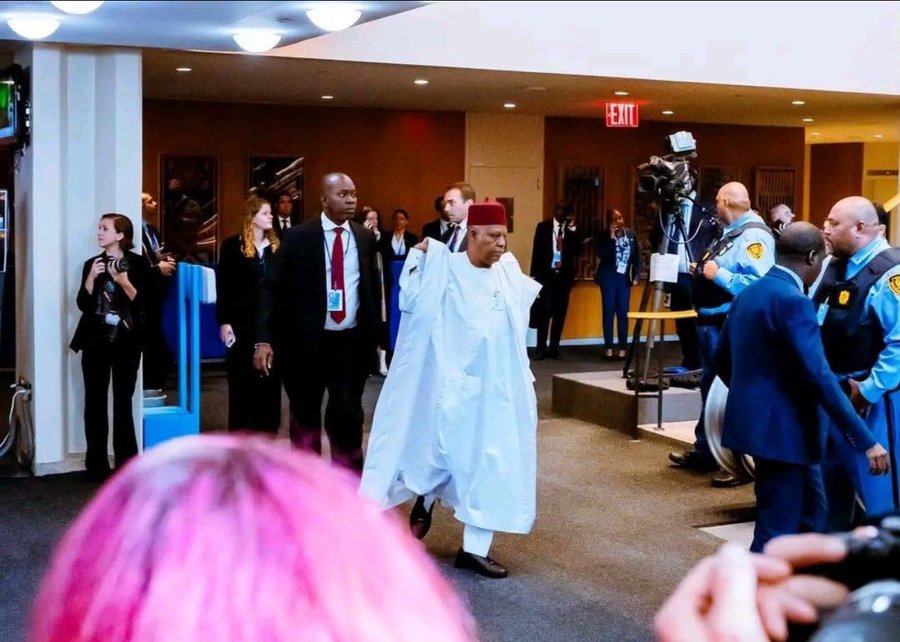
Shettima: Diaspora remittances strengthening Nigeria’s external position
Vice-President Kashim Shettima lauded Nigerians in the diaspora for their economic contributions, saying their remittances are strengthening Nigeria’s external position.

Enugu
Ebonyi assembly reviews salaries of LG chairmen, DC coordinators
LG chairmen will now earn N450,000; vice-chairmen, N400,000; secretaries, N240,000; supervisors, N230,000; and SAs to chairmen, N165,000. Legislative leaders will earn N300,000.
Abuja
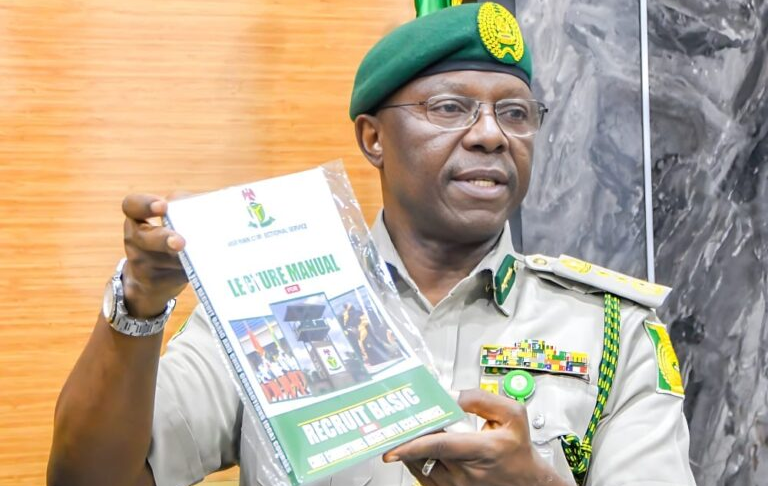
NCoS unveils unified training manual, standardised course badges
The Nigerian Correctional Service has unveiled its first-ever unified training manual and standardised professional course badges for its training institutions nationwide.

Economy
Power generation plants utilised 86% of available capacity in August: NERC
The Nigerian Electricity Regulatory Commission says the country’s grid-connected power plants utilised 86 per cent of available generation capacity in August.

Economy
Sanwo-Olu seeks affordable climate finance for subnational govts
Governor Babajide Sanwo-Olu has urged the international community to provide affordable, long-term financing to help subnational governments implement climate solutions at scale.

Abuja
Abuja motorists laud sanctions on filling stations for under-dispensing petrol
Some Abuja motorists have commended NMDPRA for sanctioning petrol retail outlets accused of under-dispensing fuel.


