


President Tinubu, terminate the dodgy £746 million ports deal

One hundred and fifty‑two days after President Bola Tinubu signed a £746 million ports financing deal with the United Kingdom at Windsor Castle, neither government has disclosed the terms of the agreement. I initially held back from commenting, prioritising Nigeria’s spiralling insecurity. But the persistent silence surrounding this deal and the pattern of opaque governance it reflects makes further waiting irresponsible.
Nigeria’s public debt has exploded from ₦87 trillion in May 2023 to over ₦152 trillion today. Debt service now gulps more than 60 per cent of government revenues, leaving crumbs for health,
education, and the security Nigerians are dying for lack of. The administration’s annual borrowing
rate has soared to nearly ₦50 trillion, that is, ten times that of its predecessors, fuelled by a $21.45 billion external borrowing plan approved without a single substantive public hearing by the complicit, supine and captive lawmakers at the National Assembly.
Against this backdrop, the Tinubu government added a £746 million ports deal whose terms remain hidden. This is not a grant, nor aid. It is a sovereign debt obligation. It is a commercial loan arranged by Citibank London, guaranteed by UK Export Finance, and structured to benefit British exporters.
At least £236 million is contractually reserved for British suppliers. British Steel alone secured a £70 million contract it described as one of the largest in its history. Nigeria borrowed the money that British companies will harvest the contracts and Nigerians will repay the debt. Yet neither interest rates nor repayment timelines have been officially published.
Civil society organisations, including SEREC, BudgIT and opposition parties, have demanded disclosure. None has received a substantive response. The loan agreement remains unpublished by the Ministry of Finance, NPA, UKEF, or any other official body.
Three failures make this silence unacceptable.
First, currency risk: a sterling loan benchmarked to a floating dollar rate, repayable in a naira that has lost over 70 per cent of its value since 2023, with no disclosed hedging framework.
Second, procurement failure which is most vexing for me as one who led the public procurement reforms of this country: credible reporting identifies ITB Nigeria a company owned by Gilbert Chagoury who is publicly identified as a bosom friend of President Tinubu as the primary contractor without the due process of competitive tender, without publicly available evidence of the involvement of the Bureau for Public Procurement, and without any published evaluation criteria.
Third, policy failure: the government ignored the proven alternative of private capital. The Lekki Deep Sea Port was built for $1.5 billion under a private BOT concession with zero sovereign debt and now handles 1.2 million 20‑foot equivalent units (TEUs). In simple language, the Lekki Port, for which Nigeria did not take on any loans, attracted private financing and is today successfully handling 1.2 million single 20‑foot shipping container annually.
No analysis whatsoever has been offered by the Tinubu administration to justify why then Apapa and Tin Can, two of West Africa’s most commercially productive ports, could not follow the same model of private capital. These two ports do not need sovereign debt to be rehabilitated. What they need is a governance framework that attracts private capital on Nigeria’s terms.
The failure of the Nigerian government to explore this proven better policy option is sufficient basis to conclude that this deal was not actually conceived for the good of Nigeria. The saying that “If it looks like a duck, swims like a duck, and quacks like a duck, then it probably is a duck” comes to mind. This shadowy deal smells like another one of the many opaque, cronyist transactions in which the country takes on the debt and the politically connected take the contracts, with citizens, as always, left to pay the bill.
What then must happen?
Two actions are extremely urgent.
One: President Tinubu must terminate this opaque deal. Suspend all drawdowns immediately and return to the National Assembly (@nassnigeria) with a competitive concession framework for Apapa and Tin Can, designed by an independent transaction adviser, not a politically connected contractor. If the terms cannot withstand public scrutiny, they should not be implemented.
Two: Civil society must file Freedom of Information requests with the Ministry of Finance, NPA, and the attorney general, and simultaneously invoke the UK FOI Act against UKEF to obtain full documentation of this transaction.
Nigeria desperately needs functional ports. The dysfunction of Apapa and Tin Can ports has cost the country immeasurably. But legitimate aspirations cannot be condoned as an excuse for illegitimate processes. A port built on undisclosed debt and non-tendered contracts entrenches the same rotten governance structure that has harmed Nigeria for decades.
The insecurity ravaging the country and the opaque borrowing I am calling out are not separate crises. They stem from the same dangerous culture of reckless abuse of public resources and contempt for accountability.
Today marks 152 days of silence. The two governments appear to be relying on public fatigue to bury this scandal. We must refuse to let them succeed with this, not just for the sake of this deal, but for the principle that no Nigerian government should borrow in the name of its people and refuse to account for the terms.
To President Tinubu, terminate the dodgy ports deal now.
To my fellow citizens, this deal will worsen Nigeria’s fiscal and economic future. I have spoken. You have a voice. Use it. If not for yourself, at least do it for your children and grandchildren who will spend their working life repaying a debt they never saw, for a deal whose terms no one would show them.
Use your voice.
Obiageli ‘Oby’ Ezekwesili is the chairperson of TheSPPG.org—School of Politics, Policy and Governance and founder of FixPolitics. She is a former Nigerian minister of education and solid minerals, former World Bank vice-president for Africa, and co-founder of Transparency International.

We have recently deactivated our website's comment provider in favour of other channels of distribution and commentary. We encourage you to join the conversation on our stories via our Facebook, Twitter and other social media pages.

More from Peoples Gazette

Agriculture
FG tasks ECOWAS on leveraging financing strategies for agroecology
The federal government has urged stakeholders in the agriculture and finance sectors in the West Africa region to leverage financing strategies to enhance agroecology practices

Politics
Katsina youths pledge to deliver over 2 million votes to Atiku
“Katsina State is Atiku’s political base because it is his second home.”
Heading 2
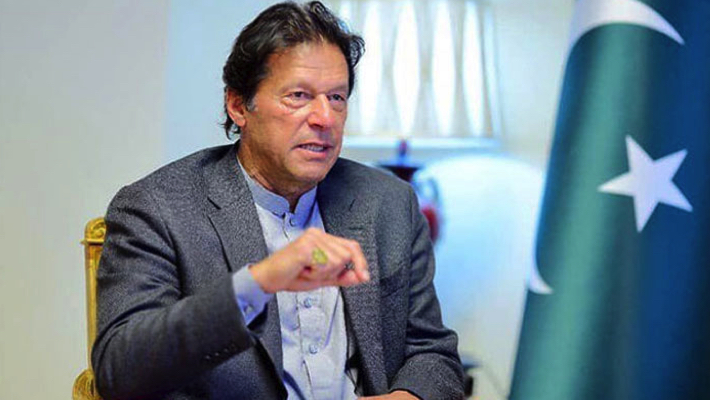
Pakistan Supreme Court orders jailed ex-PM Imran Khan moved to hospital
The court also ruled that the former prime minister would be allowed to meet with his family weekly, including telephone calls with his sons.
States
Lagos APC targets three million votes for Tinubu in 2027
Mr Ojelabi said the party’s performance in the 2023 presidential election was disappointing, and urged members to use the 2027 election to redeem its image.
States
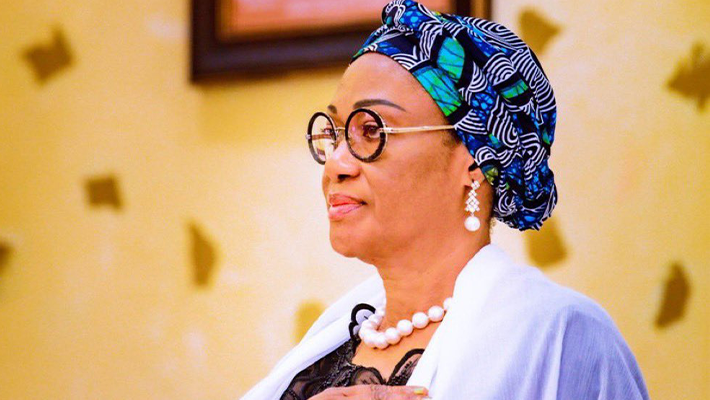
Remi Tinubu inaugurates national community food bank for South-West
She said the programme is a deliberate, sustainable response to food insecurity and malnutrition among vulnerable households nationwide.
States
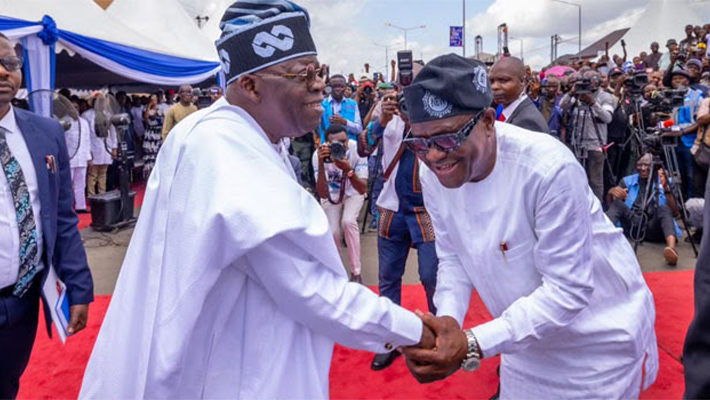
I would have delivered Osun to Tinubu even if people voted against APC: Wike
Mr Wike insisted the outcome of the election would have been different if he had been on the federal government team that went to Osun State.
Opinion
President Tinubu, terminate the dodgy £746 million ports deal
To my fellow citizens, this deal will worsen Nigeria’s fiscal and economic future. I have spoken. You have a voice. Use it.
States
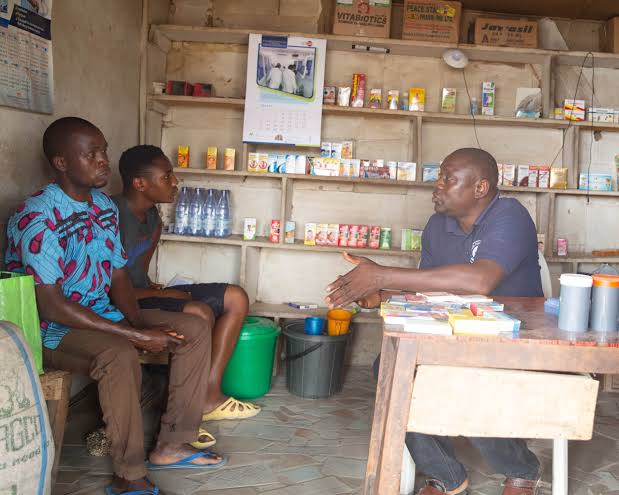
Kano govt bans IV fluid, blood transfusion at patent medicine stores
The Kano State government has banned patent medicine stores across the state from administering intravenous (IV) fluid infusion and blood transfusion.


