

Petrol: No going back on subsidy removal, says FG
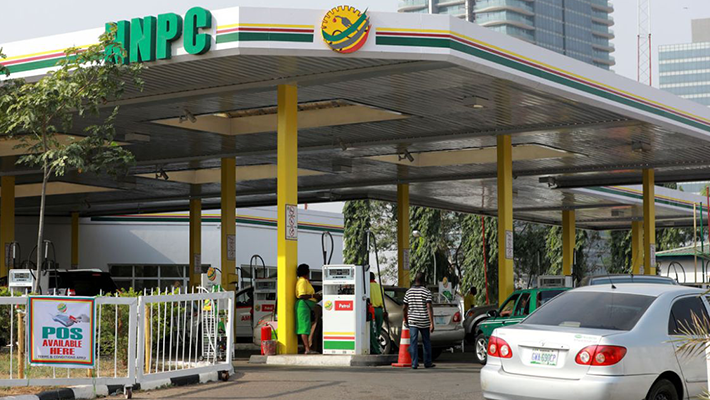
The federal government says the call by former Vice President Atiku Abubakar to bring back fuel subsidy will undermine the reforms already undertaken in the petroleum sector.
According to the federal government, it will also create legal and fiscal complications and potentially discourage investment in domestic refining, including the Dangote Refinery and other modular refineries.
The government’s position was made known by Bayo Onanuga, the special adviser to the president on information and strategy.
The presidency was reacting to Mr Abubakar’s plan to bring back fuel subsidy if elected president in 2027.
Mr Onanuga described the move as retrogressive, fiscally unsustainable and a product of “desperation to win the presidency”.
He said that Nigeria’s petroleum landscape had changed fundamentally since President Bola Tinubu announced the removal of petrol subsidy.
Also, the minister of finance and coordinating minister of the economy, Taiwo Oyedele, said the removal of petrol subsidy had generated N15.8 trillion in resources for the federation between June 2023 and December 2025.
According to Mr Oyedele, N5.4 trillion accrued to the federal government, while N10.4 trillion was shared among states and local governments.
Mr Tinubu, in his response, said that Mr Abubakar was ignorant of governance and the economy.
The president spoke when he received Governor Ademola Adeleke of Osun State at the State House recently.
He said that Mr Abubakar’s plan to reintroduce petrol subsidy was a demonstration of his high level of ignorance of governance and the economy.
Mr Abubakar, a major contender for the country’s presidency, had promised to restore petrol subsidy if elected president.
Mr Tinubu announced the removal of fuel subsidy while taking the oath of office on May 29, 2023.
The decision led to an increase in the pump price of petrol from below N200 to above N1,000, resulting in higher transportation, food and other living costs.
Mr Abubakar, who is the presidential candidate of the major opposition party, the African Democratic Congress (ADC), had also supported the removal of petrol subsidy during the 2023 campaigns.
He has, however, made the restoration of petrol subsidy a major part of his 2027 campaign, arguing that Nigerians have not seen sufficient benefits from the subsidy removal.
The former vice president alleged that the funds generated from the subsidy removal had not translated into food on the tables of Nigerians or improved their lives.
On the oil and gas sector, he said that a new intervention should be designed around domestic refining, with support capped, budgeted and tied to verifiable production and consumer benefits.
According to him, every barrel of crude allocated under his proposal will be targeted and tracked to ensure that Nigerians benefit from the intervention.
Mr Abubakar said that his proposal was not a return to the opaque subsidy regime of the past, but a controlled mechanism that would support Nigerian refineries while ensuring that the benefits of cheaper crude feedstock were transmitted to consumers.
A financial expert and president of the Capital Market Academics of Nigeria (CMAN), Uche Uwaleke, said that the debate should go beyond the immediate attraction of cheaper petrol.
According to Mr Uwaleke, Nigeria should be more concerned about the most economically sustainable way to use the country’s scarce public resources to improve the welfare of citizens over the long term.
He said that the old subsidy regime had become an enormous burden on public finances while also creating significant opportunities for arbitrage, smuggling, rent-seeking and other sharp practices.
“The success of subsidy removal should not be measured simply by whether government stopped paying the subsidy.
“It should be measured by whether it succeeded in converting that difficult sacrifice into a more productive economy, stronger public services, increased domestic production and a better quality of life for the ordinary Nigerian,” he said.
Ken Ife, a prominent global financial analyst and development economist, faulted the political rhetoric of simply returning to a blanket fuel subsidy system to lower pump prices.
Mr Ife said that Nigeria could not solve its deep-seated fuel and economic crises through artificial price-slashing at the point of sale.
According to him, returning to the old consumption-driven subsidy regime would reintroduce the distortions, inefficiencies and massive fiscal leaks that historically crippled the country’s economy.
“In broad macroeconomic terms, and even in development economies, you do not subsidise consumption. What you subsidise is production.
“You cannot borrow money to pay for subsidy. That is unlawful when you consider Fiscal Responsibility Act. It does not recognise that as a legitimate expenditure or as a legitimate borrowing,” he said.
A civil servant, Ibrahim Abbas, said that Nigerians had expected that the removal of petrol subsidy would provide enough revenue to allow the federal government to accelerate the development and upgrade of critical infrastructure to boost economic growth.
“The only thing we civil servants have experienced since subsidy was removed is economic hardship and a huge depletion of the purchasing power of the naira.
“The implementation of the new minimum wage is still shrouded in confusion, and all these make Atiku’s proposal attractive to ordinary Nigerians,” he said.
A retired civil servant, Sule Aliu, said that the economy had been particularly harsh on retirees since 2023, when petrol subsidy was removed.
(NAN)

We have recently deactivated our website's comment provider in favour of other channels of distribution and commentary. We encourage you to join the conversation on our stories via our Facebook, Twitter and other social media pages.

More from Peoples Gazette

Agriculture
FG tasks ECOWAS on leveraging financing strategies for agroecology
The federal government has urged stakeholders in the agriculture and finance sectors in the West Africa region to leverage financing strategies to enhance agroecology practices

Politics
Katsina youths pledge to deliver over 2 million votes to Atiku
“Katsina State is Atiku’s political base because it is his second home.”

Heading 1
We’ll support Tinubu for second term, expect power back to Northern Nigeria after his tenure: Zulum
He said Northern leaders had resolved to support President Bola Tinubu’s second-term bid, with an understanding that power would return to the north afterwards.
Education
Unity colleges defer resumption over King’s College concession dispute
Students federal unity colleges have deferred their scheduled resumption over the proposed concession of King’s College.
States
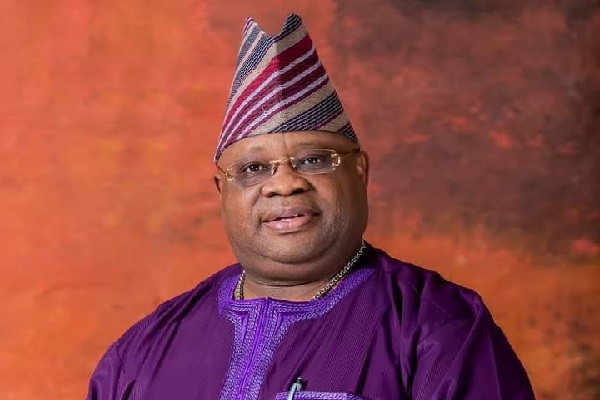
Gov Adeleke urges vigilance over alleged planned attacks on Osun worship centres
The governor urged residents to alert security agencies whenever they notice an influx of strange faces, particularly in border communities.

Lagos
Lagos PDP open to alliance to unseat APC in 2027, says campaign DG
Mr Olalemi said the PDP was reaching out to political parties and interests that shared its objective of defeating the APC in the 2027 governorship election.

Heading 2
NDLEA intercepts Colorado shipments from UK, seizes over 2.3 tonnes of illicit drugs in seven states
NDLEA operatives intercepted two shipments of synthetic cannabis, popularly called Colorado, from the UK.
States
Matawalle mobilises Zamfara stakeholders for Tinubu’s 2027 re-election bid
Mr Matawalle urged the stakeholders to reach out to communities across Zamfara and beyond to galvanise support for Mr Tinubu’s re-election bid.


