

2026 FIFA World Cup Fans: The good, the bad and the ugly (Part 2)

Ten national teams from the Confederation of African Football qualified for the tournament. Below are profiles of fans of national teams from Africa.
Algeria: The national team are called the “Desert foxes” or “Les Fennecs” which means The Fennec foxes, or “Les Verts” and “El Khadra” which means The Greens, or “Les Guerriers du Désert” which means The Desert Warriors. The supporters are also identified with the names.
The adoption of the name “Fennec fox”, which is the national animal of of the country, as well as their national colours of green, red and white, are to pay homage to the indigenous fennec fox of the Sahara and the country at large.
The national team and supporters adopted these names to reflect the agility, strenght, speed, fighting spirit, cleverness, unmatched resilience in the face of harsh environments, and resilience of the animal, people, history of the Sahara Desert.
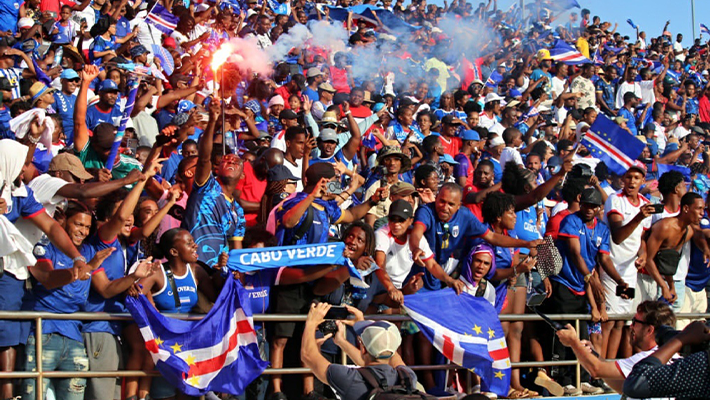
Cape Verde: The national team and their supporters, known for their blue, red, and white colours, both share the name “Blue Sharks”, adopted to pay homage to the Atlantic Ocean archipelago’s island geography, predatory marine life that surrounds them, and the team’s traditional blue home kits.
Despite being a tiny island country and one of the smallest nations to ever qualify for the World Cup, the passionate fanbase has one of the largest diaspora populations in the U.S., especially in Massachusetts and Rhode Island, where they massively come out to support the team whenever they are there to train or compete, This year’s tournament will not be any different.
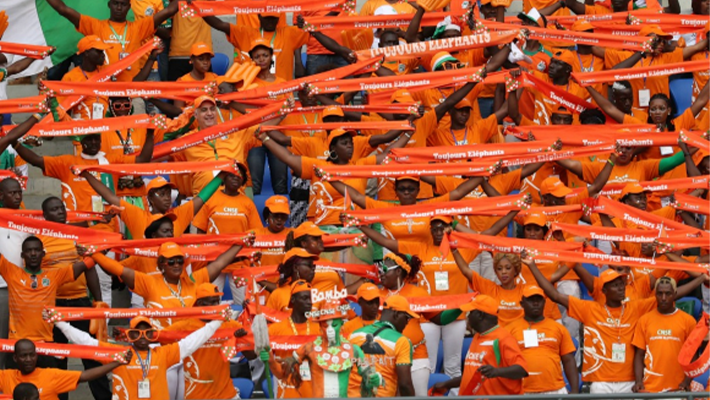
Cote d’Ivoire: The men’s national football team and their fans are called “The Elephants”, in tribute to the majestic African forests’ historically abundant elephants, which is prominent in the country’s coat of arms, to signify strength.
Known for their beautiful orange and green jerseys and regalia, the team and supporters’ adoption of “The Elephants” is also to reflect the country’s historical heritage, and to pay homage to the animal that once roamed the region in large numbers.
About half of the country’s population are dedicated football fans who cheer their team to victories with electrifying and carnival-like atmospheres in the stadiums whenever their team is playing.
Egypt: The national football team and their fans are called the Pharoahs, in honour of ancient kings in the country. Arguably the most passionate and hardcore fans in Africa, they lighten up the atmosphere during matches in stadiums when their team is playing.
They have hardcore fan groups known as Ultras. The fans have in the past, faced crackdowns for violence and deadly tragedies during matches. Most notably, in 2012, about 74 people were killed and hundreds injured in a clash during a football match in Port Said between Al-Ahly and Al-Masry.
With Egypt returning to the World Cup after 28 years, opposing fans will hope supporters of the north African nation will not replicate such violence at the international football showpiece.
Ghana: The national team are called “The Black Stars” while their passionate supporters are referred to as the “12th Player” or the “Black Stars fans.”
The “Black Stars” moniker was derived from the “Black Star of Africa”, a symbol of pan-Africanism featured in the middle of the country’s national flag and coat of arms.
The vibrant fans who display energetic presence during international matches join the team to wear their national colours of white and yellow or gold, complemented by other colours such as black, green, and red.
Morocco: They are the reigning African champions, after CAF stripped Senegal of the title for walking out of the 2025 AFCON final match over controversial refereeing decision.
They are called the “The Atlas Lions”, inspired by the indigenous barbary lions that once roamed the Atlas Mountains which spanned the country, Algeria and Tunisia in north Africa.
The supporters who also share same name with the national team wear red and green coloured shirts with a lion’s face, or dress in full lion’s costume during matches while chanting “Dima Maghrib”, meaning “Forever Morocco”, which is their most famous battle cry.
The supporters made a memorable impact at the 2022 World Cup in Qatar, by joyfully taking over host cities as they supported their team to make history to become the first African team and Arab nation to reach the tournament’s semi-finals.
Ahead of the upcoming World Cup, thousands of fans have already travelled to the U.S. as the team prepare to hopefully replicate their performance at their last appearance or even do one better by reaching the final and winning it, to bring home the trophy to the the continent as the first ever winners from Africa.
Senegal: The national team, called the “Teranga Lions”, were African champions before CAF stripped them of the title and awarded it to Morocco, after the West African side walked out of the AFCON final over a controversial refereeing decision.
Their passionate fans, known as the “Teranga Lions supporters”, show up in large numbers during international matches, filling stadiums in national colours of green, yellow, and red while waving the national flag.
The enthusiastic supporters play traditional Sabar drumming, chant, and sing to cheer their team to victory. Matches involving the team serve as a major unifying force in the country, bringing together fans from all ethnic, cultural, and religious backgrounds.
South Africa: The national team are called “Bafana Bafana” which in the local Zulu language means “The Boys, The Boys”. Supporters also translate it as “Go Boys”.
The team’s passionate fans are well known for blowing of their iconic vuvuzelas, traditional dances face painting, amongst others, to express their diverse, deeply rooted football culture.
Supporters and their team are dressed in yellow, green, and gold coloured shirts and other regalias, as seen in the country’s national flag.
Tunisia: The national team and their supporters are both called the “Carthage Eagles”. The passionate fans boast of a coordinated fanbases in Africa and the Arab world.
While the the “Eagle” symbolizes strength, swiftness, and sharp vision on the pitch, the “Carthage” relates to their ancient and historic Phoenician civilization that originated in present-day Tunisia.
The fans fill stadiums with the country’s national red and white colours with their deafening chants. They have coordinated fan groups that support their team by organising massive, coordinated travels for continental tournaments via social platforms like WhatsApp to mobilize masses.
They also have diaspora in Europe, particularly in France, that ensure friendlies and tournament matches played abroad are filled with supporters to cheer their team to victory.
DR Congo: The male football team are known as “The Leopards”. The team has a huge fanbase that has a huge diaspora community that regularly fill stadiums around the world wherever and whenever their team is playing. They have a significant Congolese diaspora in Belgium.
The DR Congo fans who also share the same nickname, started capturing more global attention after a pose by iconic superfan Michel Nkuka Mboladinga, otherwise known as “Lumumba Vea”, which went viral at the last AFCON.
He has now become the most popular DR Congo fan with his iconic pose, in recognition of and honour of the country’s independence hero, Patrice Lumumba, by standing like a silent “living statue” and raising one arm for the full 90 minutes of matches.
His viral performances attracted the Congolese government who officially made him a sports ambassador, and gifted him a car and a house. The Congolese Association Football Federation has also fully sponsored his trip to be part of the official delegation at the upcoming World Cup.
A U.S. entry restrictions on travellers from DR Congo over an Ebola outbreak, which has led to some fan ticket cancellations and match relocations, have not stopped a strong contingent of Leopards supporters from travelling to North America to support their team.

We have recently deactivated our website's comment provider in favour of other channels of distribution and commentary. We encourage you to join the conversation on our stories via our Facebook, Twitter and other social media pages.

More from Peoples Gazette

States
Independence: NBA urges Nigerians to expect better future
The NBA said that ordinary Nigerians should be deriving benefit from the subsidy removal rather than hardship.

Agriculture
FG tasks ECOWAS on leveraging financing strategies for agroecology
The federal government has urged stakeholders in the agriculture and finance sectors in the West Africa region to leverage financing strategies to enhance agroecology practices

Politics
Katsina youths pledge to deliver over 2 million votes to Atiku
“Katsina State is Atiku’s political base because it is his second home.”
Health
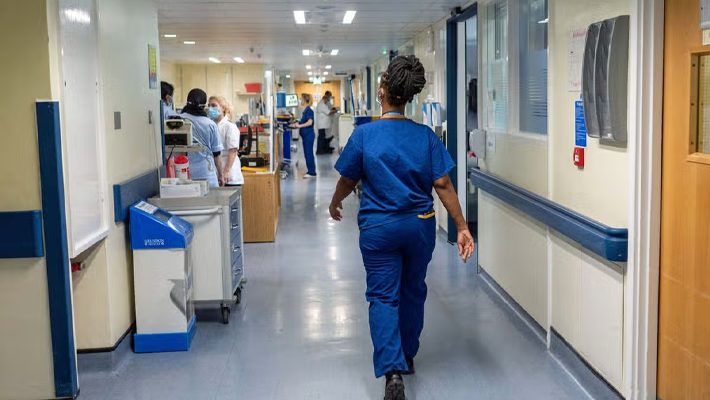
Senior doctors in England to strike for two days over pay dispute
Mrs Cooper expressed disappointment over the insistence by the BMA to mobilise senior doctors to go on strike.

States
FG, IFAD distribute tricycles, farm equipment to over 500 farmers in Anambra
The equipment distributed included 49 tricycles, 84 power tillers, 80 solar-powered water pumps, 200 knapsack sprayers and fertiliser applicators.

Economy
Afreximbank records $813.5 million net income in nine months
Afreximbank noted that the growth was underpinned by an expansion of its lending portfolio.

Hot news Home top
Chris Brown sentenced for London nightclub attack
Brown,37, had repeatedly struck Abe Diaw with a tequila bottle in the VIP section of Tape, a nightclub in London on February 19, 2023.
World
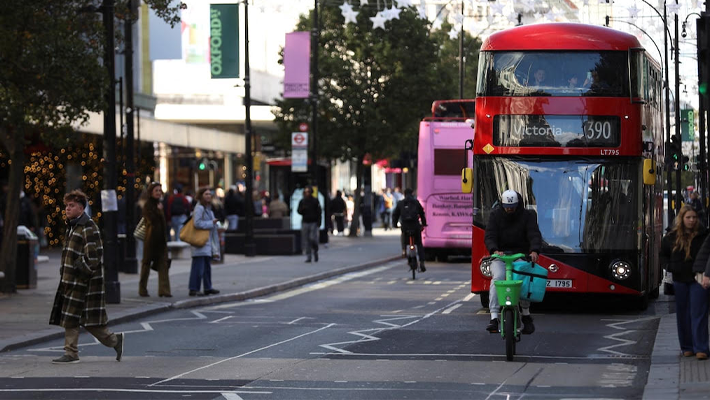
London’s Oxford Street becomes traffic-free
City officials said the revitalisation plan will create new opportunities for the famous street, which brings about $33 billion annually to London’s economy.
Health
Borno NMA sets up committee to check quackery
The NMA chair said that suspected cases of quackery would be reported to the appropriate authorities for investigation and necessary action.


