

2027 and Nigeria’s fortunate inconvenience
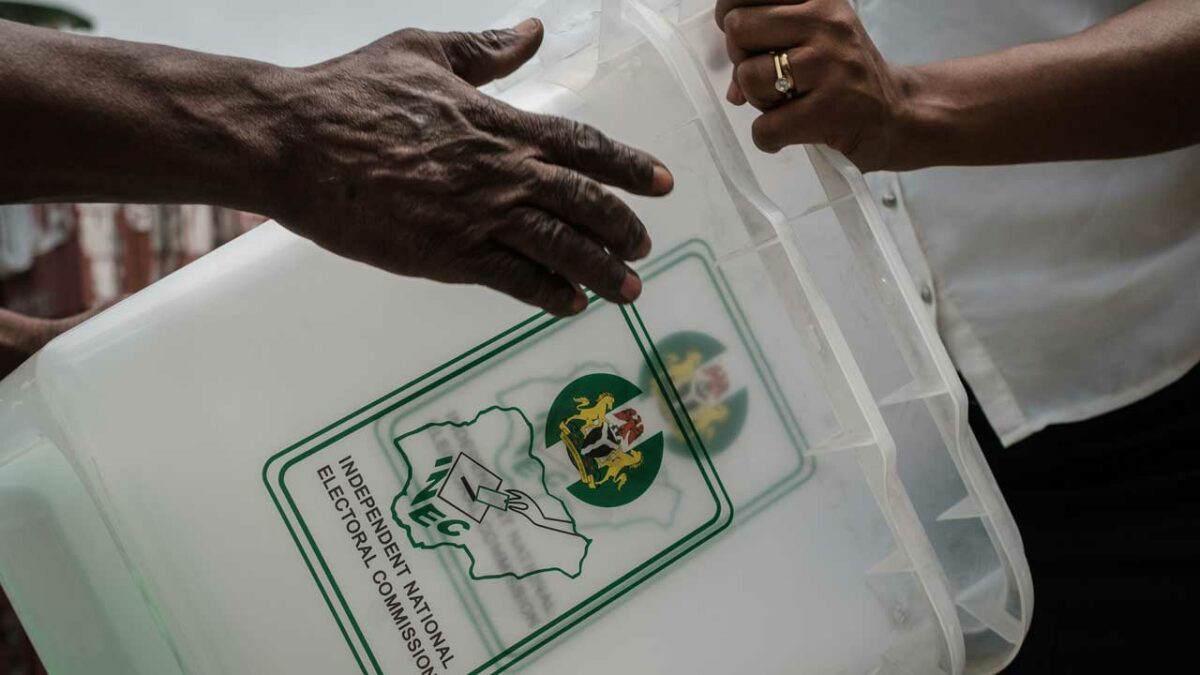
In early 1979, Nigeria stood at the edge of something new. The military government of the day was preparing to hand over power to a civilian administration. The ballots had been cast and the results counted when the arguments began.
The Constitution required that a presidential candidate win not only the most votes but also at least one-quarter of the vote in two-thirds of the states.
Nigeria had nineteen states at the time. Two-thirds of nineteen is twelve and two-thirds. So, what exactly was two-thirds of a state? It sounded like a joke. But it was not, because the election’s outcome hinged on its interpretation.
When the dispute reached the courts, the judges produced a mathematical interpretation that allowed Shehu Shagari to be declared the winner. Critics cried foul. Editorials raged. Lawyers argued deep into the night about constitutional arithmetic.
And yet something interesting happened. Ordinary Nigerians, teachers, traders, and university students began debating constitutional clauses in the most random places. Newspapers printed diagrams explaining fractional states. The language of electoral law became street conversation. Everyone had their unique interpretation of what the controversial clause meant. And so, what began as a technical dispute became a civic seminar.
That turned out to be quite a fortunate inconvenience.
A fortunate inconvenience is a moment when an action designed for advantage produces the opposite effect. It is when an attempt at quiet manoeuvring becomes a loud awakening. It is when friction generates clarity. In politics, these moments are rare, but when they do occur, when power underestimates the public, and something meant to pass unnoticed becomes unforgettable, the consequences rarely unfold as planned.
Nigeria may be living through such a moment again.
This past week, controversy has surrounded the legislative moves within the Nigerian Senate, led by Senate President Godswill Akpabio, regarding amendments to the Electoral Act. Civil society groups, legal analysts, and opposition figures have raised concerns about transparency, process, and potential implications for electoral safeguards.
At first glance, it seems like everyday procedural politics. Bills. Clauses. Harmonisation. Technical adjustments. The kind of thing that rarely trends on social media.
But electoral law is not technical. It is architectural.
It determines how votes are counted. How disputes are resolved. How institutions behave under pressure. Electoral rules are the plumbing and wiring of democracy. They are often ignored by citizens until something breaks. And when they malfunction, everything tends to flood and shock.
Electoral legitimacy depends not only on the fairness of the outcomes, but on the perceived level playing field of the process and rules that produce them. When citizens suspect that the rulebook is being quietly rewritten, trust erodes. And when trust erodes, turnout decreases, cynicism rises, and democracy weakens from within.
What would it mean if lawmakers altered the electoral framework without public vigilance? It would signal that the procedural core of democracy is negotiable.
This suggests that scrutiny is optional. It would reinforce a familiar and dangerous narrative that political institutions operate above public accountability.
But something unexpected happened with the Senate’s consideration of the real-time transmission of election results. Nigerians paid attention.
Twitter posts from groups like YIAGA began dissecting the clauses under consideration. Civil society organisations took to the streets. Opposition figures aligned with the African Democratic Congress, including Peter Obi and Rotimi Amaechi, joined the protests. Young Nigerians, many of whom came into political consciousness during the 2020 protests, began asking detailed questions about legislative procedure. What is the first reading? What is committee review? How are amendments harmonised? These are not trivial questions. They are the vocabulary of an engaged citizenry.
In mature democracies, civic awareness is often born from such controversies. Political friction is often the catalyst for civic muscle. Nigeria’s recent reaction suggests something similar.
For years, leaders, politicians, and analysts have lamented voter apathy in Nigeria. They are worried that electoral cycles have been reduced to personalities rather than processes. But now, in the debate over the Electoral Act, Nigerians are not merely arguing about the candidates. They are arguing about systems.
That shift matters.
Because democracy is sustained not by who wins elections, but by whether citizens understand how elections work.
And here lies the deeper irony. Akpabio and the 10th Senate’s attempt to quietly reshape the Electoral Act amendment has had the opposite effect. It has dragged legislative mechanics into the open. It has made electoral law a national conversation. It has reminded Nigerians that vigilance cannot be seasonal.
Ahead of 2027, this awakening carries implications.
A politically attentive population is harder to surprise. A legally literate electorate is harder to mislead. Citizens who understand the procedure can detect irregularities before they become irreversible.
In the coming days, weeks, and months, the Senate controversy may fade from the headlines. News cycles always do. But the habits it has triggered are far less fleeting.
Last week, the Senate may have attempted to move quietly by inserting a contentious clause into the electoral act amendment, but Nigerians were paying attention. And History suggests that when Nigerians are provoked into a state of constant vigilance, they rarely forget the lesson.
Olu Onemola writes from Abuja

We have recently deactivated our website's comment provider in favour of other channels of distribution and commentary. We encourage you to join the conversation on our stories via our Facebook, Twitter and other social media pages.

More from Peoples Gazette

States
Independence: NBA urges Nigerians to expect better future
The NBA said that ordinary Nigerians should be deriving benefit from the subsidy removal rather than hardship.

Agriculture
FG tasks ECOWAS on leveraging financing strategies for agroecology
The federal government has urged stakeholders in the agriculture and finance sectors in the West Africa region to leverage financing strategies to enhance agroecology practices

Politics
Katsina youths pledge to deliver over 2 million votes to Atiku
“Katsina State is Atiku’s political base because it is his second home.”

Heading 2
UNIZIK introduces digital clearance, certificate systems to reduce graduation delays
The vice-chancellor said the university had also digitised its transcript processing system.

Health
Study links 2.3 million global cancer cases to infections in 2024
The researchers said the findings underscored the importance of infection control in cancer prevention.

World
Trump admin justifies White House ban on CNN, MS NOW, Politico
The judge ordered that the ban be lifted for two weeks which would end next week Thursday.
Diaspora
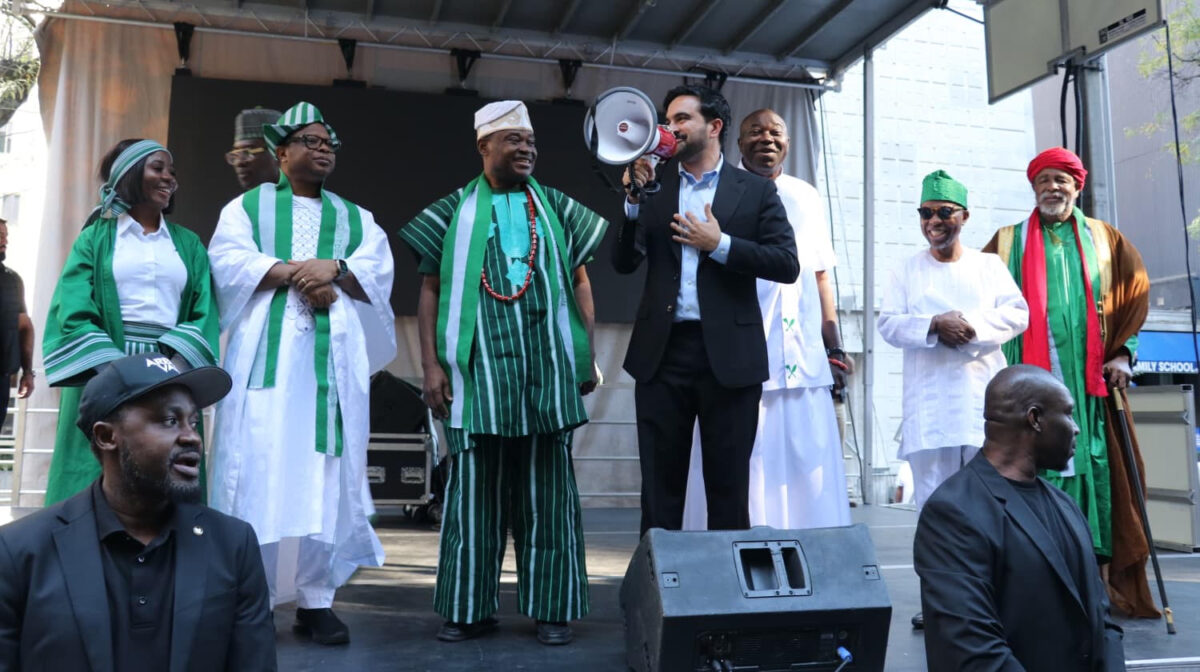
New York mayor hails Nigeria’s global cultural influence at independence carnival
Mr Mamdani praised Nigeria’s extraordinary cultural influence across Africa and internationally.
States
NIPR, Global Alliance commend Gov Sule’s role in establishing PR, leadership university
The state government donated 100 hectares of land for the project.
NationWide
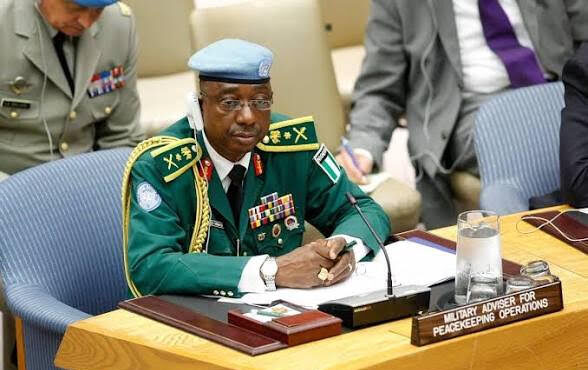
Army celebrates late Obiakor’s legacy in global peacekeeping
Mr Obiakor died on May 27, 2026, at the age of 75.


