

2027: JONAPWD urges political parties, candidates to prioritise disability inclusion

The Joint National Association of Persons with Disabilities (JONAPWD) has urged political parties and candidates to engage directly with disability communities and present concrete inclusion agendas ahead of the 2027 general elections.
JONAPWD’s national chairman, Abdullahi Aliyu, made the call on Tuesday in Abuja at the Conference of Stakeholders on Disability Inclusion in Nigeria (COSDIN 3.0).
Mr Aliyu said persons with disabilities (PWDs) should not merely be used to demonstrate political diversity but should have opportunities to contest elections, influence policies and occupy elective and appointive positions.
He said political parties and aspirants seeking the votes of PWDs must engage them directly and demonstrate their commitment to disability inclusion.
“Some of the political parties pick some people from our community just for them to tick the box.
“Any political party or aspirant who wants the votes of persons with disabilities in this country needs to sit down with the community and tell us the promises they have for disability inclusion.
“We are not ready to tick the box, and if political parties and aspirants are not ready to engage with us, our votes are still with us,” he said.
The chairman also called on the federal government to increase the annual budget of the National Commission for Persons with Disabilities (NCPWD) to at least N2 billion.
According to him, adequate funding, accountability and effective implementation of the Discrimination Against Persons with Disabilities (Prohibition) Act, 2018, are necessary to achieve meaningful inclusion.
He maintained that establishing disability commissions at federal and state levels would achieve little without adequate financial resources, institutional capacity and mechanisms to ensure they fulfilled their statutory responsibilities.
Mr Aliyu said the disability community was seeking a transition from policy commitments to practical implementation, particularly in leadership, decision-making, education, employment and political participation.
“We want to see the full implementation of disability inclusion in this country. We want to leave what is in the paper and begin to see actions.
“We are tired of seeing people talking about inclusion. What we really want to see is the full implementation of inclusion in this country.
“We want the Federal Government and state governments to understand that our population is more than enough reason to give the National Commission for Persons with Disabilities a N2 billion budget,” he said.
Mr Aliyu also called for greater representation of PWDs in leadership and decision-making, insisting that their lived experiences qualified them to determine policies affecting their rights and welfare.
He urged PWD organisations to take ownership of disability advocacy rather than allowing individuals without disabilities to dominate conversations and represent their interests.
In his remarks, Omar Alihashi, Head of the Political Affairs Section at the Canadian High Commission in Nigeria, said meaningful disability inclusion was essential to Nigeria’s democratic, economic and social development.
Mr Alihashi described PWDs as voters, entrepreneurs, professionals and potential public office holders whose perspectives and leadership were necessary for decisions affecting society.
He stressed that the implementation of the 2018 Disability Act must translate into tangible improvements through accessible institutions, effective enforcement and accountability.
According to him, political inclusion must extend beyond voting independently and safely to include opportunities to contest elections, influence public policies and occupy leadership positions.
He said Canada, through initiatives supported by its Fund for Local Initiatives, had partnered with Nigerian organisations to advance disability rights, address gender-based violence and strengthen democratic participation ahead of the 2027 elections.
Also speaking, the convener of the Nigeria Civil Society Situation Room, Yunusa Ya’u, said establishing disability commissions across several states was commendable but insufficient to guarantee meaningful inclusion.
Mr Ya’u noted that PWDs continued to encounter barriers to participation in classrooms, decision-making institutions and other spaces where policies affecting their lives were determined.
He urged stakeholders to intensify advocacy and engagement to ensure that commitments contained in disability laws and regulations translated into measurable outcomes.
Mr Ya’u said the forthcoming elections provided an opportunity for PWDs to develop an inclusion agenda and use it to engage political parties and candidates.
“Policies and their implementation are shaped by political participation. If people with disabilities do not participate, we will always have differences between promises and actual implementation,” he said.
Representing the president of the ECOWAS Commission, Abimbola Oyelohunnu, Programme Officer, Social Affairs, said the regional organisation was strengthening disability inclusion through policy frameworks, data collection and capacity development.
Mrs Oyelohunnu said ECOWAS adopted its Regional Action Plan on Disability Inclusion in 2024, providing a framework for integrating disability considerations into its programmes and institutional activities.
She said the commission had also supported the provision of assistive devices for children with disabilities in West Africa, reaching approximately 1,000 children in two member states.
Mrs Oyelohunnu said ECOWAS had developed a regional Disability Data Framework to improve data collection, track progress and support evidence-based policymaking across member states.
She identified technology, staff training, early identification of disabilities among children and recognition of caregivers within social protection programmes as priority areas requiring greater attention.
Mrs Oyelohunnu also called for the integration of the care economy into social protection, noting that many individuals caring for children with disabilities remained unrecognised and unsupported.
The country director of the Westminster Foundation for Democracy (WFD), Nigeria, Adebowale Olorunmola, said economic and political inclusion were interconnected, stressing that economic empowerment was necessary to expand political participation.
Mr Olorunmola said inclusive societies created opportunities for broader participation in development, adding that Nigeria needed sustained public education to deepen understanding of disability rights and inclusion.
He commended JONAPWD for sustaining the stakeholders’ conference and developing a 10-year strategic plan to monitor implementation milestones, strengthen accountability and consolidate gains in disability inclusion.
The West Africa programme manager of the Disability Rights Fund (DRF), Theophilus Odaudu, commended JONAPWD for sustaining the stakeholders’ conference, urging participants to translate discussions and policy commitments into concrete, measurable actions to advance disability inclusion.
The conference, themed “Beyond Participation: Advancing Disability Leadership and Accountable Governance in Nigeria”, brought together government representatives, development partners and disability rights advocates to discuss strategies for strengthening inclusion and accountability.
(NAN)

We have recently deactivated our website's comment provider in favour of other channels of distribution and commentary. We encourage you to join the conversation on our stories via our Facebook, Twitter and other social media pages.

More from Peoples Gazette

States
Independence: NBA urges Nigerians to expect better future
The NBA said that ordinary Nigerians should be deriving benefit from the subsidy removal rather than hardship.
Agriculture
FG tasks ECOWAS on leveraging financing strategies for agroecology
The federal government has urged stakeholders in the agriculture and finance sectors in the West Africa region to leverage financing strategies to enhance agroecology practices
Politics
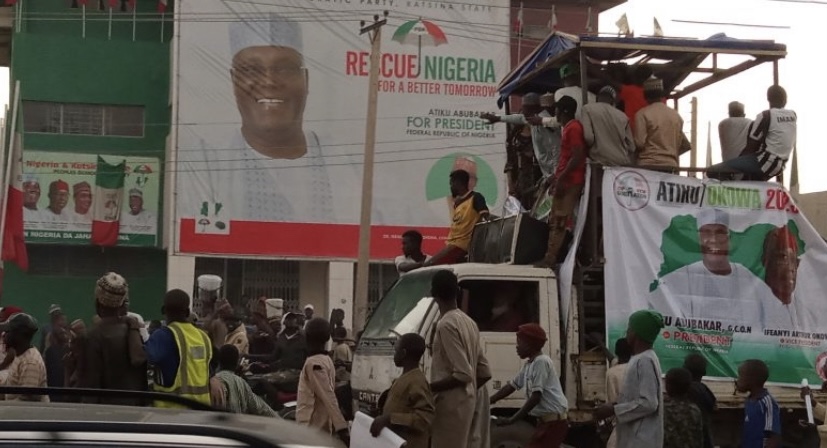
Katsina youths pledge to deliver over 2 million votes to Atiku
“Katsina State is Atiku’s political base because it is his second home.”
Heading 5
2027: JONAPWD urges political parties, candidates to prioritise disability inclusion
Mr Aliyu said the disability community was seeking a transition from policy commitments to practical implementation.

Agriculture
3,520 Benue farmers to benefit from NADF’s post-flood support
Mr Ibrahim said the intervention was designed to cushion the impact of flooding on agricultural activities.
States
Shettima inaugurates electric mobility, renewable energy projects in North-East
He commended the NEDC management and staff for their commitment to sustainable development.
Africa
RVMC launches $35 million initiative to address vaccine manufacturing gaps in Africa, other regions
Mr Kristensen said the focus should shift from building more manufacturing plants to strengthening the wider regional manufacturing system.
Economy
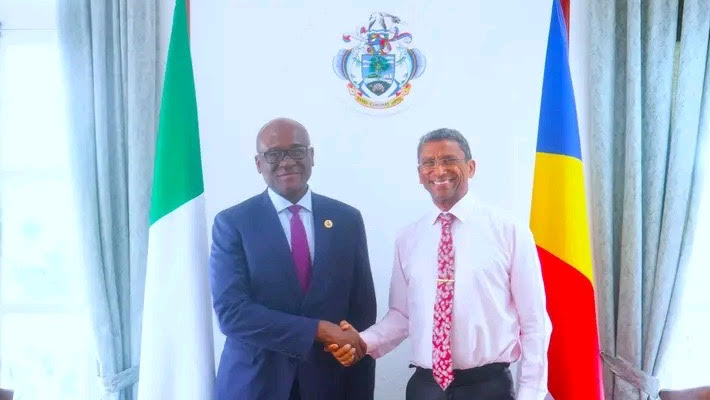
Seychelles, Nigeria target stronger cooperation ahead of 50th diplomatic anniversary
Mr Danlami and Mr Faure discussed setting up a joint commission to provide a structured framework for engagement.
Heading 4
FIFA rejected Nigeria hosting World Cup due to poor stadium infrastructure: ACG
Mr Mognard explained that a football-only stadium hosts a match once every two weeks during the season.


