

21,000 babies born in 2023 through IVF in UK

The equivalent of almost one child in every classroom in the United Kingdom is now born through in vitro fertilisation or IVF fertility treatment, new figures suggest.
The Human Fertilisation and Embryology Authority (HFEA) on Thursday said that almost 21,000 babies were born from IVF in 2023, compared to 8,700 in 2000.
The authors of the fertility regulator’s latest report wrote that “IVF births are making up a higher proportion of all UK births over time, increasing from 1.3 per cent in 2000 to 3.1 per cent in 2023.
“This means around one in 32 UK births in 2023 were via IVF – roughly one child in every classroom – compared to one in 43 in 2013.”
The HFEA said that its latest figures show the “changing landscape” of fertility care in the UK.
Overall, 52,400 patients had more than 77,500 in vitro fertilisation (IVF) cycles at UK fertility clinics in 2023.
While some 11 per cent of births to women aged 40 to 44 were a result of IVF, increasing from 4 per cent in 2000 and accounting for 0.5 per cent of all births, HFEA said.
The data also reveal a rise in the proportion of women freezing their eggs, rising from 4,700 in 2022 to 6,900 in 2023, but the HFEA said that the number of patients using their stored frozen eggs in treatment remains low.
Meanwhile, the HFEA also said that in 2023, around 820 babies were born following donor insemination (DI) treatment.
The figure also shows a reduction in the number of IVF treatments funded by the NHS.
The proportion of NHS-funded IVF cycles declined from 35 per cent in 2019 to 27 per cent in 2023 in the UK, decreasing most in England, the HFEA said.
More than half (54 per cent) of IVF cycles in Scotland were funded by the NHS in 2023, compared to 49 per cent in Northern Ireland, 33 per cent in Wales, and 24 per cent in England.
The HFEA also raised concerns about racial disparities in IVF.
It said that in recent years, Asian and Black patients have had lower birth rates compared to white patients and those from a mixed ethnic background.
Julia Chain, chairwoman of the HFEA, said, “IVF is helping more people have babies, including patients of different ages and family types.
“One in 32 of all UK births are from IVF, and 11 per cent of all UK births are to women aged 40-44 who had IVF. We are also seeing more single patients and female same-sex couples having IVF. These findings highlight the changing landscape of the UK fertility sector and how it could develop in the years to come. However, we are very concerned to see that Black and Asian patients continue to have lower IVF birth rates compared to other patient groups, and our recent survey found that Asian and Black patients are less likely to report being satisfied with their fertility treatment.”
Data from the Office for National Statistics shows that the fertility rate in England and Wales in 2023 was 1.44 children per woman, the lowest level on record.
Commenting on the HFEA data, a spokesperson from the fertility charity Fertility Network UK said, “This important report from the HFEA reflects how essential fertility treatment has become for growing families in the UK and underlines.”
The spokesperson added that it was not just the scientific advances in fertility care but also the profound social impact of helping people realise their dreams of parenthood.
“Delays in accessing treatment, whether due to long GP referral times or inconsistent NHS funding, can have a devastating emotional and biological impact.
“We call for fair and timely access to fertility services for all, wherever they live and whatever their background,” the spokesperson said.
(dpa/NAN)

We have recently deactivated our website's comment provider in favour of other channels of distribution and commentary. We encourage you to join the conversation on our stories via our Facebook, Twitter and other social media pages.

More from Peoples Gazette

States
Independence: NBA urges Nigerians to expect better future
The NBA said that ordinary Nigerians should be deriving benefit from the subsidy removal rather than hardship.

Agriculture
FG tasks ECOWAS on leveraging financing strategies for agroecology
The federal government has urged stakeholders in the agriculture and finance sectors in the West Africa region to leverage financing strategies to enhance agroecology practices

Politics
Katsina youths pledge to deliver over 2 million votes to Atiku
“Katsina State is Atiku’s political base because it is his second home.”

Sport
2027 AFCON Qualifier: Guinea-Bissau beat Madagascar, extend lead over Nigeria in Group L
Guinea-Bissau now have 10 points, Nigeria seven points, while Madagascar and Tanzania have two points each.
Africa
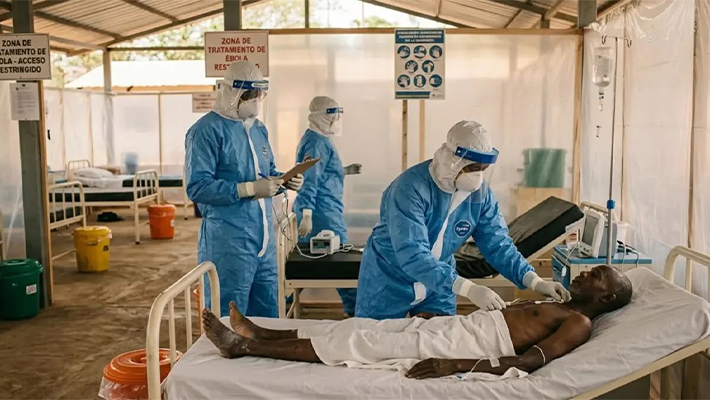
WHO raises concern over rising Bundibugyo Ebola deaths, insecurity in DR Congo
Mr Ghebreyesus said the outbreak, declared six months ago, had spread across 67 health zones in eight provinces in the DR Congo.

Africa
Afreximbank urges industries to boost intra-African trade as alternative to China in global markets
“As global markets look to diversify production beyond China, Africa must position itself as a natural partner of choice,” Mr Maayergi said.

World
Russell Brand faces probe over prison message to supporters
Mr Brand was convicted at Southwark Crown Court of one count of rape and three counts of sexual assault.

Politics
Tinubu admits cost-of-living crisis after APC dismissed widespread hunger claims
According to Mr Tinubu, the 2027 election is about the country’s future and direction.

World
WHO pushes for stronger vaccination, screening, treatment to eliminate cervical cancer
WHO said that expanding HPV vaccination, improving screening access, and ensuring timely treatment are critical to protecting women.


