

33% of Nigerian children under five years suffer stunted growth: Survey
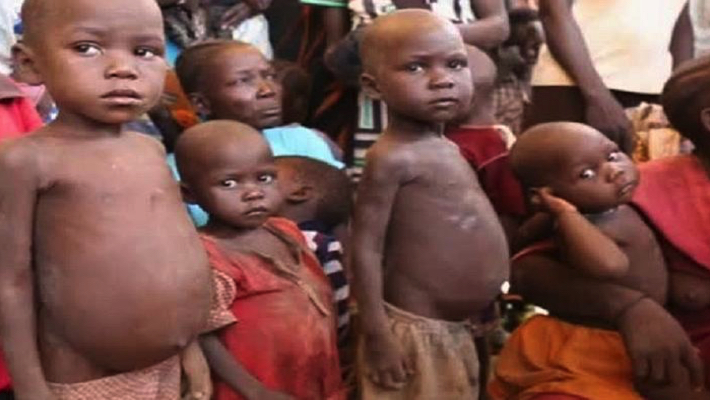
The National Food Consumption and Micronutrient Survey (NFCMS) shows that 33 per cent of Nigerian children under five years suffer stunted growth.
Nebeolisa Anako, permanent secretary, federal ministry of budget and economic planning (FMBEP), disclosed this at the opening of a two-day national launch of the NFCMS report on Monday in Abuja.
The NFCMS is a collaborative effort of federal ministries of health and social welfare, budget and economic planning, agriculture and food security, as well as development partners, led by the International Institute of Tropical Agriculture (IITA).
Ms Anako said the survey is to get a reliable database for food consumption patterns that will serve as a source of information for addressing chronic non-communicable diseases (NCDs) and to improve food systems to deliver healthy diets to Nigerians.
He noted that adequate and proper nutrition is necessary for human capital development, hence the report will comprehensively assess the dietary habits and nutritional status of Nigerians.
He added that “the National Food Consumption and Micronutrient Survey of 2021 shows the prevalence of stunting, wasting and underweight among children under five years as 33.3 per cent, 11.6 per cent and 25.3 per cent respectively.
“However, malnutrition is influenced by a host of underlying factors related to poverty, including poor diet, food insecurity, poor water, sanitation and health services.
“These find their roots in factors that can vary from conflict to climate change, from scarce natural resources to high and volatile food prices, from poor governance to demographic growth.
“This is a huge burden and calls for deliberate efforts to address,” he said.
Dr Ladidi Bako-Aiyegbusi, the director and head of nutrition department, federal ministry of health and social welfare, said the survey was conducted using computer-assisted personal interviewing (CAPI).
Ms Bako-Aiyegbusi added that the survey targeted non-pregnant women of reproductive age between 15 and 49 years old, children between six and 59 months old and pregnant women between 15 and 49 years.
She added that non-pregnant adolescent girls between 10 to 14 years were also captured from the six geopolitical zones, with a sample size of 14,820 and 38 enumeration areas.
“The report provides information for evidence-based policy and programmatic decisions for national supplementation, fortification, sensitisation of appropriate nutrient consumption and other key nutrition interventions to achieve food and nutrition security in Nigeria.
“Also, it will provide important sub-national insights on micronutrient issues, which enable more advanced programming, addressing unique characteristics of the different subgroups of our population,” she said.
Cristian Munduate, UNICEF’s country representative, represented by Chizoba Edemba, nutrition specialist, said: “The launch of this report is an important milestone. It is not the end but the beginning of a new and important next step.
“The utilisation of the data and insights to inform policies and programming is important. Today is an exciting step toward achieving that journey.”
Similarly, Dr Walter Mulombo, Nigeria’s country representative, World Health Organisation (WHO), noted that women and children were more vulnerable to malnutrition due to increased physiological and nutrient needs required to support foetal and child growth.
“Nutrition deprivation during early lives impairs growth and development, leading to poor school performance, reduced productivity and loss of earnings in later life for adults.
“Consequently, the first 1000 days of life, from conception to a child’s second year, is a critical window of opportunity to effectively prevent malnutrition.
“Adolescence is identified as a stage we can actually make up for lost malnutrition.
“Many of these deficiencies are preventable through nutrition education, consumption of healthy diet containing diverse foods, as well as effective food fortification and supplementation,” she said.
Other highlights of the event were panel discussions on food security and WASH, as well as policy, implementation and recommendations.
(NAN)

We have recently deactivated our website's comment provider in favour of other channels of distribution and commentary. We encourage you to join the conversation on our stories via our Facebook, Twitter and other social media pages.

More from Peoples Gazette

States
Independence: NBA urges Nigerians to expect better future
The NBA said that ordinary Nigerians should be deriving benefit from the subsidy removal rather than hardship.

Agriculture
FG tasks ECOWAS on leveraging financing strategies for agroecology
The federal government has urged stakeholders in the agriculture and finance sectors in the West Africa region to leverage financing strategies to enhance agroecology practices

Politics
Katsina youths pledge to deliver over 2 million votes to Atiku
“Katsina State is Atiku’s political base because it is his second home.”

States
Troops kill six terrorists, nab 11 suspected collaborators in Borno
An AK-47 rifle, three magazines and 169 rounds of 7.62mm special ammunition were recovered.

World
Saudi Arabia to reopen Riyadh airport partially
The airport was previously targeted in attacks that caused multiple deaths and injuries.


Heading 3
El Niño: Experts warn of heat-related illnesses
She said prolonged heat could cause dehydration, heatstroke, cardiovascular strain and kidney complications.

Heading 4
Enugu community backs Tinubu, Mbah for 2027, seeks Nnamdi Kanu’s release
The traditional ruler urged political opponents to conduct their campaigns peacefully.

Education
UNILAG to test new students for drugs, substances in toxicology screening
UNILAG urged newly admitted students to visit its website for further information.


