

95 yellow fever cases recorded across Africa, Americas, says WHO

The World Health Organisation (WHO) says yellow fever transmission remained active across Africa and the Americas from January to May 2026, with 95 confirmed human cases recorded across affected countries during the period.
In a statement on Wednesday, WHO said six countries in the Americas reported 79 confirmed infections and multiple epizootics, while three African countries recorded 16 cases during the review period.
The organisation said 32 suspected cases were being investigated in five additional countries, raising concerns about possible under-detection and continued virus circulation in areas with limited surveillance capacity currently.
It said, “WHO’s rapid risk assessment concluded that unvaccinated populations in areas with a history of yellow fever transmission face the greatest threat. The highest risk occurs where low vaccination coverage overlaps.”
According to WHO, transmission in the Americas continued into 2026 following an increase in cases recorded during 2025, reflecting persistent viral circulation and heightened public health concerns across affected regions.
The organisation said, “Multiple epizootics in non-human primates confirm active sylvatic circulation, signalling ongoing virus activity in forest mosquitoes and heightened spillover risk to humans.”
The WHO said sustained yellow fever activity continued across Africa, affecting 13 high-risk countries participating in the Eliminate Yellow Fever Epidemics (EYE) Strategy aimed at reducing outbreak risks continent-wide.
The organisation said that outbreaks recorded between October 2025 and May 2026 coincided with seasonal ecological factors, including rainfall patterns, temperature changes and increased mosquito abundance levels.
“These conditions increase vector density and human exposure, especially where vaccination coverage is low. No imported cases were detected outside the two affected WHO regions so far.
“However, expanding vector suitability, rapid urbanisation, climate shifts, and increased human mobility create conditions conducive to international spread,” WHO noted.
It also highlighted emerging risks to global public health.
According to the WHO, strengthening active surveillance, timely laboratory testing, cross-border coordination and information sharing remain essential for detecting infections early and containing outbreaks before wider transmission occurs.
“Early detection in both human and animal populations is critical to prevent urban transmission cycles. Vaccination remains the primary means for prevention and control of yellow fever.
“WHO continues to support countries in expanding routine immunisation programmes and preventive vaccination campaigns to boost population immunity and reduce outbreak risk,” the organisation added.
(NAN)

We have recently deactivated our website's comment provider in favour of other channels of distribution and commentary. We encourage you to join the conversation on our stories via our Facebook, Twitter and other social media pages.

More from Peoples Gazette

States
Independence: NBA urges Nigerians to expect better future
The NBA said that ordinary Nigerians should be deriving benefit from the subsidy removal rather than hardship.

Agriculture
FG tasks ECOWAS on leveraging financing strategies for agroecology
The federal government has urged stakeholders in the agriculture and finance sectors in the West Africa region to leverage financing strategies to enhance agroecology practices

Politics
Katsina youths pledge to deliver over 2 million votes to Atiku
“Katsina State is Atiku’s political base because it is his second home.”
Anti-Corruption
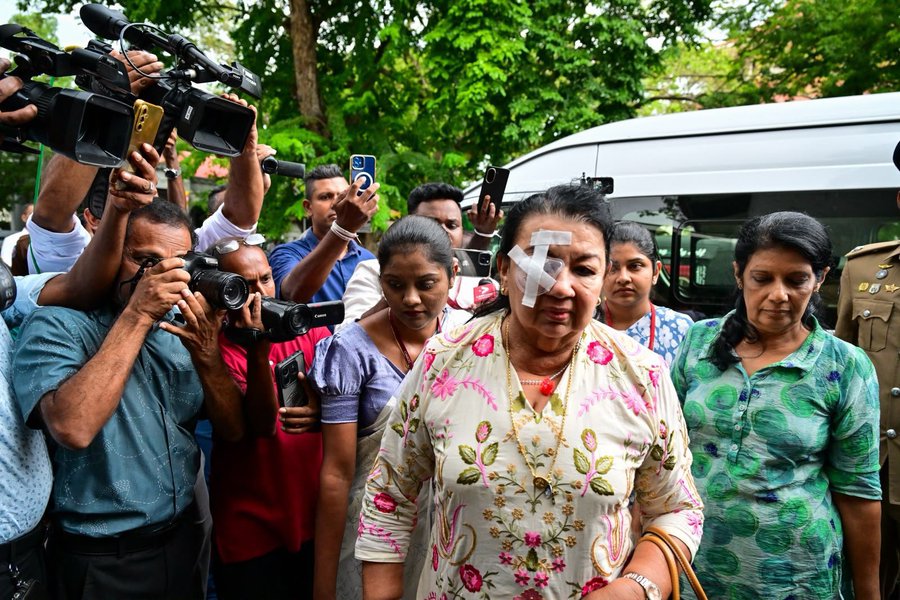
Sri Lanka’s ex-first lady Shiranthi Rajapaksa arrested for fraud
Ms Rajapaksa was grilled for about two hours on Wednesday over 10 million rupees, equivalent to $30,300, in donations collected by the Siriliya Saviya charity.

States
Mikati supporters reject Ashiru’s ADC certificate of return
A coalition of Idris Mikati supporters rejected the certificate of return issued to Isa Ashiru as the African Democratic Congress governorship candidate in Kaduna.

States
Ododo backs unity of Kogi indigenes, seeks lasting peace
Mr Ododo said the responsibility for building peace and unity should not be left to politicians.

NationWide
Amnesty International urges Madonna University to recall final year nursing student expelled over TikTok challenge
The rights group on Wednesday argued that the sanction was an overkill and consequently, disproportionate to the offence.

Heading 4
Veteran communication scholar Idowu Sobowale dies at 85
The family noted that arrangements for the deceased’s burial would be announced later.

Heading 5
FBI raids fraudsters’ hideout in Ghana, arrests suspected scammers
Mr Patel said the raid, codenamed “Operation Blackout”, was carried out on Thursday.


