

Obi is the new Buhari and Obidients new Buharists
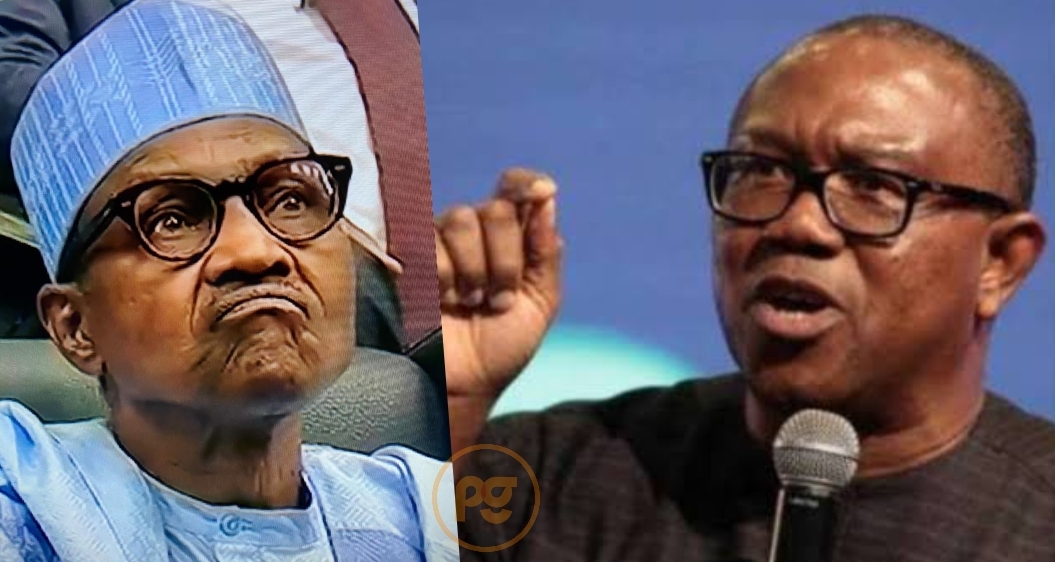
As Peter Obi’s acceptance surges across the country and the prospect of his becoming president of Nigeria is now a real, graspable possibility, we shouldn’t ignore the uncanny parallels between him and Muhammadu Buhari and between his zombielike, unremittingly indecorous, and compulsively vituperative online supporters (called Obi-dients) and Buhari’s supporters, most of whom later transmuted into Buhari Media Center (MBC) trolls on social media.
Like Buhari, Obi is being constructed—or, more correctly, reconstructed—as a blank slate on whom admirers are inscribing all kinds of positive, superhuman attributes. The inscriptions on the empty slates brook no dissent. Contrary evidence, however incontrovertibly factual, is met with the most brutal rhetorical violence.
Like Buhari, Obi has been propelled to the public imagination by riding on the high waves of populism even when they both lack the personal charm and the rhetorical ingenuity to engineer it by themselves. They have never articulated any profound policy positions, but their railings against an ill-defined “elite” of which they’re ironically a part, resonate with people who are angry with a dysfunctional political class.
Their supporters project their desires onto them and attribute to them a willingness and capacity to do what it takes to move the country in a different direction even when nothing in their history and predispositions suggests that.
In one of Buhari’s run for president, he was asked during a presidential debate how he’d address the decline in education standards in the country when his children were in UK universities. He had no coherent answer.
When Obi ran for governor of Anambra State, he pledged that he would so improve the education in the state that his children would return from the UK to attend Anambra schools. Well, his children not only still live abroad and never went to school in Nigeria, they’re citizens of a foreign country.
As I pointed out when Obi released his presidential campaign list that was riddled with avoidable duplications and omissions, a man who couldn’t be bothered to even look at the list of his campaign council members—or, if he did, didn’t know enough to know people who should be in it—won’t be any different from the people we have had in the past.
The attributes people venerate in him were also projected onto Buhari in 2014/2015. One of my Obi-supporting friends said Obi “Not being greedy or avaricious on issues of money, not being flamboyant by living like a king while millions wallow in poverty, being able to save, being accessible to the people, listening to the people, etc.” are the proofs we need to know that he will be different as a president.
But people said exactly the same of Buhari. But see what he has become. Being in power is different from seeking power. Attributes such as access, empathy, etc. often disappear as sure as tomorrow’s date when people get to power. I am friends with a man who used to be close to Buhari because he used to tell Buhari uncomfortable but helpful truths, which Buhari had said he admired. The man’s relationship with Buhari endured only a few months after Buhari became president.
Like Buhari, Obi is popular with a core demographic that is animated by religious and ethnic politics. On ethnic and religious tolerance, Obi’s record isn’t different from Buhari’s, according to media reports I’ve read. He called Ngige a Yoruba man in 2013, implying that it’s undesirable to be Yoruba. In 2013, when Idemili women protested after being disenfranchised, Obi said the women were from Osun State in order to delegitimise them.
Obi’s ethnic politics as a governor was so acute that Okey Ndibe called him out on it in several columns, saying in one column that “such appeals to base, ethnic sentiments would return to haunt him if he ever seeks to be a political player at the national level.”
On the issues that really matter, Obi is no different from any politician. It’s people on social media who created this image of Obi as some transformational person when he is just a business-as-usual politician like everybody else.
This is a man whose aide was caught with N250 million cash in 2009 in his lodge when he was a governor. A former banker and a governor holding that much cash is suspicious. His record in human rights isn’t any different from other governors. The Daily Champion of June 20, 2006, reported him as ordering the police to “shoot on site hoodlums caught perpetrating violence in the city.” What happened to fair trial?
And he lies a lot—like other politicians. He claims he never borrowed as a governor and that he left a surplus when he left office as a governor. Records at the Debt Management Office don’t support this claim. Anambra’s External Debt was $15 million by December 2007. At the time Obi left office in June 2014, the state’s external debt climbed up to an astronomical $41 million. That’s a 173 percent jump!
And, like other politicians, he is corrupt, too. He invested Anambra state’s money in his family business and squirrelled away millions of dollars in illegal tax havens abroad.
Yet when you point out that he is just as human and as flawed as most politicians, his supporters threaten people with death and coarse invective, like Buharists did—and still do. Critical democratic citizenship isn’t allowed where Obi is involved.
So, “Obi-dients” are the new Buharists. Better get ready for their rank stupidity and pigheadedness should Peter Obi become president. They’re perpetually angry. They’re narrow minded, verbally primitive, ignorant, tunnel-visioned automatons who think their illiterate trolling can stop people from expressing views that are contrary to theirs.
They constitute a risible horde of unthinking troll brigade on the Internet and are incapable of the most basic level of cognitive complexity. If you’re not one of them, you are against them. If you don’t sacrifice your critical faculty on the altar of Peter Obi political idolatry, you’re against their idol.
If you write any favourable article about Obi, you’re an unflinching patriot, but if you do the same for Obi’s opponents, you’re a paid supporter of their idol’s opponents. They live in a world of Manichean binaries. Nuance is a strange concept to them.
If Satan were to magically emerge today and endorse Obi, they’ll sanctify Satan as Angel Gabriel and sing his praises. They’re that stupid.
They deserve their name. Obedience, after which “Obidience” is modeled, means a dutiful surrender of one’s critical senses to someone in authority, and that’s what Obidients do every waking moment of their miserable lives since they caught the bug of Obimania.
Obi supporters are, of course, different from “Obidients.” Obi supporters are merely people who genuinely believe Obi is the best candidate out of the lot and often use the resources of evidence and logic to make their point. Unlike “Obidients,” Obi supporters want to build bridges.
I don’t care who people vote for. It’s their choice. For me, though, in spite of my reservations, if I had to vote, I’d vote for Obi in 2023, but I’d do so acutely conscious of his weaknesses, aware that he won’t be a transformational leader, and with the knowledge that he is being dressed in borrowed robes.
I’m also hopeful that he won’t be as bad as or worse than Buhari, my benchmark for horrible leadership. My only reason for rooting for him is what I’ve called representational justice. The Southeast should produce the next president of Nigeria in the interest of national cohesion. It’s not because I think Peter is better. He isn’t.
I can’t defend supporting another northern Muslim to replace Buhari, and Tinubu is too sick and too steeped in enabling Buhari’s disaster to be president.

We have recently deactivated our website's comment provider in favour of other channels of distribution and commentary. We encourage you to join the conversation on our stories via our Facebook, Twitter and other social media pages.

More from Peoples Gazette

Agriculture
FG tasks ECOWAS on leveraging financing strategies for agroecology
The federal government has urged stakeholders in the agriculture and finance sectors in the West Africa region to leverage financing strategies to enhance agroecology practices

Politics
Katsina youths pledge to deliver over 2 million votes to Atiku
“Katsina State is Atiku’s political base because it is his second home.”
Heading 2
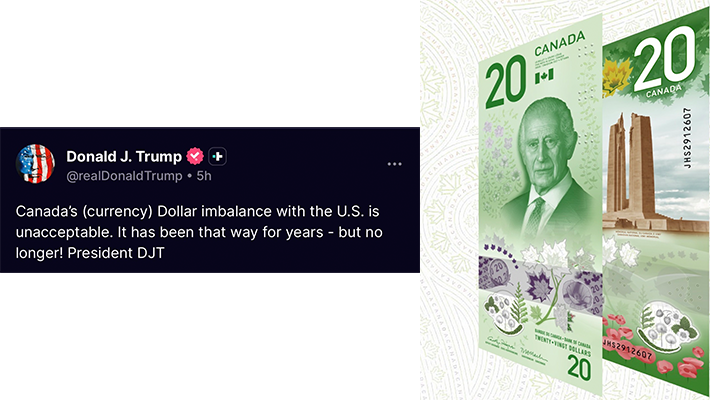
Trade War: Trump mocks value of Canada’s dollar, says disparity with U.S. dollar ‘unacceptable’
Mr Trump said the exchange rate between the currencies of two North American countries had been unequal for years and must end.
Heading 1
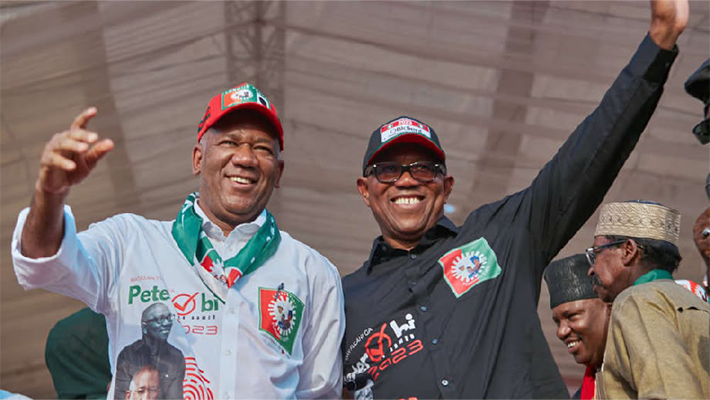
Peter Obi can’t fix Nigeria; he’s among politicians responsible for its present state, says Baba-Ahmed
Mr Baba-Ahmed said, “Those people contesting against him (Mr Tinubu) were all in bed together at some point or another — including Peter Obi.”

Uncategorized
ADC will defeat APC in Zamfara 2027 governorship poll, says chairman
Mr Garba charged party officials to avoid insults, provocation, and the spread of unverified information.
Heading 5
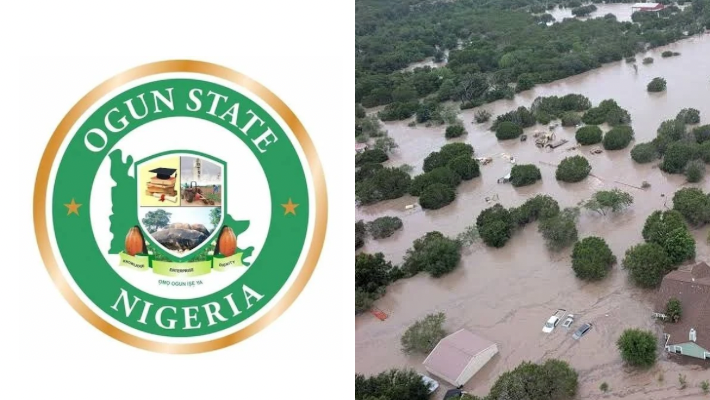
Ogun govt issues flood alert to residents, warns against flood-prone areas, electric poles
The agency said, “Heavy rainfall is expected in parts of Ogun State this wet season.”
Heading 3
My decision to return fuel subsidy is to strengthen local oil production like Trump: Atiku
Mr Atiku said, “Tinubu did not inherit this cost-of-living crisis from Nigerians. His policies created and deepened it.”

States
Gov. Makinde approves 32-seater, 18-seater buses for Shooting Stars
The governor assured the club of government continued support.


